
Pedals and Paperwork: Cilenca Trails’ Journey to Mountain Biking Paradise
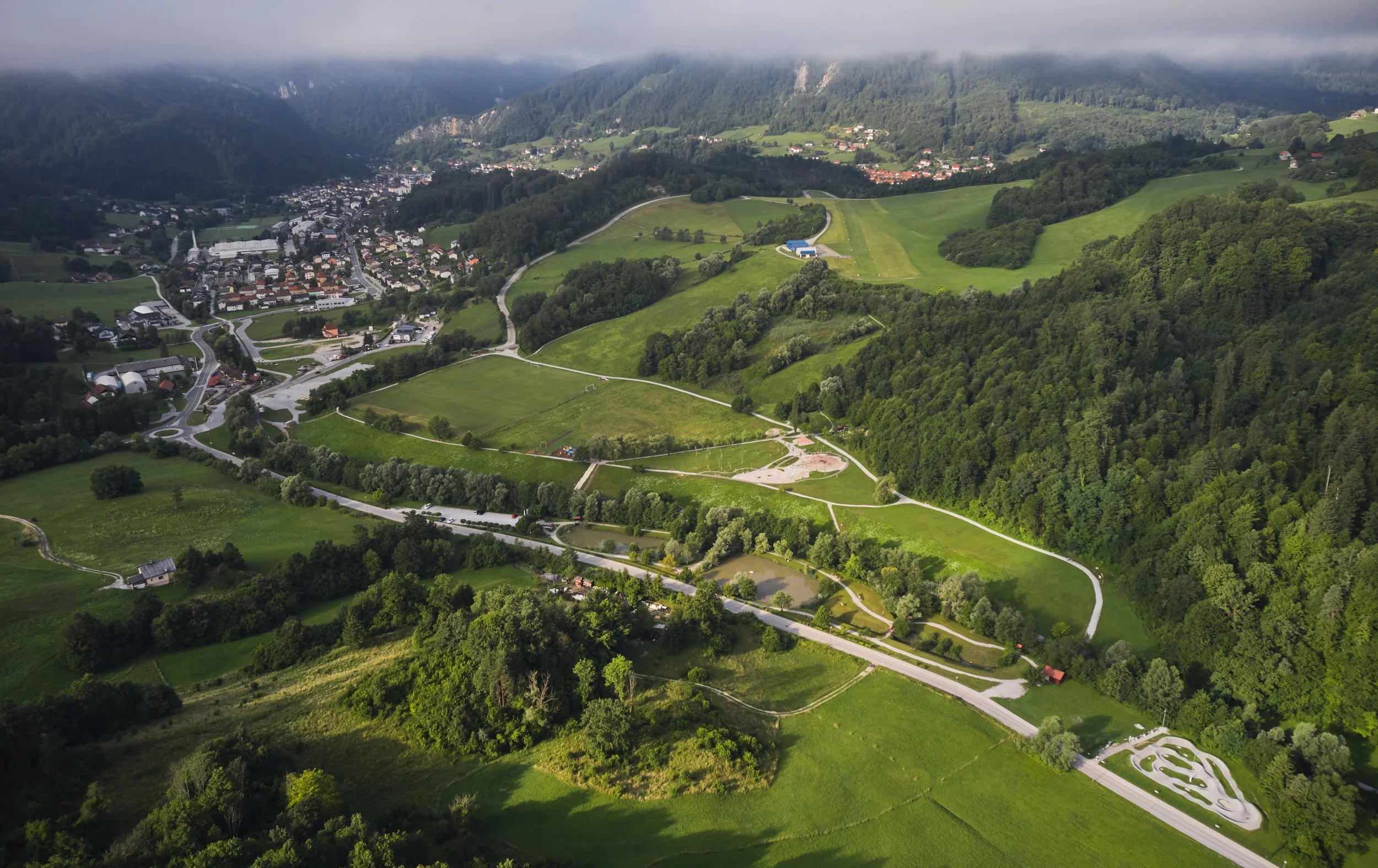
Tucked between Italy, Austria, Croatia, and Hungary, Slovenia is so small you might skip over it on your next biking trip — but that would be a huge mistake. Smaller than the size of New Jersey, Slovenia has it all: emerald rivers and lakes, cliffside castles, mesmerizing caves, jaw-dropping waterfalls, rich wildlife, beautiful forests, a diverse coastline, and some of the best restaurants in the world. If we switch our focus to the world of mountainbiking, Slovenia boasts diverse terrain, ranging from rugged alpine trails to picturesque forest paths, offering an exhilarating playground for riders from all corners of the globe.
Just a short drive from Slovenia’s capital city, nestled in the heart of Zagorje ob Savi, you will come across Cilenca Trails. This vibrant destination, enveloped by lush green hills, has become a true magnet for both local riders and enthusiasts from across the border, drawn by the allure of 5 meticulously designed bike trails that offer an exhilarating ride for bothbeginners and seasoned pros.
Sounds absolutely dreamy, right?
Right, but if you look underneath it all, it’s way more complicated and far from dreamy … the journey to bring Cilenca Trails to life was no easy ride. In a country where legislation and bureaucracy governing such ventures can be a complex labyrinth, the founding members behind this project encountered numerous hurdles before the dig even began.
This article unravels the compelling story of Cilenca Trails, a testament to perseverance, collaboration, and the unwavering passion of a dedicated mountainbiking community. It delves into the legal landscape that shaped this project, shedding light on the intricate dance, or should we say ride, between vision and regulation that underpins the building, as well as legalizing bike parks and trails in Slovenia. From legal intricacies and stacks of paperwork to environmental considerations, the path to realizing this two-wheeled haven was paved with challenges.
Background Into the Slovenian Trail Building Scene
Before we dive deep into the story, it is important to shed light on the current state of the Slovenian mountain biking scene. Mountain biking is becoming increasingly popular in Slovenia. With the popularization of the sport and improved accessibility and infrastructure, the cycling scene is experiencing a real boom.
New bike parks and trails are popping up across the whole country. But the truth of the matter is that a lot of them are unsanctioned … the biggest problem trail builders face in Slovenia is a lack of information and undefined laws when it comes to building MTB trails. If you ask 5 trail builders from Slovenia what their process for obtaining trail-building documentation looked like, you will receive 5 different answers, which clearly indicates that the state laws are not writtenwith building and developing mountain bike trails and networks in mind. This strongly suggests that state laws are antiquated and fail to align with the increasing interest in trail construction and developing MTB communities that wish to improve the biking infrastructure in the country.
On the one hand, as mentioned, we have existing trails, which are illegal, and on the other, we have individuals and MTB communities that would like to build and develop MTB trails and trail networks. Furthermore, numerous institutions lack the knowledge to navigate the process of acquiring essential permits to initiate trail construction. In cases where trails have already been established, they face challenges in legitimizing them. This issue predominantly arises from the absence of a legal framework, state laws, and construction acts pertaining to the matter. This frequently leads trail builders to feel perplexed or discouraged by the trail legalization process.
Consequently, prior to commencing the trail-building process, trail builders must navigate the task of obtaining a series of permits from landowners, some of whom may be hesitant about having trails on their property. As if convincing them to start building wasn’t challenging already, there are instances where a plot of land, intended for a trail that spans less than a kilometer, is owned by as many as 50 individuals. The intricacy of coordinating with numerous forest owners is often a significant factor contributing to the limited construction of trails in Slovenia.
Where There’s Smoke, There’s Fire
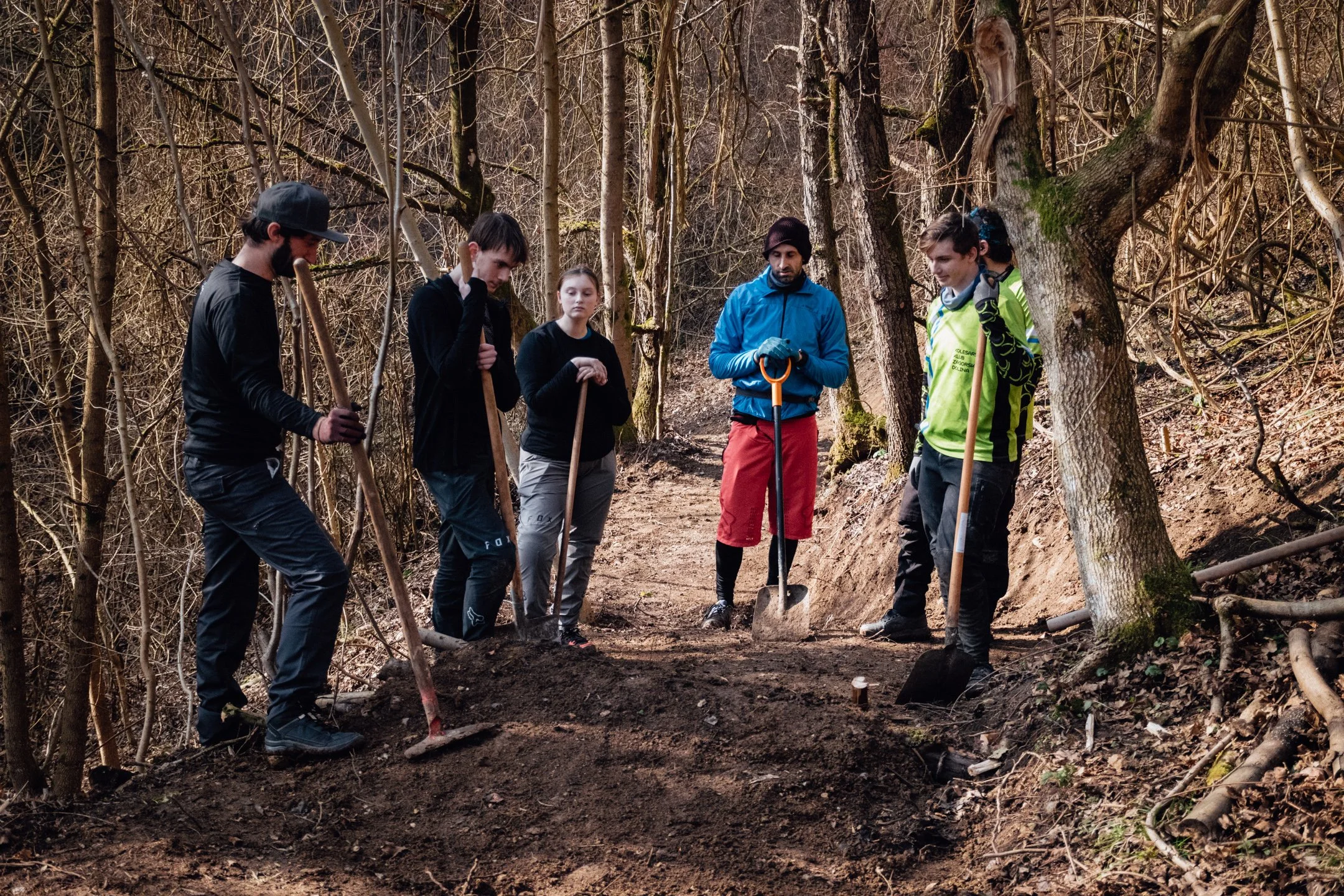
The story of Cilenca Trails takes us back a few years, when Andraž Grum, president of the Zagorska Dolina cycling club, who would later be described as “the founding father” of Cilenca Trails, as a passionate mountain biker, asked himself a question: “Where in Slovenia can you ride legal trails?”. This rather simple question sparked an idea in his head.
Years later, when he became president of the local cycling club, he noticed a growing interest in mountainbiking in his community. Furthermore, it has become apparent that more and more biking enthusiasts from other parts of Slovenia are flocking to Zagorje ob Savi in search of their next mountainbiking adventure. Grum saw this as an opportunity to further develop the cycling infrastructure, grow the mountainbiking community, and improve the tourist offerings in the region, as well as a chance to put Zagorje ob Savi on the map as a true mountainbiking destination.
After careful consideration and gathering a circle of a few like-minded MTB enthusiasts from his cycling club, the idea and end goal of building the next Slovenian bike park began … and so did the bureaucratic obstacles.
Leaving Paper Trails
In 2019, Grum began the process of preparing project documentation, which involved gathering necessary permits, consents, and approvals from both the private and state landowners of the area where Cilenca Trails would be built and relevant state institutions for the establishment of the park, obtaining lease agreements, approvals for forest area interventions, as well as letters of support from various institutions. In addition, construction documentation had to be prepared, which contained: elevation maps of the area, GPS projections of trails on different types of maps, CAD drawings of trail elements, and trail signage.
The first step was getting confirmation from the local municipality that the suggested location could be used in order to build and develop a bike park. As well as obtaining consent from the Slovenian Forestry Institute on the possibility of recreational activities in this forest area, and the permit for investor intervention in the forested area. The majority of the land in the Cilenca Trails area is state-owned, meaning trail builders had to obtain another permit from the Slovenian State Forests company, which would later allow them to build trails on the state-owned land.
Another factor that Grum had to consider beforehand was the fact that some parts of the forest where the trails would be built fall within a protected area. This meant that they had to apply to the Ministry of Agriculture, Forestry, and Food for permission to construct the trails in this section of the forest.
Bringing Together the Local Community
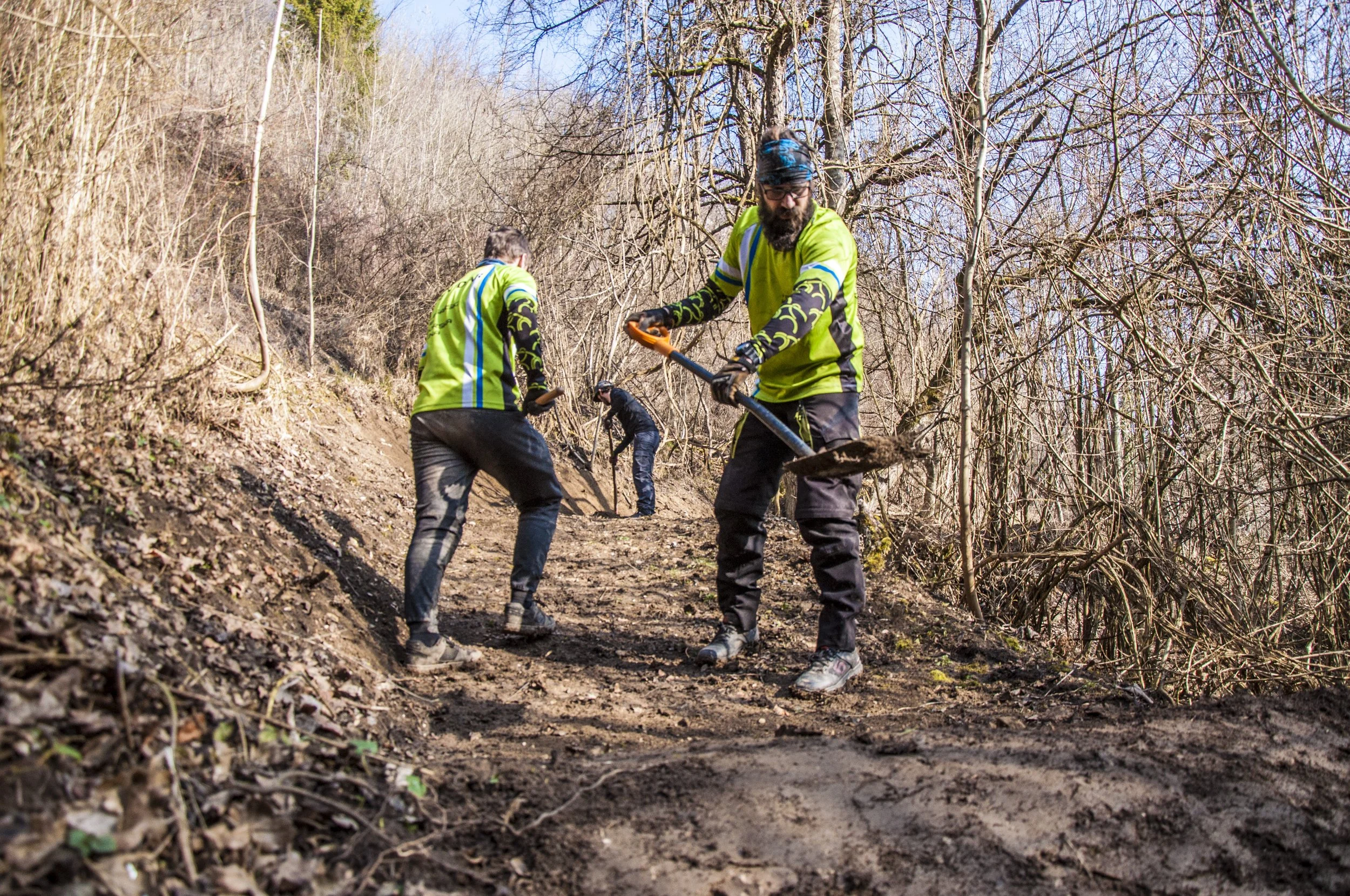
Luck was on the trail builders’ side in this case, as the municipality of Zagorje ob Savi was in favor of building the bike park since the idea was first brought up. They have been of great help and support when it came to gathering necessary permits and approvals from landowners and national institutions.
A one-in-a-million situation, as the majority of Slovenian municipalities and local communities are not in favor ofbuilding bike parks and trail networks. This is largely due to closed-minded people who believe that mountain bikers are savages, who disturb wildlife, run over hikers on paths, and pollute forests. With this being said, Grum emphasizes the importance of the local community, without which this project would never see the light of day.
Once all construction documentation and permits were acquired, the trail building officially began.
Light at the End of the Trail
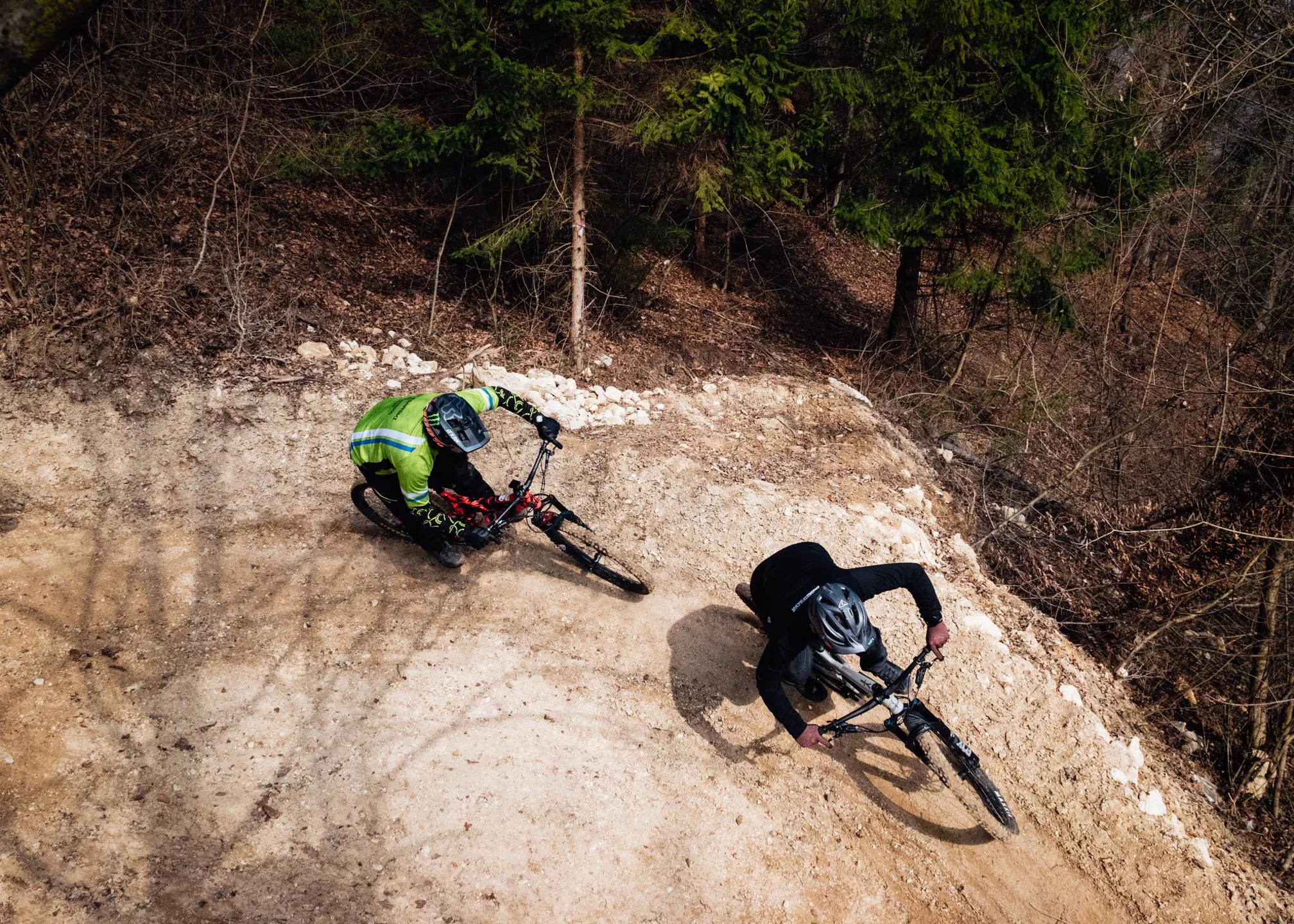
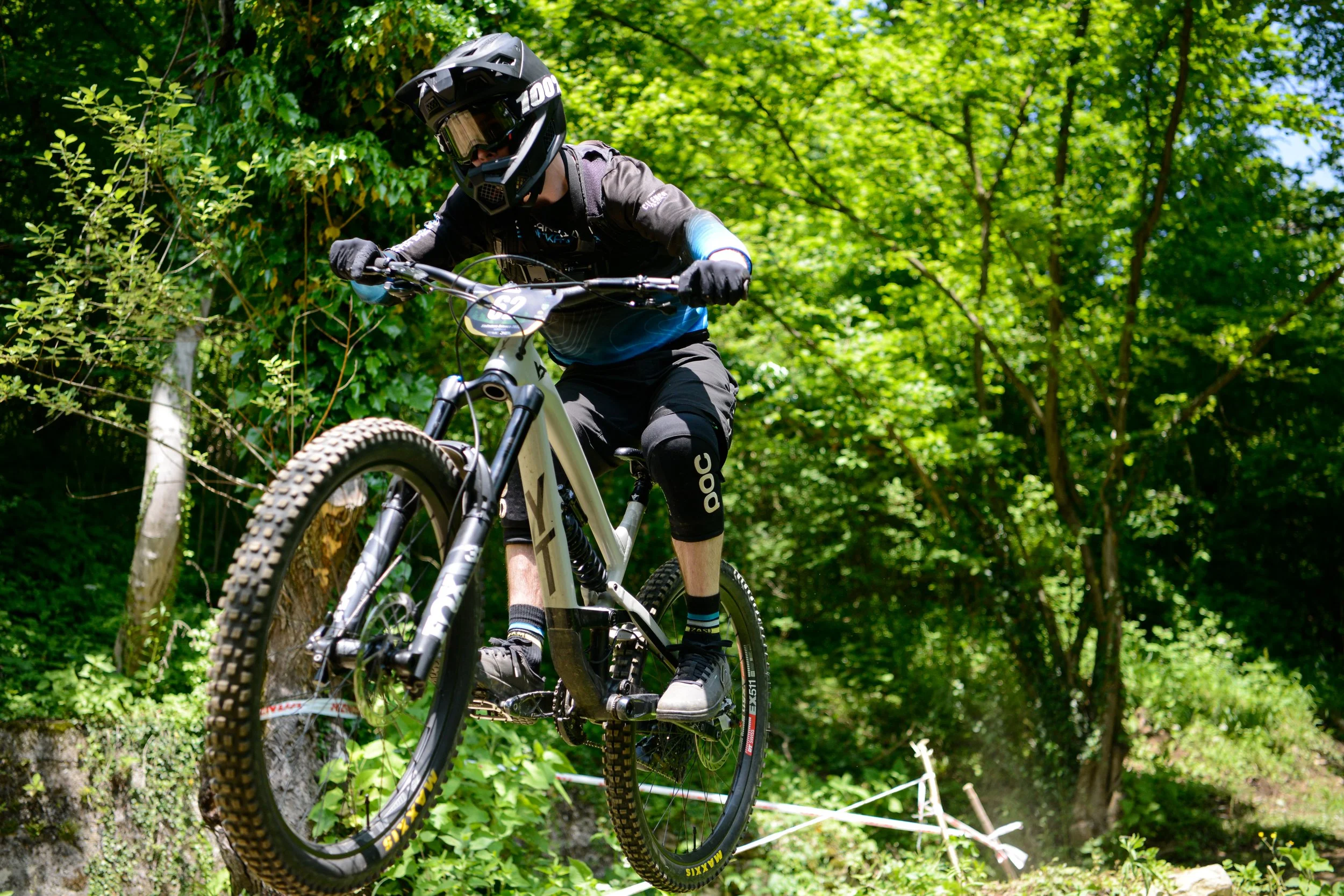
The construction of the park began in the winter of 2020, just a week before the global pandemic caused the country to shut down. Despite the restrictions on social gatherings due to COVID-19, small groups of dedicated trail builders worked on their own sections of trails in order to keep a safe distance. During the summer season, an excavator was transported to the flow trail, which was under construction at the time. This facilitated the team in the development of larger features and earthworks. As soon as the first leaves hit the ground and the flow trail began to take its final shape, the work on the two singletracks began.
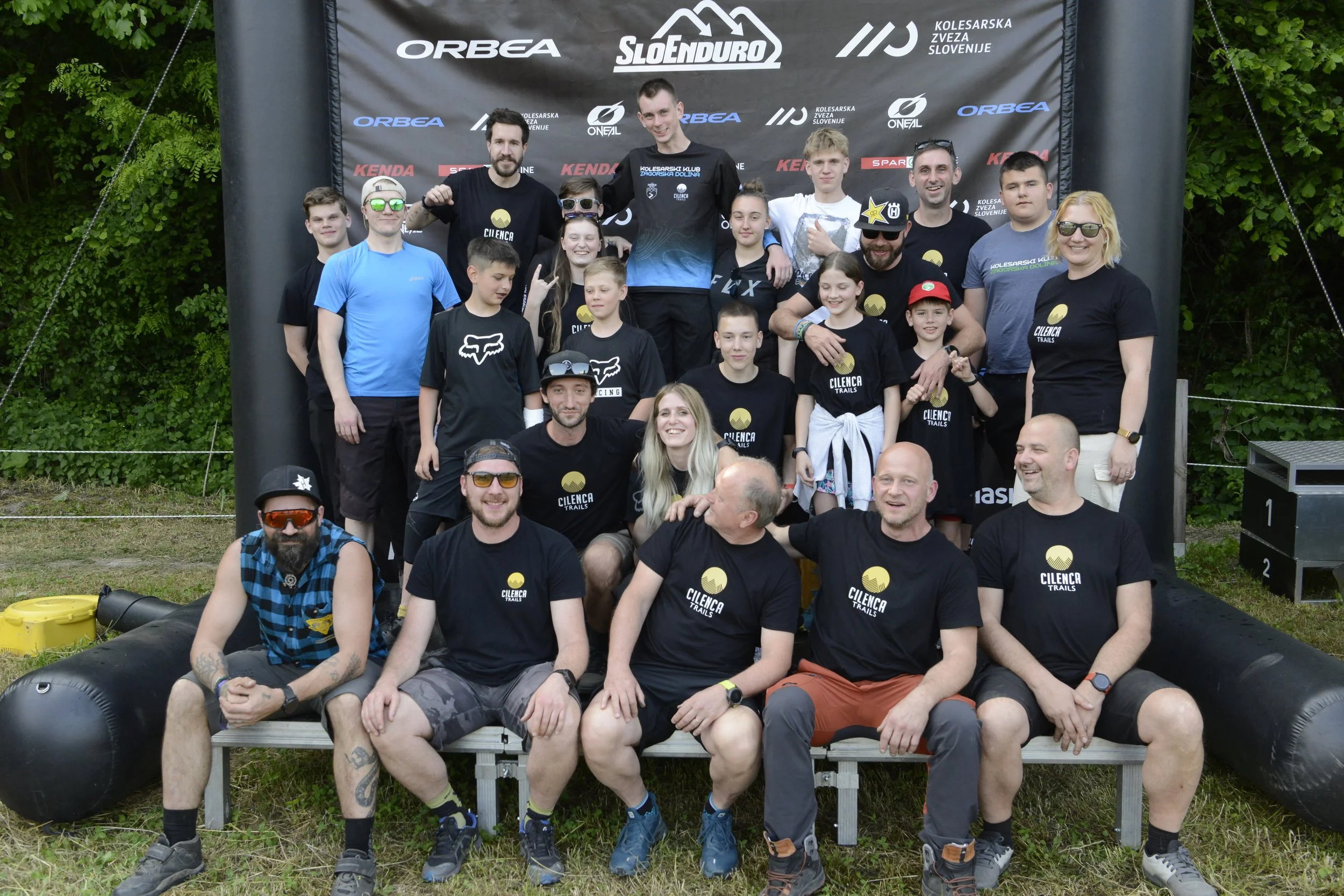
The longest blue trail, which spans 1.4 kilometers, was completed in the winter of 2021, and the shorter green trail for beginners followed soon after in the springtime. The drive and determination of Grum and his fellow trail builders prevailed, and Cilenca Trails bike park officially opened in July of 2021. Since its opening, the number of people interested in MTB has significantly increased in the local community. Furthermore, the cycling club, alongside dedicated volunteers, organized an enduro race under the wing of the SloEnduro series, which attracts a few hundred riders from different countries.
Currently, Cilenca Trails bike park is spread across an area of 16 hectares with 200-230 meters of elevation, and it currently has 5 trails with more being planned out and 2 currently under construction.
————————————
This article originally appeared in Volume 2, Issue 1 of Trail Builder Magazine.


Sara Todorović
Sara Todorović is a marketing and creative professional with a passion for outdoor adventures. In 2020, she combined her expertise with her love for mountain biking by joining her boyfriend and his friends to promote a bike park they were building. With a background in marketing and social media, Sara is dedicated to spreading the joy of trail building and mountain biking through her work.