
Ride the Rebellion

Building Trails and Community in the Most Unlikely Places
What do you get when you mix sandy soil, motivated people, and a dream to inspire others? The Rebellion—that's it. This is our story of how we are transforming a mindset and mountain bike culture in the most unlikely of places.
Flashback to 2021: a dedicated group of us sharing riding tales in a parking lot with some beverages when a couple of our crew approaches us with an idea.
How the Ride the Rebellion Trail Project Began
"Let's do what no one thinks is possible!"
"Let's build a downhill-ish bike park in Mobile, Alabama!"
From Rogue Trails to a Legit Trail Building Vision
Cue the laughter from the crowd. The two guys sharing the idea were thinking outside the box. But on opposite sides of the box. One of them just wanted to build rogue trails and make it as punk rock as possible. The other, and clearly more mature one, thinks we go fully legit, and get the landowner involved and do things right. We are all part of our local organization but just saw a need that wasn't being met due to the slow processes of bureaucracy.
Doing Trail Building the Right Way: Landowners, Leases, and Legitimacy
Since we are not young pups, and have a lot to lose, we opted for option B. "Let's do things right!" Digging in, the owner was found, a lease was signed, insurance secured, lawyers contacted, an LLC created, and we are off. But with rules and limitations. Mostly, rules we created ourselves but they are necessary nonetheless.
Rules, Culture, and Identity in Community-Built Trail Systems
"Exclusivity breeds loyalty—let's keep it private." "Strava? Not our style."
"Respect thy fellow trailbuilder."
Learning Trail Building From Scratch on Sandy Soil
So, here we are, just some middle-aged men and women with 65 acres of sandy soil and minimal trail building knowledge! How do we get this rolling? Easy, just start marking, raking, cutting, planning, and obsessing! In the fall of 2021, we discovered that we weren't building a trail system; we were building a community. What started with a selfish desire to just go downhill really fast transformed into a desire to want everyone to share the feelings we all get while we are at the Rebellion.


Experimenting With Trail Building Methods and Materials
We worked hard through 2022, and a lot of people were sharing the journey through our social media channels. We were experimenting with different build methods, materials, and styles. Each trail is built by someone else, so every one of them has its own flavor and unique name. We have had so many surprising successes with different build methods that it is encouraging to continue. It's not easy to just say hey Siri, "How do you build trails on sand?"
Growing a Grassroots Trail Network Through Events
To end 2022, we hosted our first "friENDURO" and got as many locals as we could to share in our excitement. At this point, we had developed around 5-7 miles of trails, mostly down one side of the hill and not real loops. We had a great turnout and learned that we could start inviting more people and get some more help in the process. So, with that began our "Season 2" build year. We focused on adding more "XC" miles to get some more pedaling in while we are there. That worked out masterfully, and we now have a four-mile loop that includes a lot of the enduro lines to keep you on your toes while getting that workout in. We also started building more berms, drops, and jumps on the existing trails. When 2022 came to an end, we had a solid 8-10 miles of rideable trails.
Scaling a Trail System Despite Climate Challenges
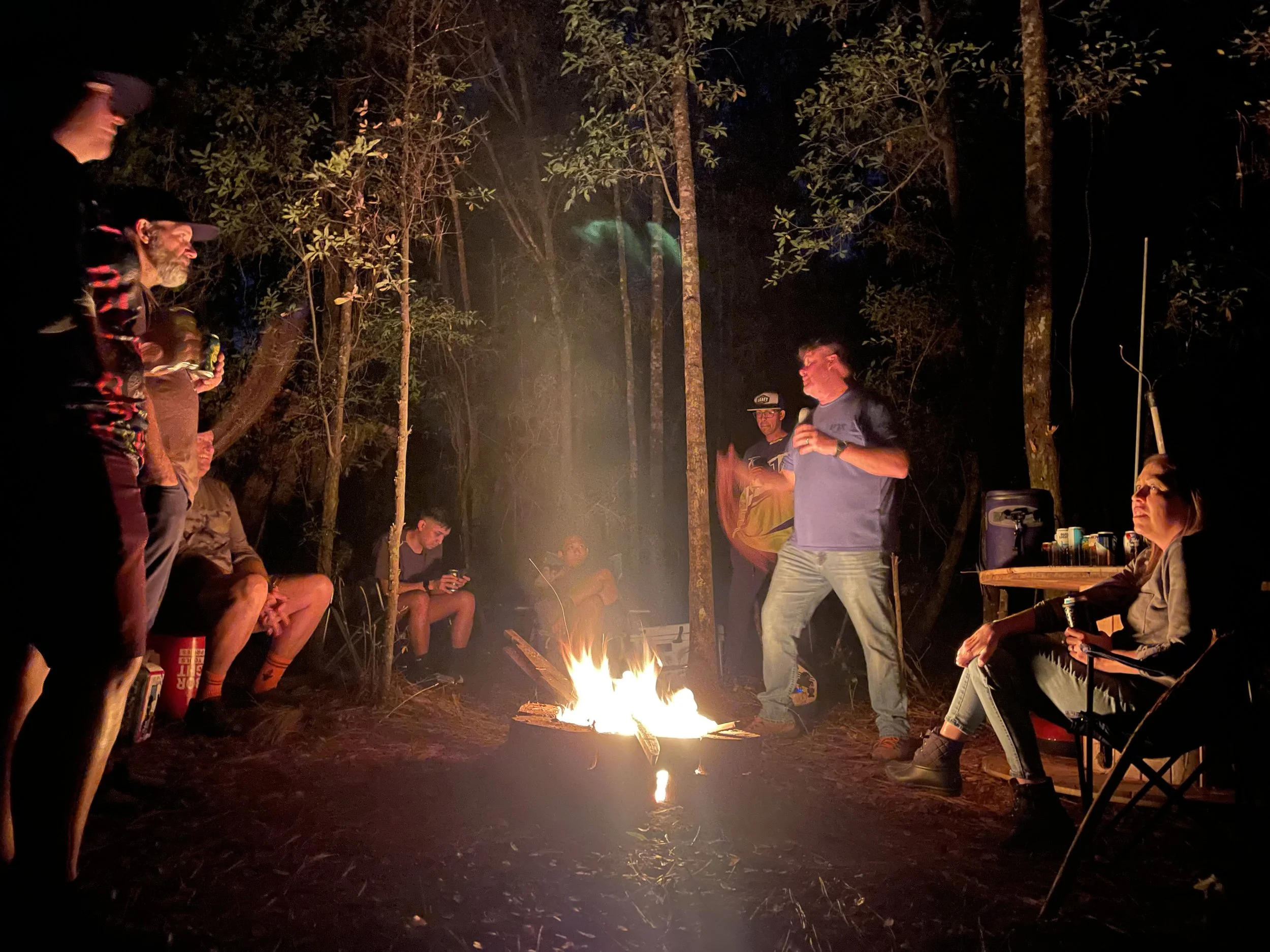
We continued on a positive trajectory all through 2023, all while fighting extreme heat and humidity and the biggest spiders you have ever seen! What developed in 2023 cannot be replicated anywhere. The idea can be replicated, but the emotions and the friendships cannot. We are a very broad group of people from every walk of life. We have lifelong Alabamians, Filipinos, men, women, and their least favorite ... Ohioans. Through all of our differences physically, mentally, politically, and emotionally, we have found out that we bonded over one common purpose. We spend more time sharing our trials and tribulations of life and helping each other overcome those obstacles. The trail became a tool more than a place. It's a tool for our mental health. It's a tool for our physical health. And it's a tool to teach us so much more about a person that we otherwise would have ignored in our everyday lives.
Ride the Rebellion Podcast and Social Media as Community Builders
As the project gained momentum, so did our efforts to document and share the progress. Enter Ride the Rebellion Podcast—a platform where members shared insights, stories, and updates, inviting listeners into our journey of growth and discovery. Simultaneously, our social media channels flourished, becoming hubs of inspiration and camaraderie, drawing in enthusiasts from far and wide.
When Trails Become Bigger Than the Trails Themselves
Together, we stumbled upon something we didn't even know everyone needed. We have spent hours and hours working on the trail, but what we failed to realize is that maybe we were working on ourselves and each other. It has made relationships that never would have been. Created a mindset that is infectious across and entire region. People have come and ridden with us and always leave saying they are blown away. Not by the awesome trails, because of course they are AWESOME. But more blown away by the community that surrounds them.
Ride the Rebellion may not last forever, but the friends and people it has influenced will forever transcend the trail itself.
Words: Dale Boyd Photos: Supplied by Dale Boyd
ABOUT THE AUTHOR

Dale Boyd
Five years ago, Dale’s life changed forever when he purchased his first mountain bike. Since then, he has embedded himself into the local bike culture and leadership. As a Co-Host for the Ride the Rebellion podcast, he is able to share the trials and triumphs the group faces while trying to build culture and trails on the Alabama Gulf Coast.

