
Cased Knee Pads Review: First Impressions for Riding and Trail Building
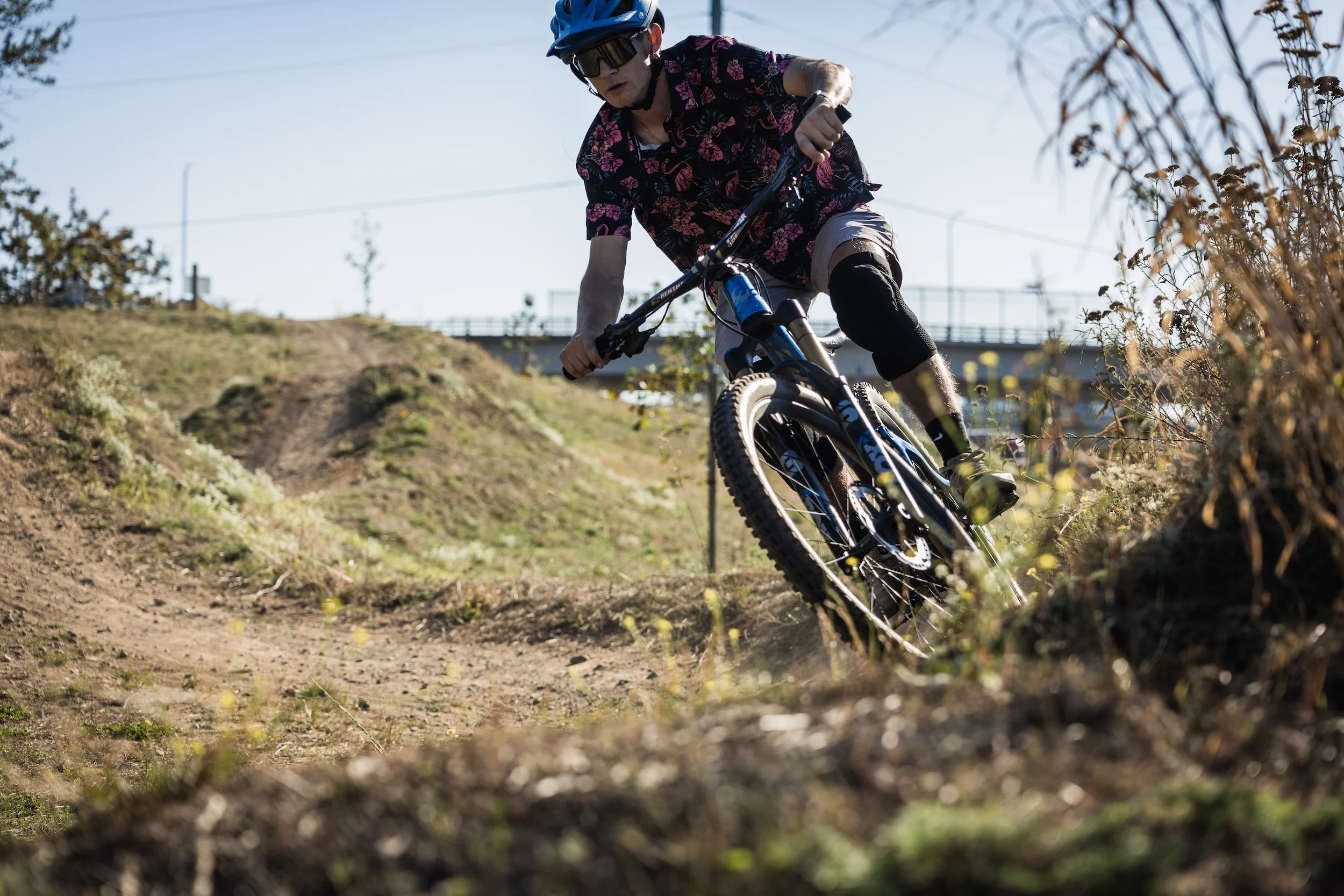
Many of us have a love-hate relationship with knee pads. Over the years, I’ve tried all kinds. I’m sure you have too.
Some offer amazing protection but lack comfort and flexibility. Others are super comfortable, but you question whether they will hold up if you actually need them in a crash. Then there’s nothing worse than when your knee pads keep sliding down your leg during your ride. Eventually you just give up, and they become great shin protectors.
As Trail Builder Magazine, we add another wrinkle to the conversation about how well a set of knee pads holds up when you’re doing tasks like rock work on your knees.
To find a pair of knee pads that are comfortable, offer the kind of protection you need, don’t slide down all day, and can double up for trail work might be the equivalent of finding hidden treasure.
The crew from Cased sent us a couple of sets of their knee pads to test. While I’m still early in the testing phase, I have enough data to begin sharing some observations and what I think of them.
More importantly for our audience, are these worth considering for people who spend as much time building trails as riding them?
Bringing Another Tester Into the Mix
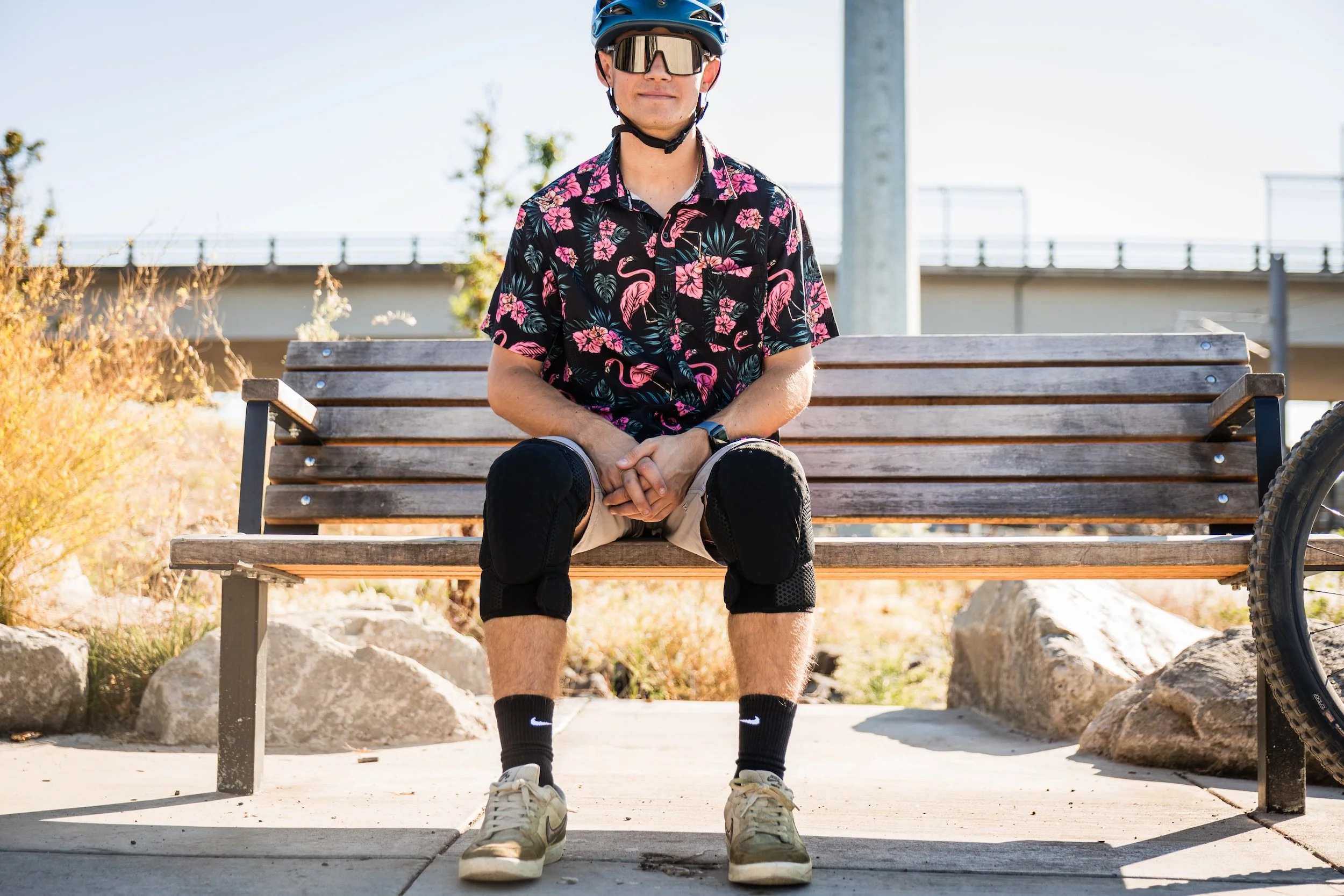
Since Cased sent me two sets of knee pads, one medium and one large, I knew I wanted to share one pair and have someone else help test them.
One of the benefits of teaching undergraduate digital media courses is that I have a lot of students come through my classroom each semester. Most aren’t mountain bikers, but every once in a while I get one who is.
In a couple of my courses this semester, we’ve been covering product-review writing and the photo and video content that accompanies reviews. I mentioned in class that Trail Builder Magazine has a queue of products that need to be tested, photographed, and reviewed.
That led me to ask one of my students, who also rides, if he wanted to help. Not only did I pay him for his time, but I also gave him the medium pair to keep.
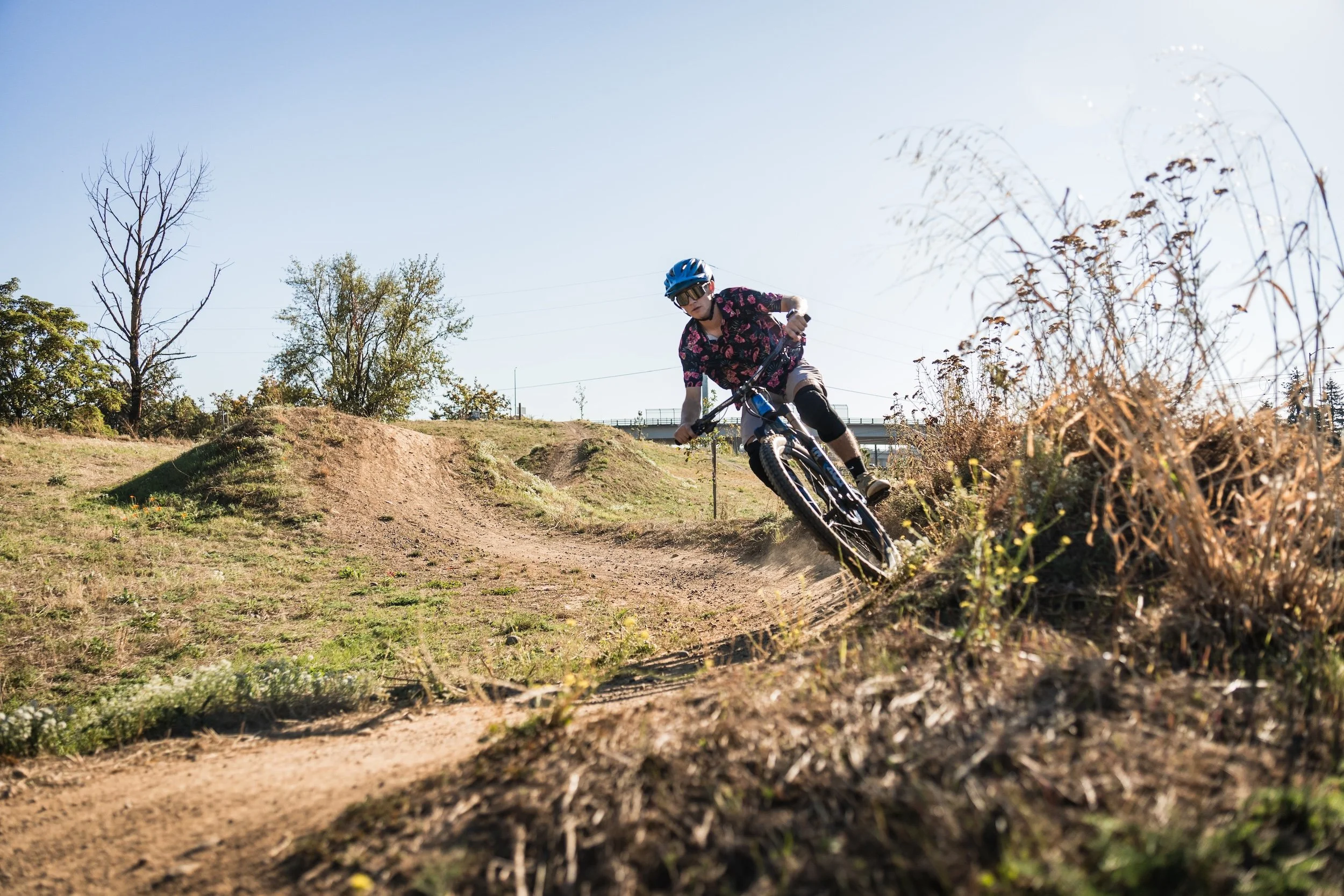
We met near campus at a bike park in the city to shoot photos, ride, and talk through his impressions of the pads.
His early observations lined up almost exactly with mine. They were comfortable. They were flexible. They were easy to put on. And, perhaps most importantly, they stayed where they were supposed to stay.
That gave me two different riders with different body sizes coming away with many of the same first impressions.
So, Who Is Cased?
Cased is a relatively new protective-gear company founded in 2025 by Rhett Jones and Dylan Vanek.
According to the company, the idea came from their own frustration with protective gear they didn’t particularly enjoy wearing. Their stated goal is straightforward: create protection they themselves actually want to ride in. Both founders say they personally test and develop the company’s products.
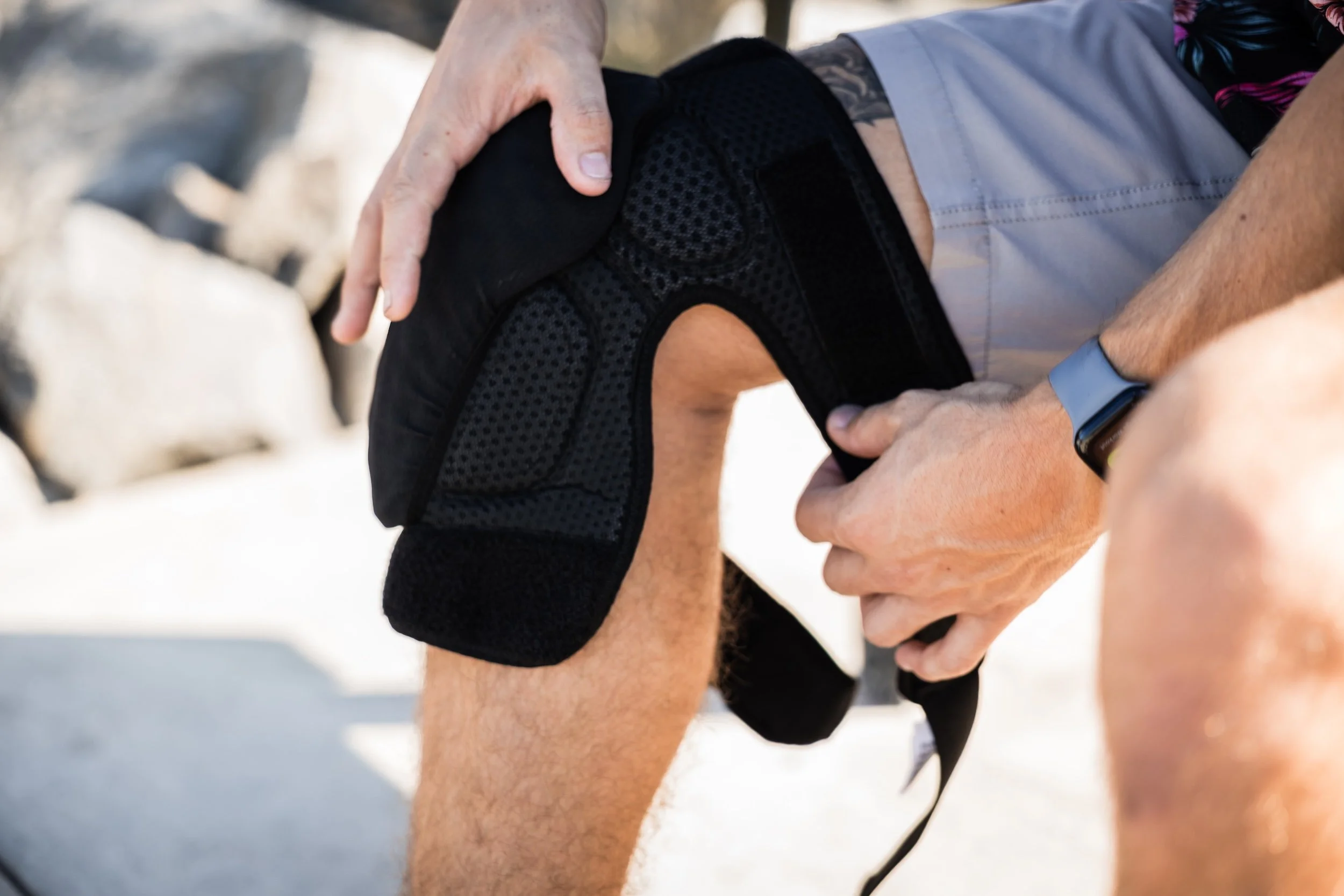
That makes sense when you look at these knee pads. Cased isn’t trying to make a giant piece of downhill armor. The emphasis is on combining protection with mobility, ventilation, and comfort.
The pads are rated to CE Level 2 protection, and Cased says the impact material absorbs 89 percent of impact energy. The company also highlights their flexible construction, breathable design, and secure fit as primary selling points.
At the time of writing, Cased lists the knee pads for $69, discounted from a listed $150 regular price.
For me, though, specs only get us so far.
The more important question is what they are actually like to wear.
How Comfortable Are the Cased Knee Pads?
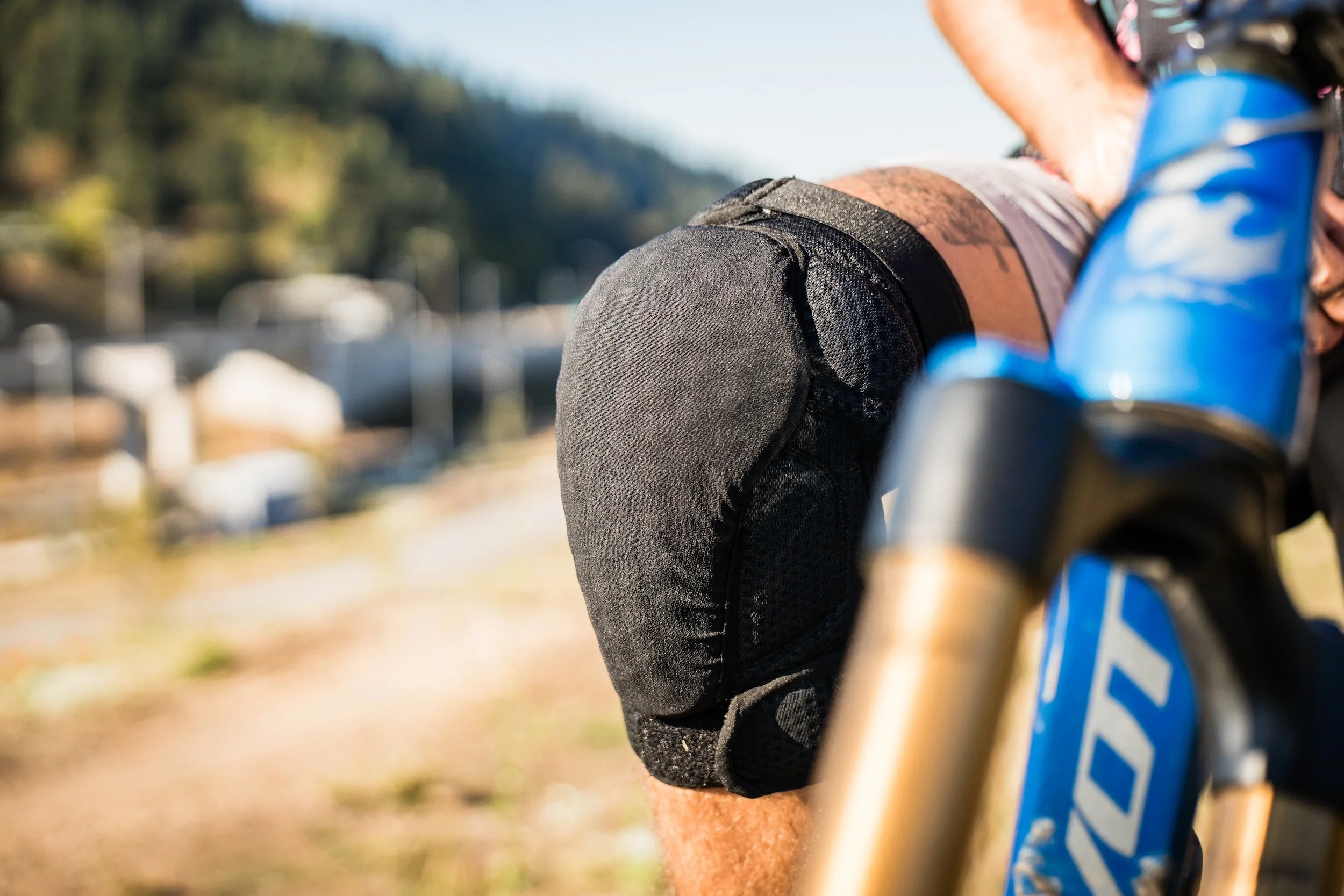
The first thing that stands out is comfort.
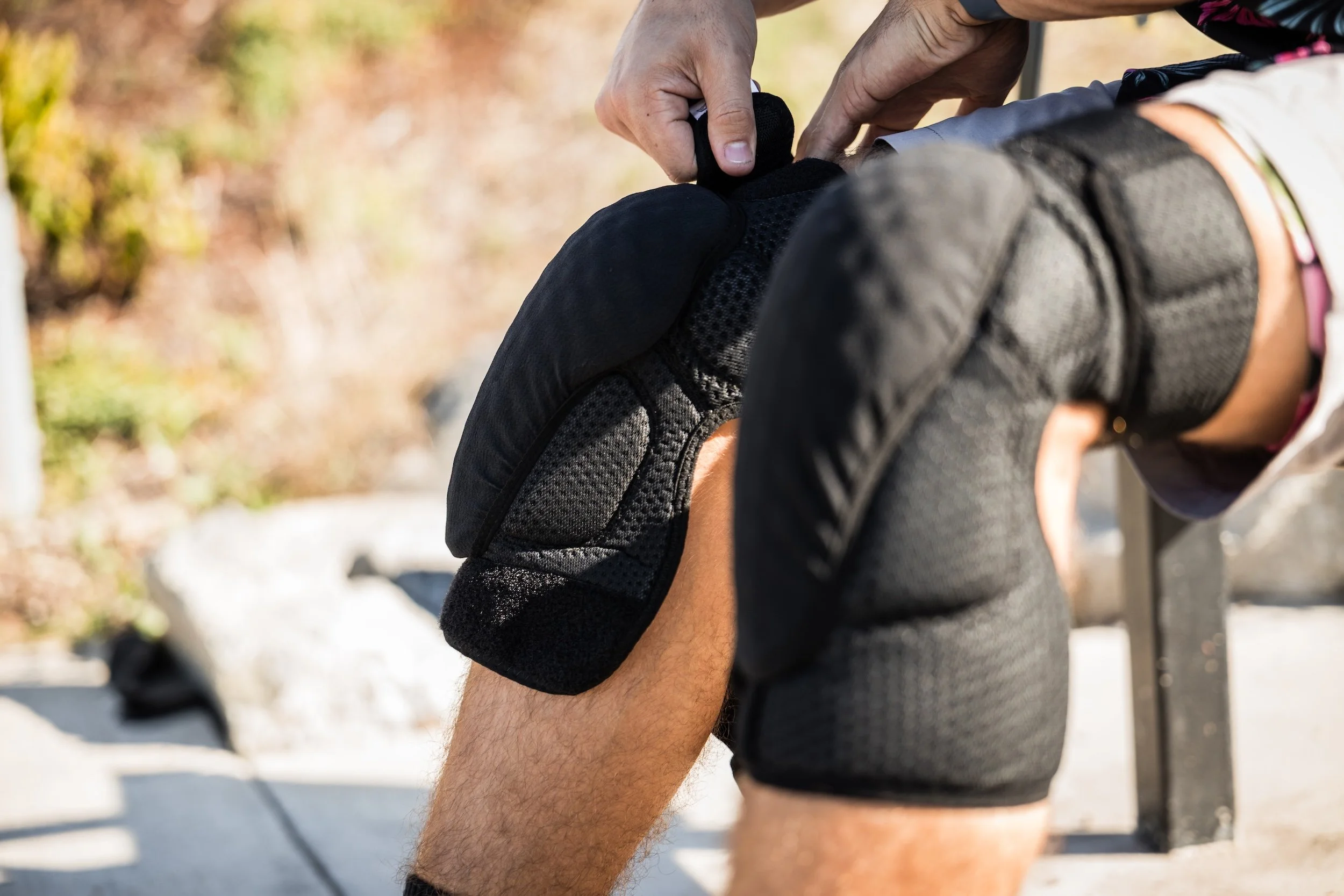
The pads move easily with your knees instead of feeling like a rigid piece of protection strapped to your leg. That’s a big deal when pedaling, but it could potentially matter even more for trail builders.
Trail work involves a lot more movement than simply standing around swinging a tool. You crouch. You kneel. You step over logs. You scramble up and down slopes. You carry tools. You move rocks. You might spend an hour shaping a feature and then hop on the bike to test it. A knee pad that restricts movement quickly becomes something you take off.
My early impression is that the Cased pads have enough flexibility that I don’t immediately want them off my legs. My student had essentially the same response. His first comments centered on comfort and flexibility rather than the protection itself.
To me, that’s a compliment. Good protective equipment often does its best work when you stop thinking about it.
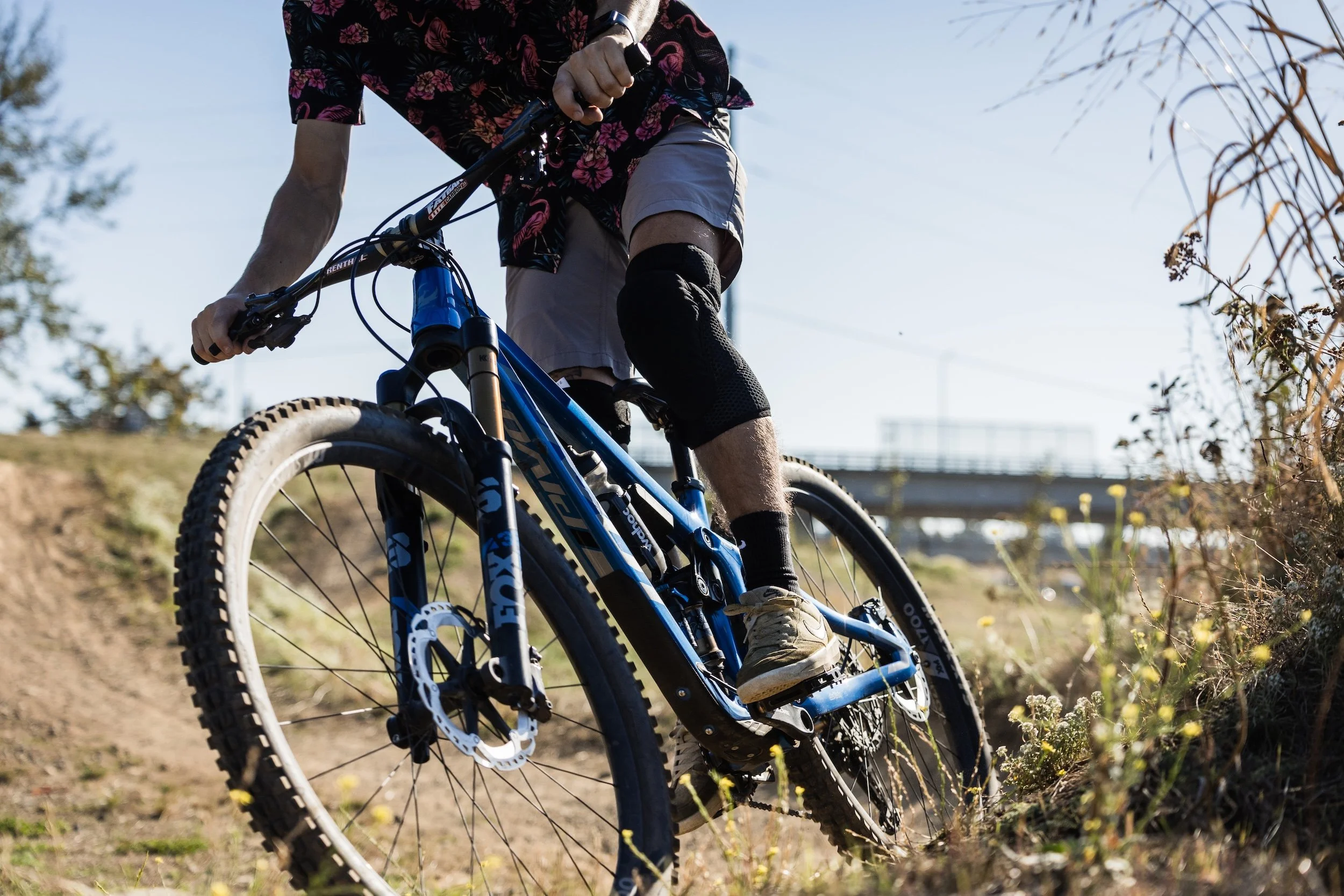
Do the Cased Knee Pads Stay in Place?
This might sound like a small thing until you’ve owned knee pads that continually migrate south.
Fit has been excellent so far.
The large fits me well, while the medium worked well for my student, who is smaller than I am.
Cased promotes the secure fit as one of the defining characteristics of the pads, and customer comments on the company’s website repeatedly mention that they stay in place and avoid bunching behind the knee.
From our limited testing so far, staying put has not been an issue. That alone moves these ahead of plenty of knee pads I’ve worn in the past.
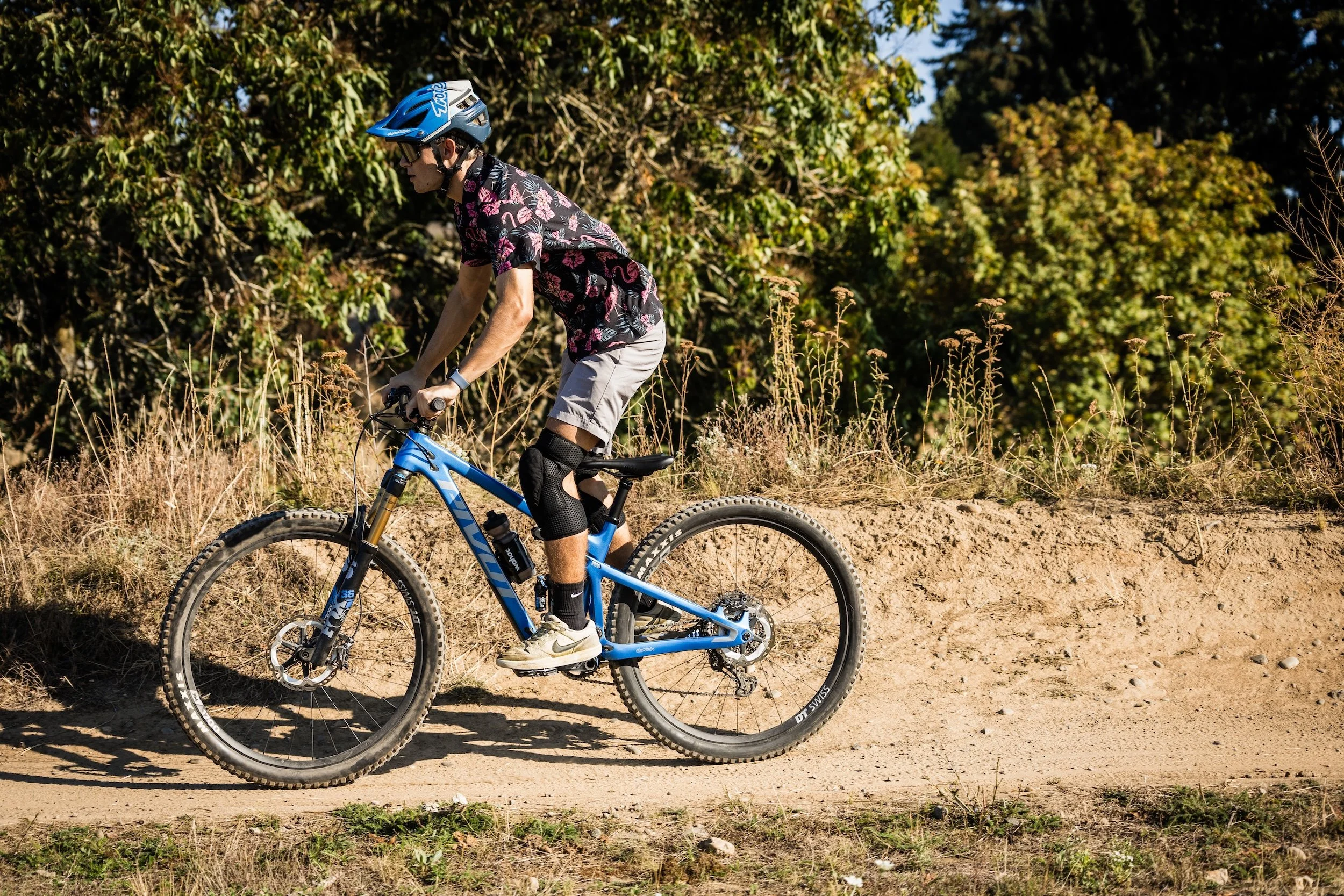
How Easy Are the Cased Knee Pads to Put On?
Another benefit is how easy they are to put on.
For me, that's especially relevant for trail builders.
You don’t necessarily want to pull off your boots or shoes every time you decide you want knee protection. If you arrive at a work site and suddenly realize you’ll be spending the next hour setting rocks, you want something you can throw on quickly.
The Cased pads work well in that regard.
I can easily put them on over pants, which immediately caught my attention because that broadens their usefulness beyond mountain biking.
That reminds me of one of the things I liked most about the Avision Guardian knee pads we previously reviewed.
The Avision Guardian uses a Fidlock V-Buckle that lets you put the pads on or take them off without removing your shoes. That made them especially useful when transitioning between riding and trail work. In that review, I found myself using the Guardians more often simply because they were easy to throw on when I needed them.
The Cased pads accomplish something similar through a different design.
For a rider, that’s convenient. For a trail builder, it could be a genuinely useful feature.
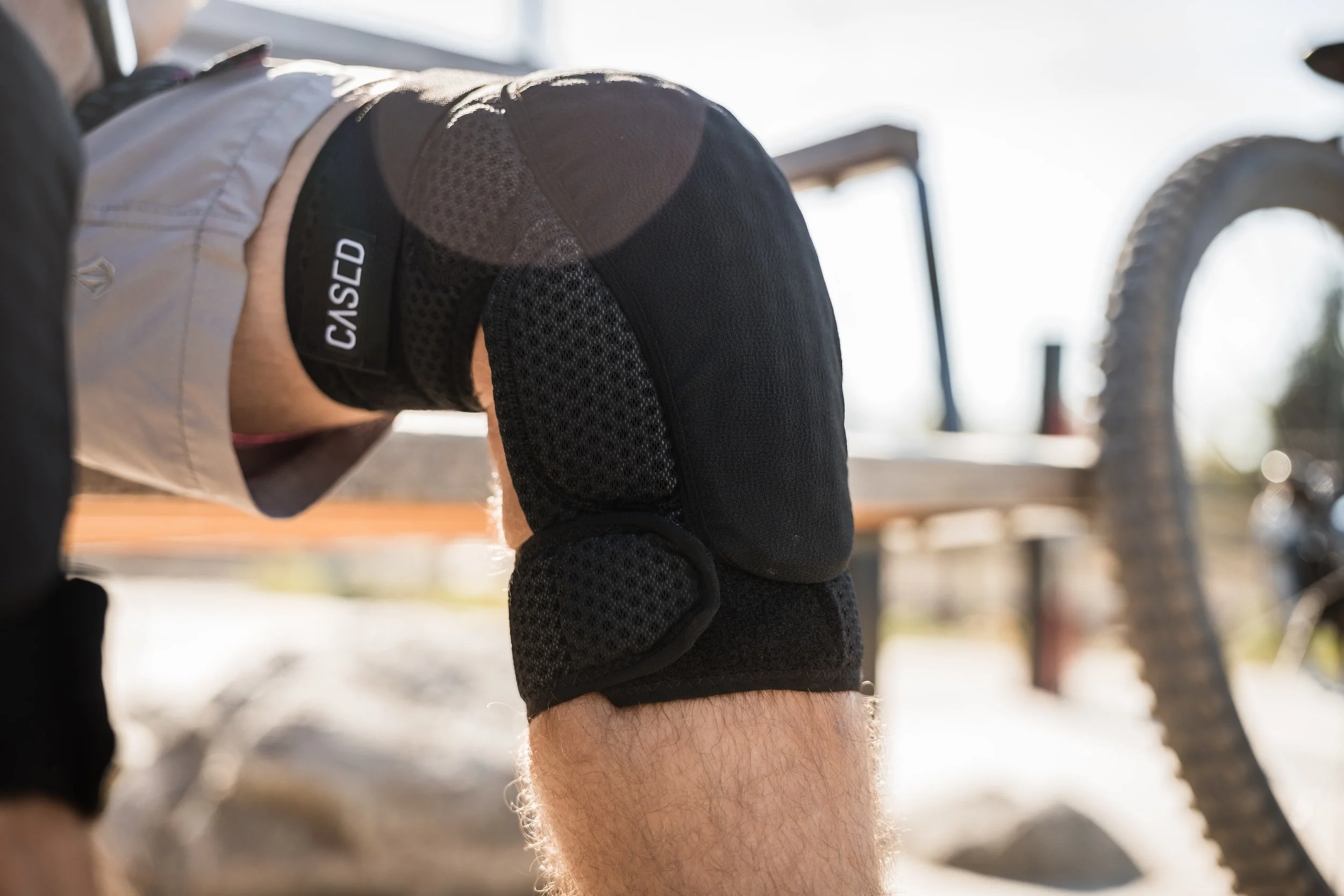
Can Cased Knee Pads Work for Trail Building?
This is where our review begins to depart from a typical mountain bike knee-pad review. I’m interested in what happens when these are used as workwear.
Can you kneel on rock while positioning it?
Can you spend time shaping tread while resting on one knee?
How do they handle dirt, mud, abrasion, and repeated contact with the ground?
Can you wear them over work pants for several hours without constantly readjusting them?
Those are questions I have not fully answered yet. I haven’t spent enough time doing actual trail work in them to make claims about their long-term durability or performance during prolonged rock work.
What I can say is that the early ingredients are there. They are flexible enough to crouch and move naturally. They stay in place. They are comfortable. And they are easy to put on over pants.
Those characteristics make me optimistic about their potential usefulness for trail builders. But potential and proof are different things.
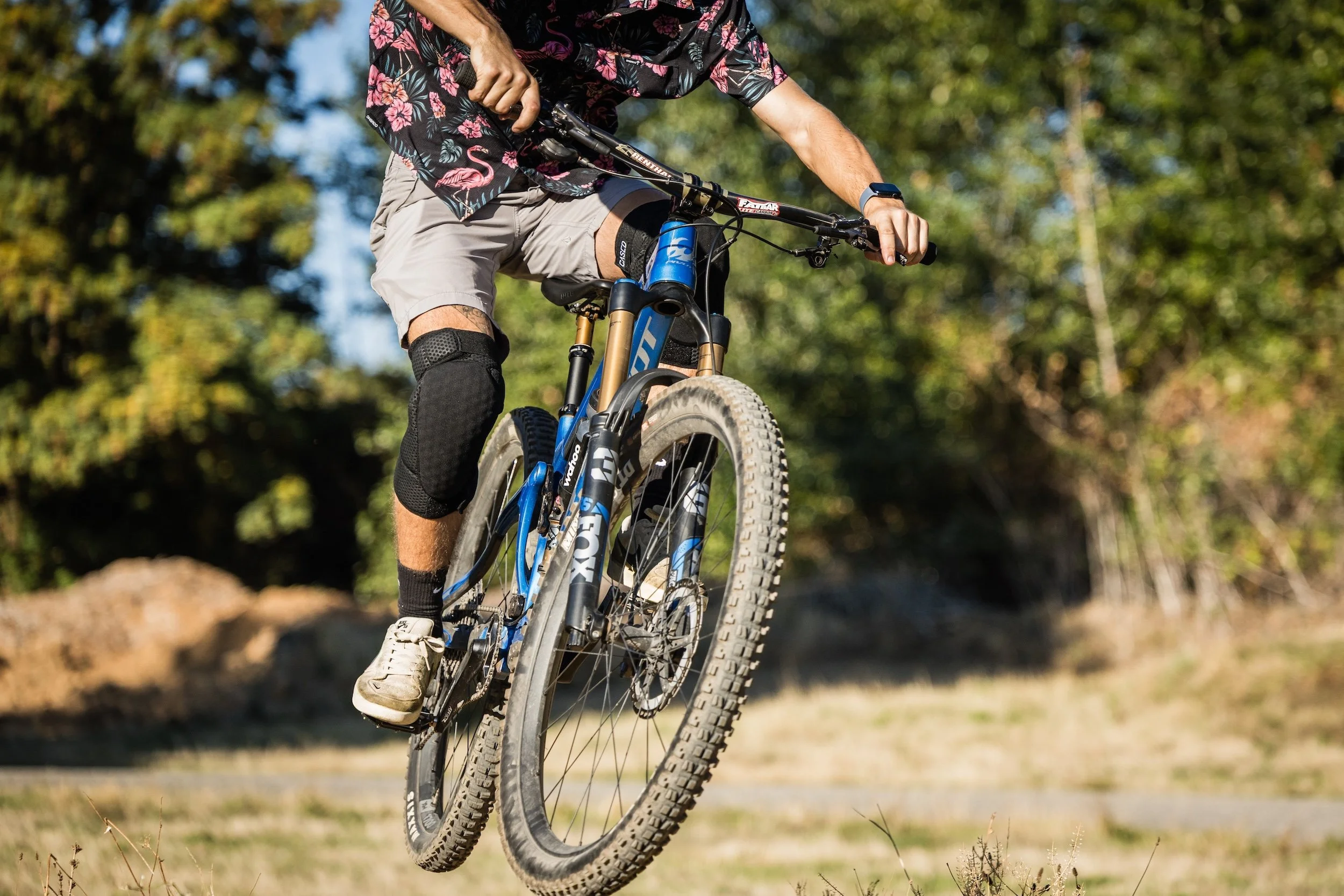
How Much Protection Do Cased Knee Pads Offer?
Cased advertises these as CE Level 2 knee protection, which is significant because Level 2 represents the higher impact-protection level under the applicable CE standard for limb protection. Cased says its pads absorb 89 percent of impact energy.
I have not taken a substantial crash in these. Neither has my student. Lucky for both of us.
So I’m not going to tell you how well they protected my knee during a major impact when that hasn’t happened.
There is anecdotal feedback on online forums from other riders who report taking impacts while wearing Cased protection and coming away impressed. One rider specifically described crashing on gravel while wearing Cased knee pads and reported that his knee was protected.
That is useful context, but it isn’t the same as our own testing.
For now, the CE certification gives us more useful information about protection than our personal crash experience does. Hopefully it stays that way.
What Are the Limitations of This Early Cased Knee Pad Review?
There is another piece worth discussing.
Cased is young.
That means there simply isn’t the same volume of independent, long-term testing available that you’ll find for established brands that have been producing mountain bike protection for years.
That means there are still unanswered questions around the brand that only time and wider real-world use will answer.
For Trail Builder Magazine, that is another reason I want to keep testing these rather than treating a few rides as the final word.
Cased Knee Pads First-Impressions Verdict
So far, I like these knee pads.
More importantly, my student came away with essentially the same impressions without me needing to coach him toward them.
Comfortable. Flexible. Easy to put on. Good fit. No slipping. Those are five good places to start.
For mountain bikers who hate bulky knee protection or pads that constantly need adjustment, the Cased design deserves some attention.
For trail builders, I’m even more curious.
The ability to quickly put them on over pants, combined with the flexible fit and Level 2 protection, creates the possibility that these could work as a genuinely useful crossover piece between riding and digging.
But this is still a first-impressions review.
I haven’t yet put enough trail-work hours into them to evaluate abrasion resistance, long-term durability, repeated kneeling, or how they handle months of dirt, sweat, washing, and abuse.
That’s the next part of the test. For now, I can say this: they’ve done enough right that I want to keep wearing them.
And when it comes to knee pads, that might be the most important first test of all.

Sean is the Founder and Editor-in-Chief of Trail Builder Mag, a digital media instructor, and the Communications Director for the Northwest Trail Alliance in Portland, Oregon. Email: sean@trailbuildermag.com