Putting Your Emerging Trail Town on the Map: A Practical Social Media Checklist
A Practical Social Media and Marketing Checklist for Trail Organizations and Rural Communities
If you have been following our conversations around trail towns, you already know the tension. Many rural communities have enough trail infrastructure to be proud of, but not enough confidence to say it out loud. They worry about marketing too early. They worry about attracting the wrong kind of attention. They worry about promising more than they can deliver.
In a previous article, Should Your Town Market Itself as a Trail Town, we explored that hesitation and why it exists. The short version is this: not every town should rush to brand itself as a trail town. But that does not mean you should stay invisible.
This article is about the middle ground. It is about putting your emerging trail town on the map in a responsible, realistic, and doable way. Not through glossy campaigns or paid ads, but through consistent documentation, thoughtful storytelling, and a simple social media strategy that works even with limited budgets and capacity.
What follows is a practical checklist. It is designed to help you start posting tomorrow and to help you make the case to local leaders that marketing, when done right, is not merely hype.
What “Putting Your Emerging Trail Town On the Map” Really Means
For many trail organizations and volunteer advocates, the phrase “putting your town on the map” sounds like a big leap. It conjures images of crowded trailheads, too many Sprinter vans, wannabe influencers, outside investors, and growth that feels out of control.
That is not what this article is advocating for.
Putting your emerging trail town on the map means making your work visible. It means showing that trails are being built, maintained, and cared for. It also means helping your own community, and eventually visitors, understand that something meaningful is happening here.
This kind of visibility comes from documentation. Documentation earns attention because it shows proof.
That distinction matters, especially in rural communities where trust, pacing, and local buy-in are everything.
A Quick Recap: Are You Ready to Start Telling Your Trail Town Story?
If your town is still debating whether it should ever call itself a trail town, that is okay. Many successful trail communities started long before they ever used that language publicly (even before social media).
If you can answer yes to most of the following, you are ready to begin documenting:
You have active trails or a growing trail system
Volunteers or crews are regularly doing trail work
There is community interest, even if it is informal
You want leadership to better understand the value of trails
A Practical Trail Town Social Media Strategy for Limited Budgets
This section is intentionally tactical. You do not need a marketing degree, a consultant, or a big budget to do this well.
Step 1: Choose the social media platforms that give you the most traction
You do not need to be everywhere.
For most emerging trail towns, the best return on effort comes from:
Instagram for visual storytelling and discovery (Instagram has 3 billion monthly users)
Facebook for community credibility, local engagement, and older stakeholders (Facebook has over 4 billion monthly users)
TikTok is an optional platform for reach, especially if someone on your team enjoys short videos (TikTok has 1.5 billion monthly users)
Instagram should be your primary focus. It is visual and where trail culture already lives.
Facebook still matters more than many people want to admit, especially when your goal is convincing local leadership, partners, and residents that trails matter.
TikTok can wait if capacity is limited.
Step 2: Decide what you are documenting as a trail organization
This is where many groups overthink things.
You are not documenting a fully-formed destination. Instead, you are documenting effort ... progress ... what's happening..
Examples of content that consistently works for emerging trail towns include:
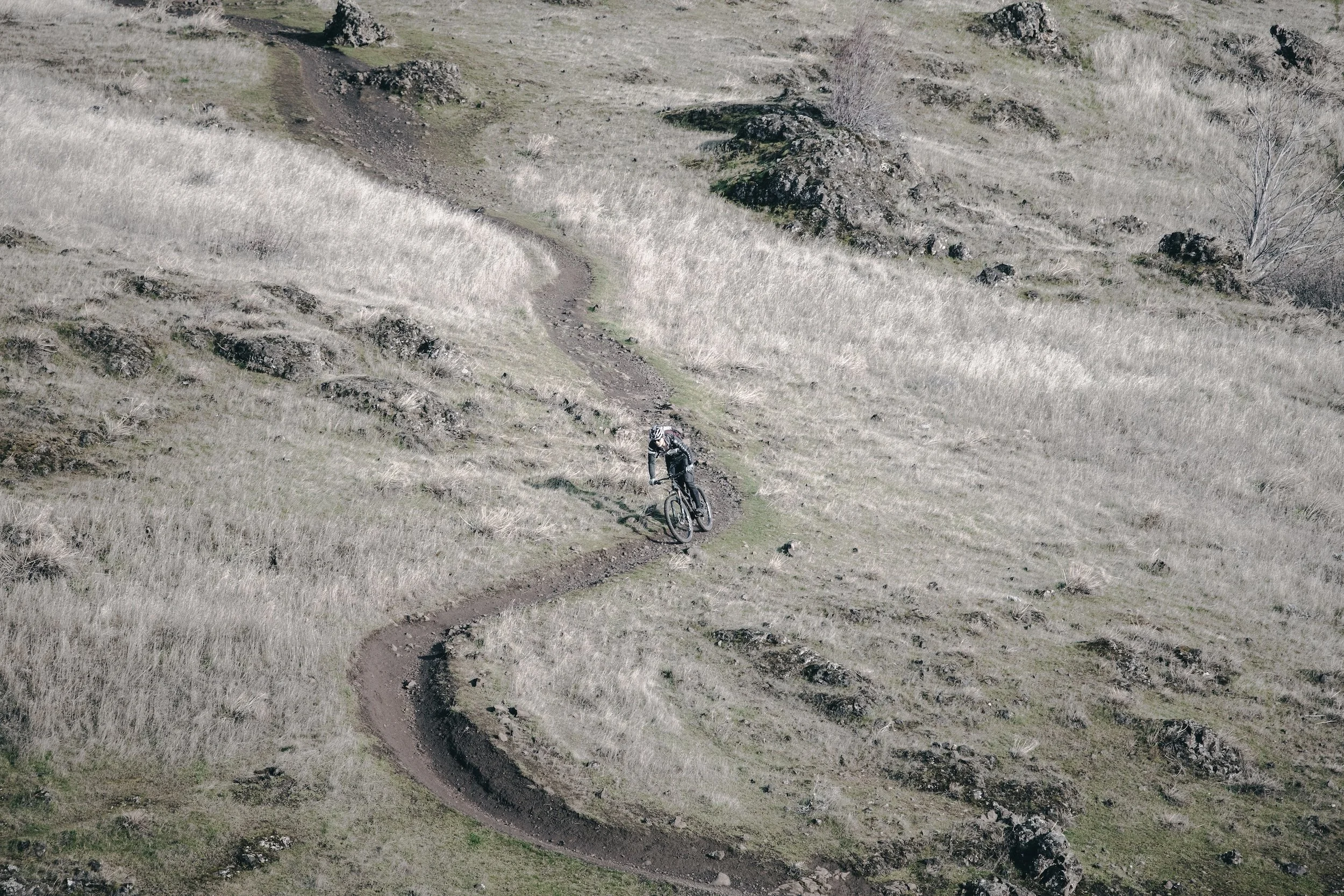
Trail work days and volunteer crews
Before and after trail photos
Short clips of digging, shaping, brushing, and maintenance
Seasonal changes and trail conditions
Small milestones, not just grand openings
The people behind the work
If you are already doing the work, the content is already there. Just pull out your iPhone and start documenting.
Step 3: Reels vs photos is the wrong question
Photos and reels both work. Carousels work. Social media algorithms are constantly changing. Experiment and see what works for your audience.
The format matters far less than the story you are telling. A clear photo with context will outperform a reel/short-form video with no meaning. A simple video that shows the process will outperform a polished edit that feels like an ad.
Focus on content that invites engagement. That means:
Explaining what is happening
Sharing why it matters
Using plain language, not marketing copy
Step 4: Start with consistency, not perfection
Consistency builds momentum and striving for perfection delays it. Meaning, just start ...
For most trail organizations, a realistic posting cadence is one to three times per week. That is enough to stay visible without overwhelming your team.
Post consistently for a few months. Watch what resonates. Adjust slowly.
Your strategy should evolve based on what your audience responds to, not what social media trends say you should do.
Step 5: Use the jab, jab, hook approach to trail town storytelling
If every post is asking for something, people tune out.
A helpful framework comes from Jab, Jab, Jab, Right Hook:
Jab: show the work and the people
Jab: educate and provide context
Jab: celebrate progress
Hook: occasionally ask for support
For trail organizations, most of your content should be jabs. Process, people, history, and effort. The hook might be asking for volunteers, donations, or community support, but it should feel earned.

What Has Worked for Other Emerging Trail Towns
One example worth studying is Grants Pass, Oregon. Through intentional storytelling and collaboration, including professional support around messaging, the community has been working to raise awareness of its Dollar Mountain trail system.
What stands out is not flashy branding. It is consistency and clarity. The message is simple. Trails exist. They are being invested in. They matter to the community.
This mirrors patterns we have seen in other places highlighted in Trail Builder Magazine, including in our article The Anatomy of a Trail Town. Momentum builds when communities focus on showing the work instead of selling the outcome.

Using Light Data to Convince Leadership That Trail Marketing Matters
You do not need a full economic impact study to start the conversation.
Social media provides early indicators that leaders understand:
Engagement from people outside your immediate area
Shares from neighboring communities
Comments from visitors saying they did not know your trails existed
Steady follower growth over time
These numbers are not merely vanity metrics. They are proof of awareness. Awareness leads to interest. Interest leads to support.
For many trail advocates, this visibility becomes the bridge between grassroots effort and institutional backing.
Common Mistakes Emerging Trail Towns Should Avoid
Only posting when something big happens
Making every post promotional
Waiting for permission instead of momentum
Chasing trends instead of telling your own story
If your content feels rushed, sales-driven, or inconsistent, it will not build trust.
Final Thought: Document First, Market Later
You do not have to declare yourself a trail town to start telling your story.
Documenting trail work, people, and progress is not marketing hype. It is how emerging trail towns quietly put themselves on the map without losing control of the narrative.
Rethink how you show up online.
If you do that well, the map tends to take care of itself.

Sean Benesh
Sean is the Founder and Editor-in-Chief of Trail Builder Mag, a digital media instructor, and the Communications Director for the Northwest Trail Alliance in Portland, Oregon.