
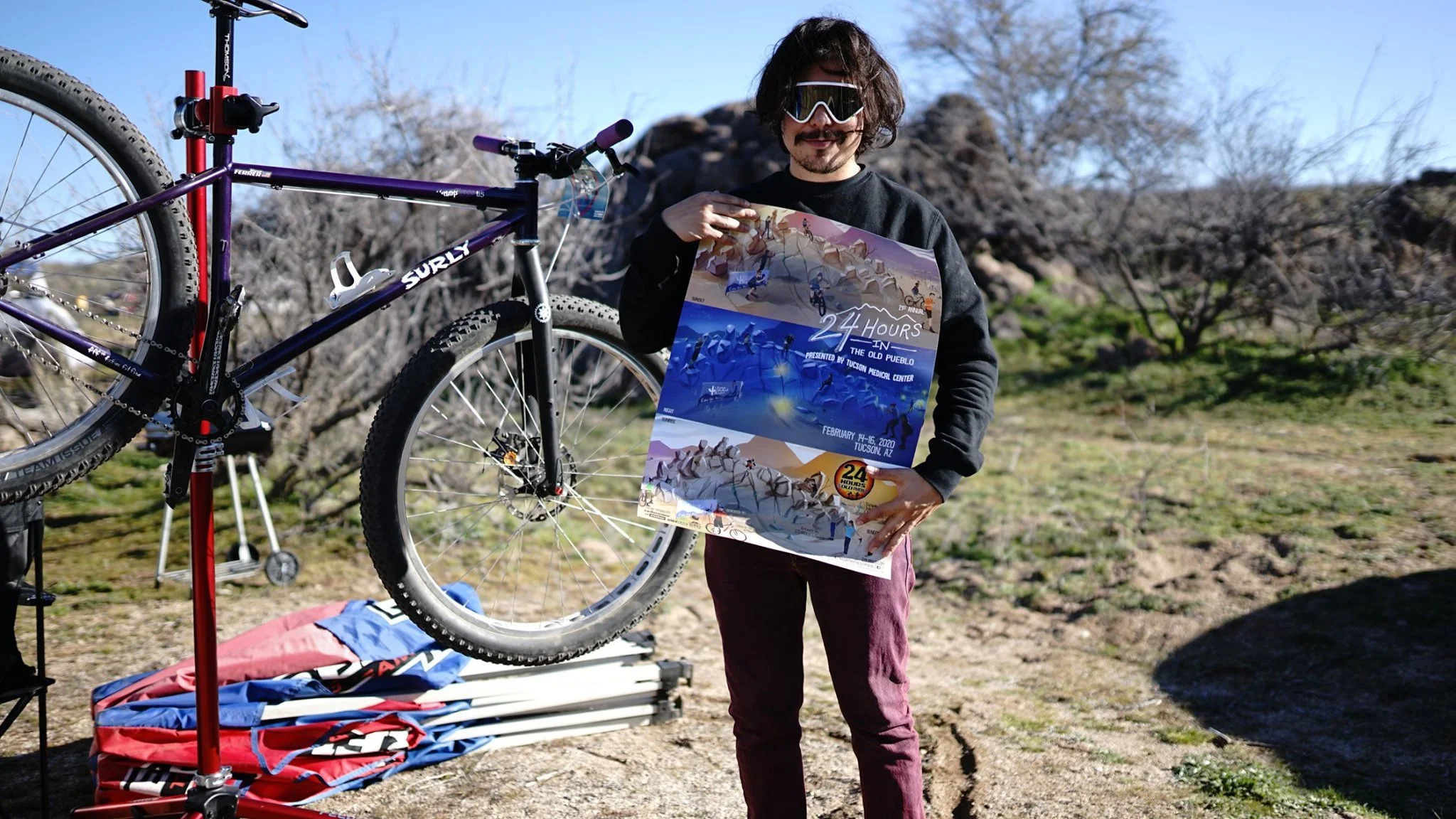
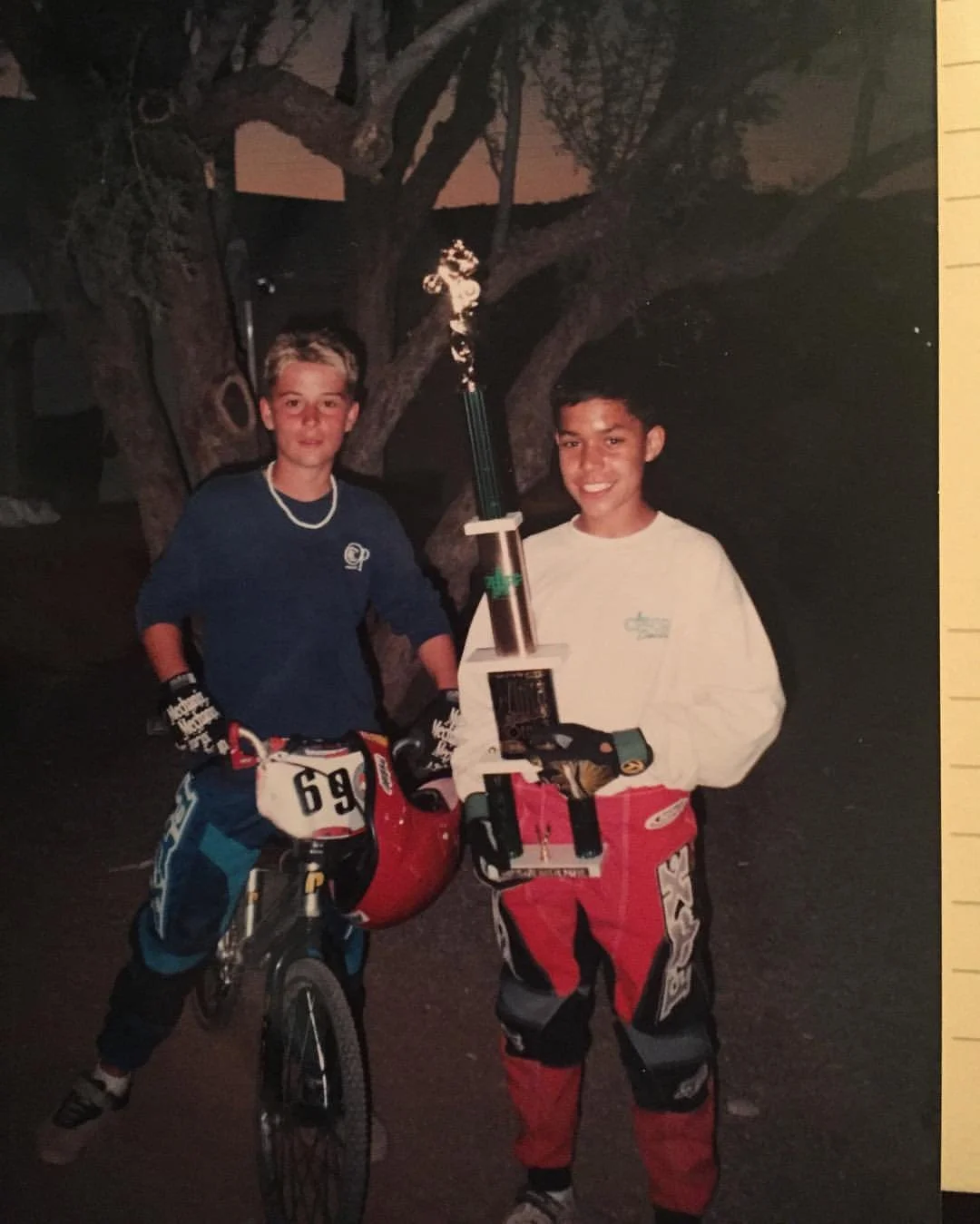
From sketch to summit, I love designing trail and bike park signage with a fun backdrop. Growing up as a BMX racer at a very early age, I always loved drawing trails, specifically when I wasn’t supposed to be.
Being on the bike, like for many of us, was an escape for me. If I couldn’t be on my bike, I was drawing bikes and trails in class. If my bike was down, my friends and I would build miniature tracks for finger bikes and skateboards.
Entering my early teens, sketching and building backyard trails was my top skill. The neighborhood kids and I would be up until 1 am building trails in my parents’ backyard. One of my best BMX memories was being able to help build the next year's track. I distinctly remember designing it one year and the joy it brought me to think people would be racing on it. Sadly, the track operator didn’t use it at all, but that was the first time I combined art and cycling.
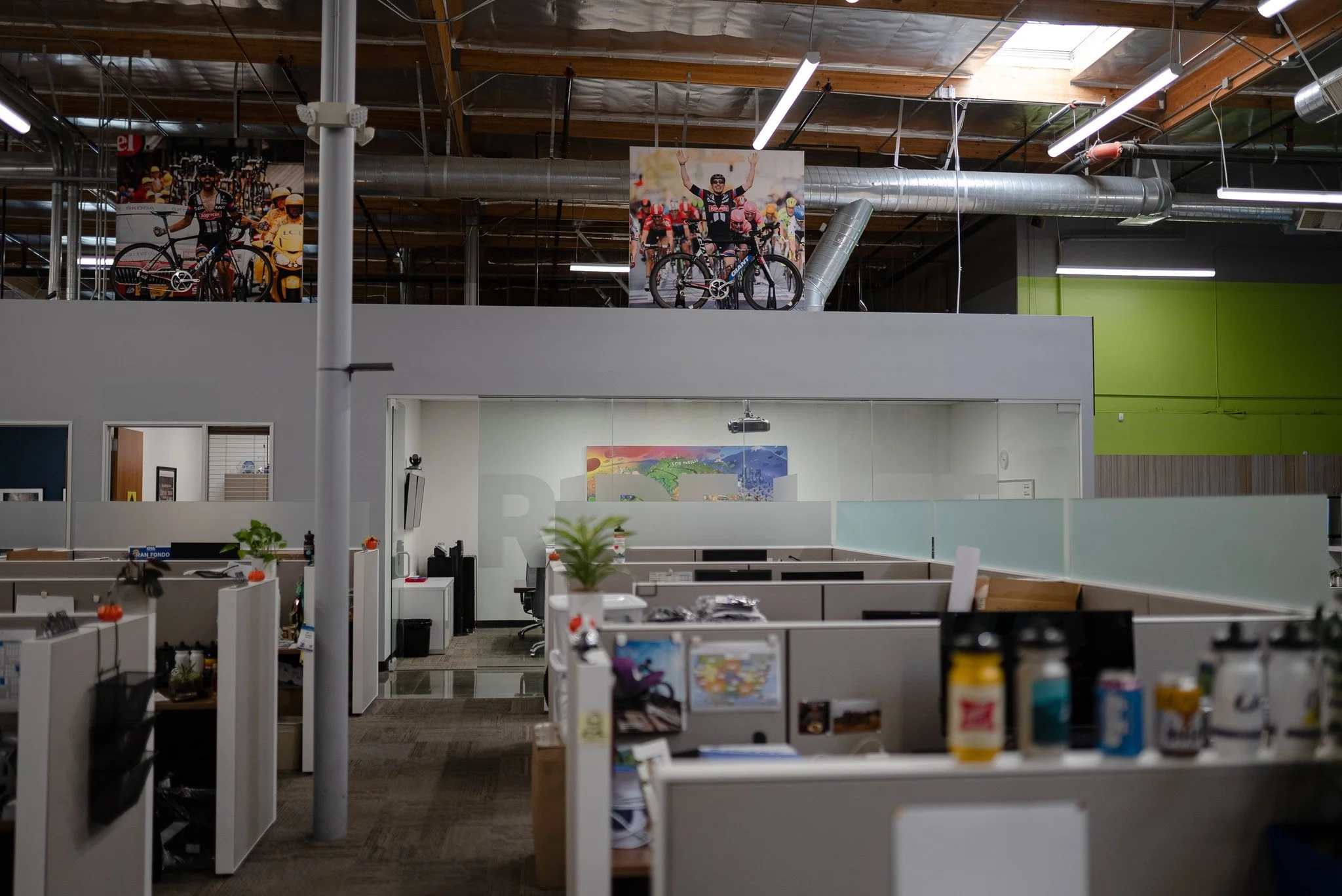
Today I work in the industry as a freelance artist; here is a special piece I did at the Giant/LIV USA HQ in California. As you can see, it’s a map of sorts.
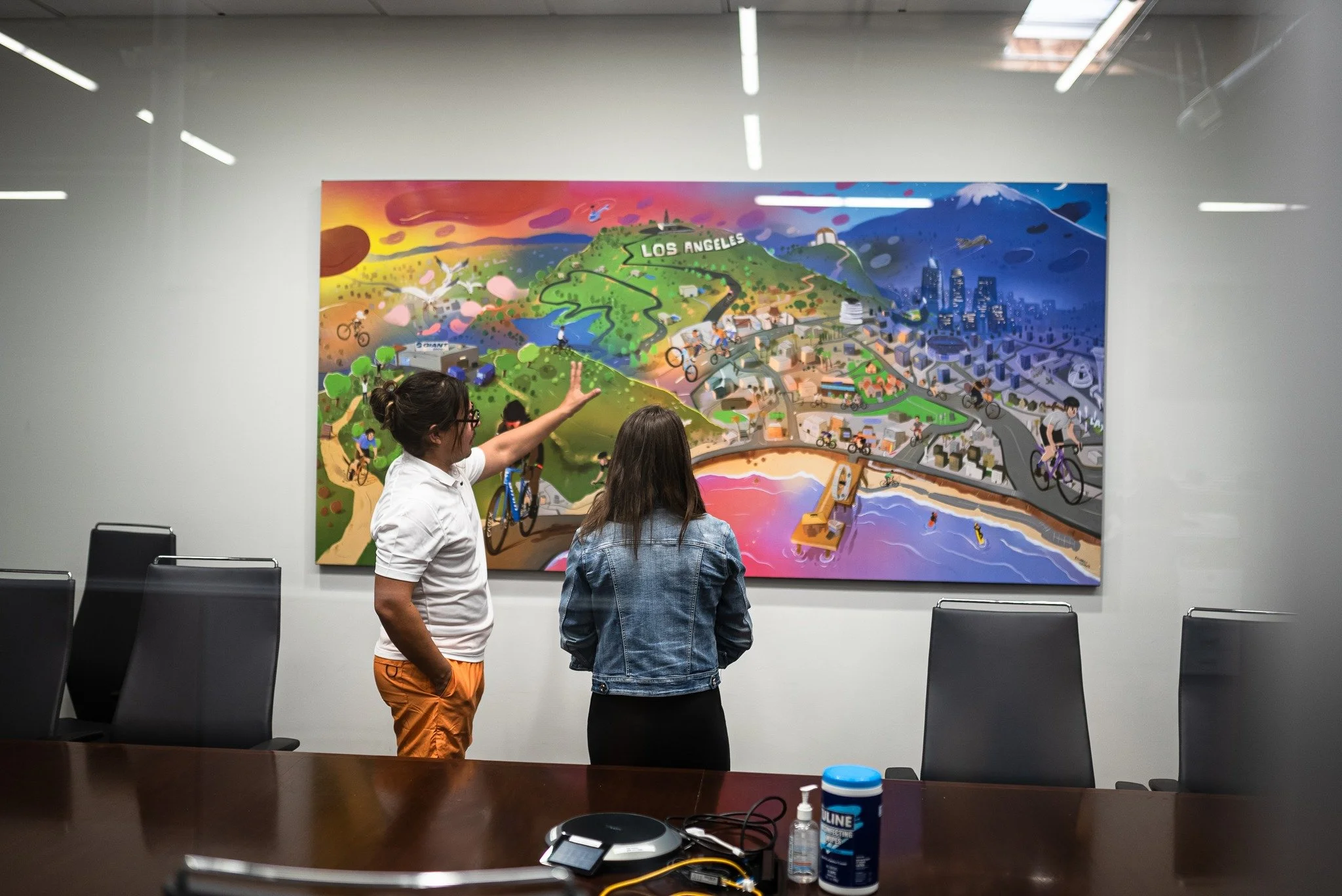
Present day, I am still drawing and on my bike more than ever. Combining these two passions and creating signage for popular locations has been a dream come true. When you arrive at the park, you’re not just reading a map; you’re being taken back to a time when the only thing that mattered was being on your bike.
When creating trail signage, I aim for one thing: something that offers visual instruction, but also gives you an idea of how big the area is. This includes the jumps or any other features. I want the viewer to look at it and say oh ok I have an idea of what that will look like when I roll up to it. This isn’t usually achievable when using just a regular map with lines for trails. After all that, it has to be FUN. I want the viewer to look at the art and get even more stoked than they already are.
I always get social media messages or emails about my signage from people saying how much they loved it. I think it just makes the experience that much more fun because the layout just gives off that vibe; it’s not boring. We go to trails or bike parks to have fun, so the first thing you see should be that fun trail map signage, in my opinion.
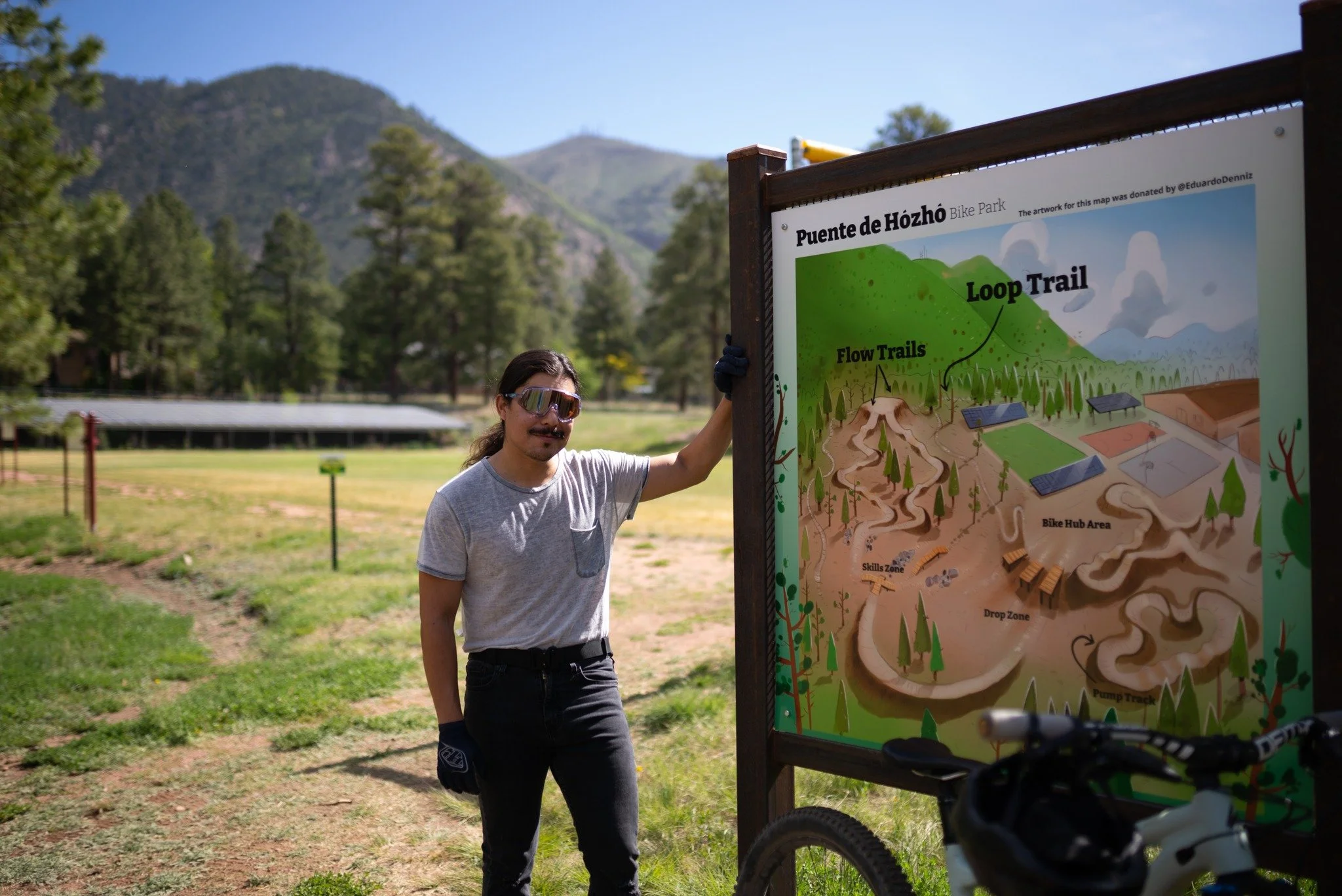
Typically, when I am hired, all the designers or city engineers have is a map with lines for where the trails will go. It’s then up to me to meet with them and see what goes where. There have been times when it’s so late in the game that they simply tell me what feature will be where, and I have to sort of guesstimate. Other times, years after the project is complete, they will ask me to make changes to reflect the physical park’s changes.
I will then go out and use my drone to take photos of the surrounding area. I always try to make my maps look as if you were hovering above the park or trail. When I take the drone photos, there is nothing there but tractors, so it’s extremely difficult to then place the park onto that parcel of land. It’s a bit different when the park or trail already exists; that’s easier.
Here was an example of a bike park in Tucson, AZ that had no engineering plans. Early on in the planning process, I was called out to design a park, just me. So I took photos of the area and did my own thing. This was the only time this happened, and 4 years later it’s still up in the air whether it will even happen.
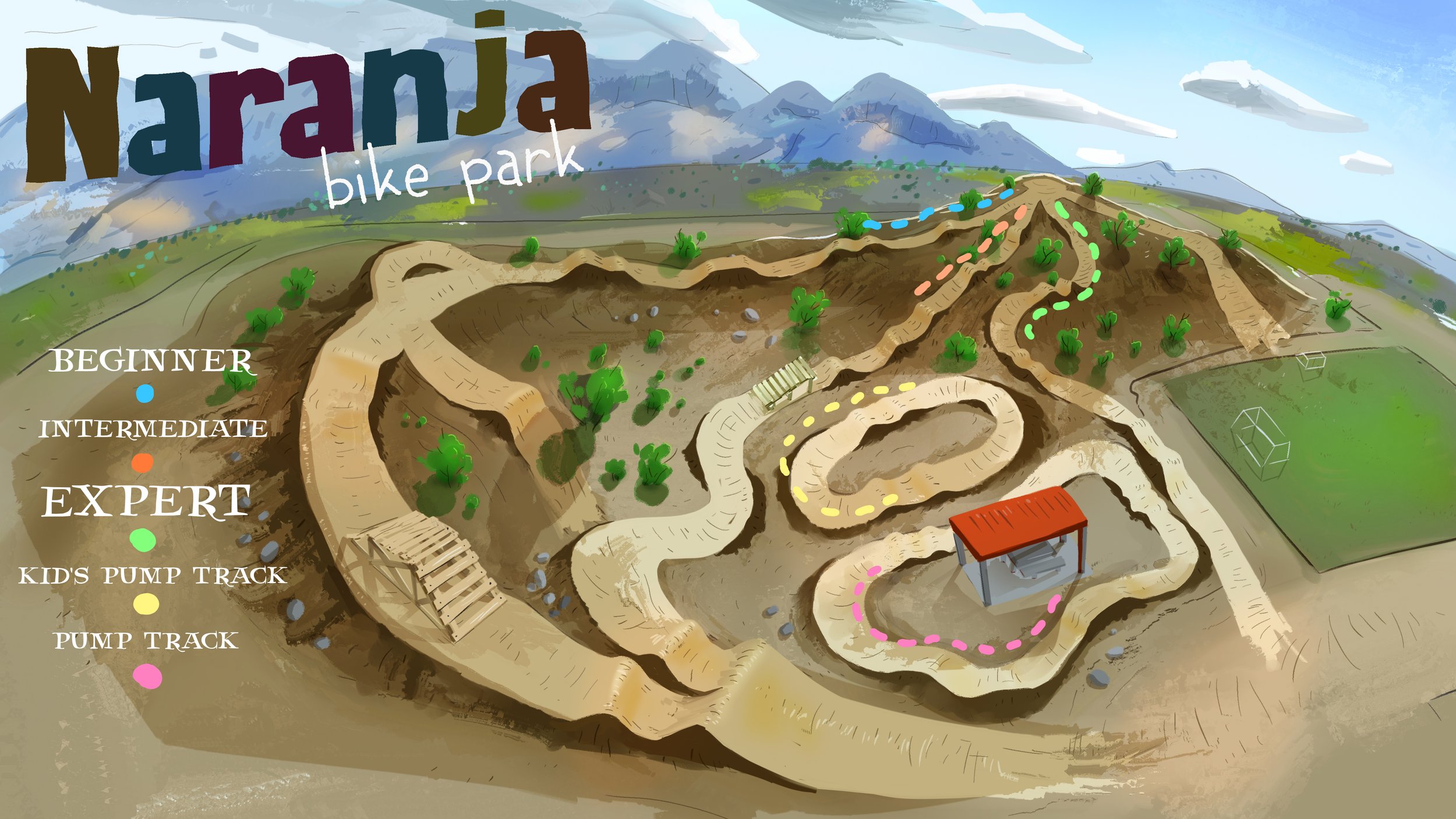
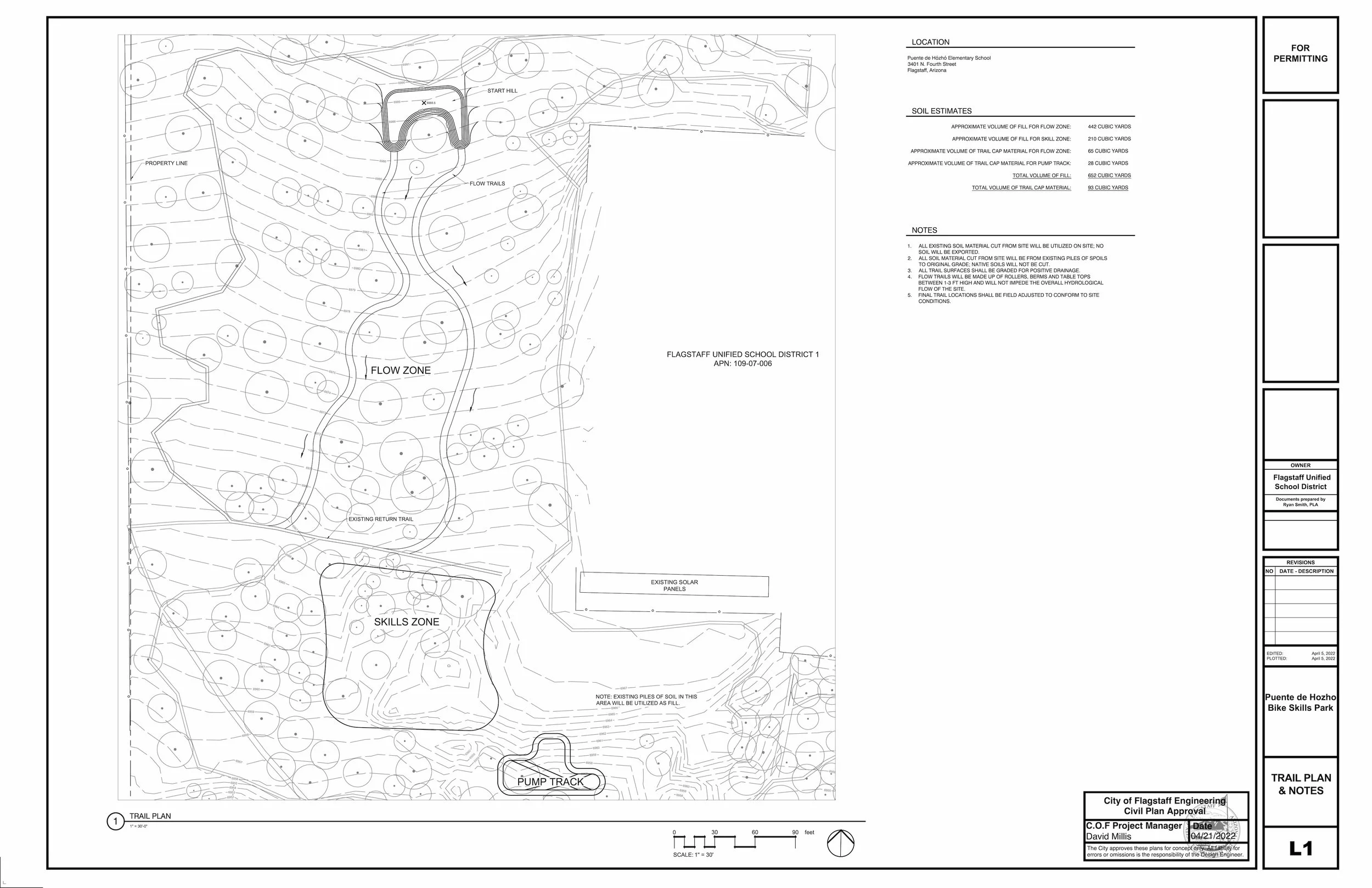
Below is an example of a park that just had engineering plans. The land itself was torn up, with tractors scattered across, and I had a short amount of time to complete the map so it could be printed on metal for the park’s opening. This was difficult because all I had was the engineer’s plans. As you can see, there are no indicators for what types of jumps will be where. So I usually walk the area with the team, and they explain, and I do sketches. Sometimes the sketches I do inspire the construction team or in most cases, what happens is I make a 2nd trip to the park and have to redraw what they build in the following weeks.
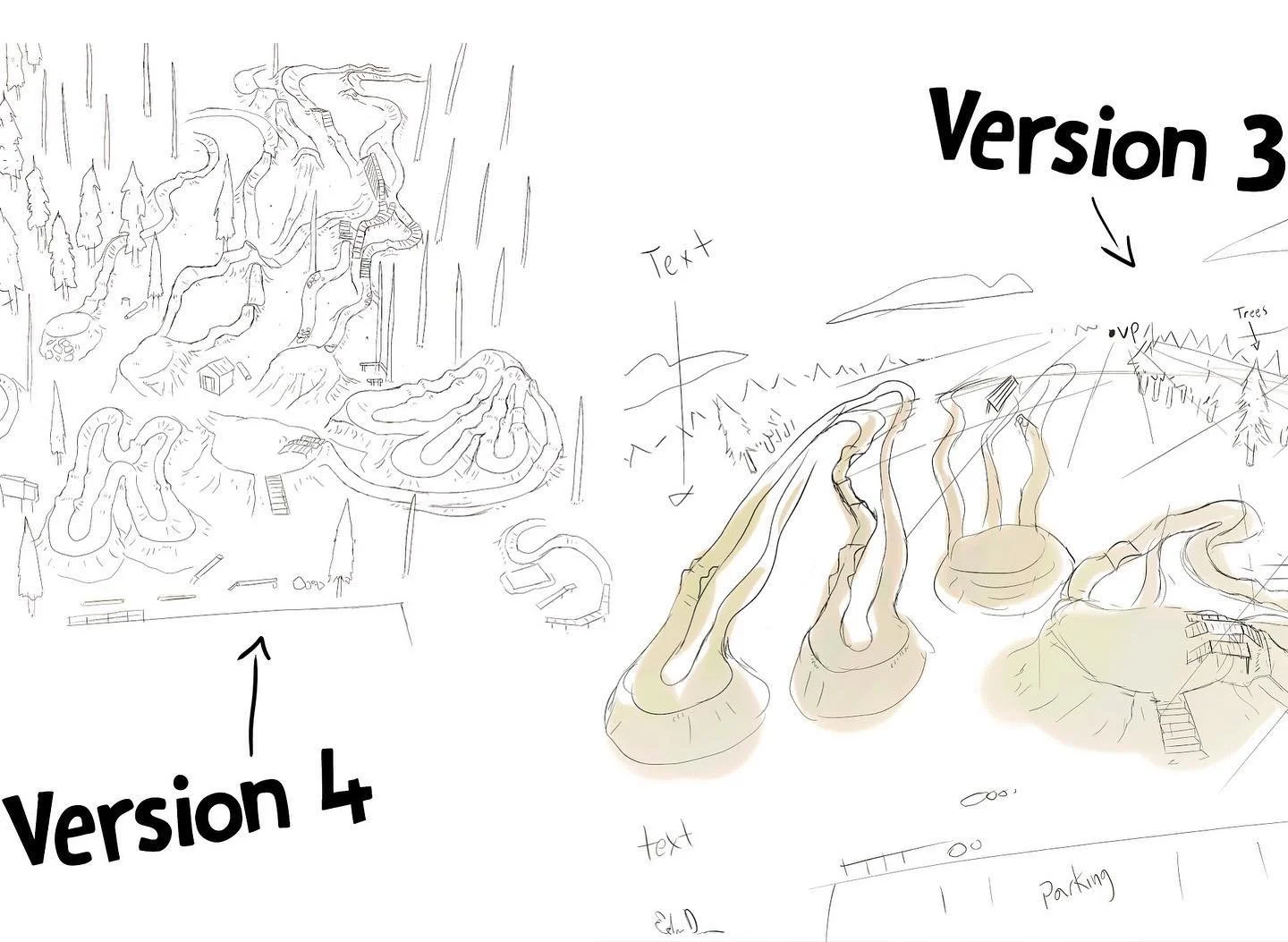
The next stage is creating concepts from the drone footage. You can see here these are versions 4 & 3 of 6 designs I showed the City of Flagstaff for their Fort Tuthill bike park. They liked version 4 the most, so I went ahead and started coloring that version. Here is a progress shot of a bike park I started coloring; I simply try to capture the park with regular weather and lighting. This was for a bike attached to an Elementary school, which was the first of its kind.
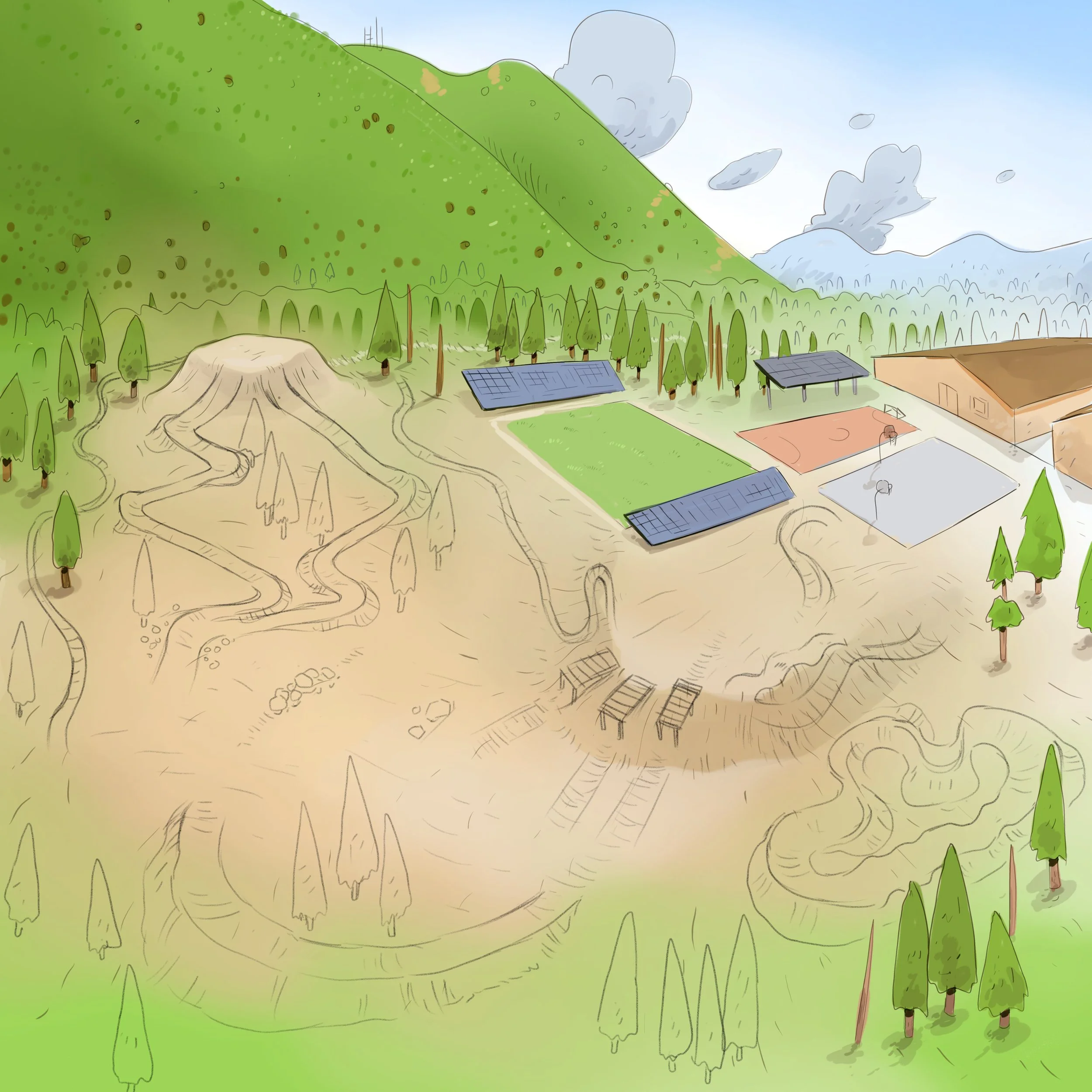
For me, being able to create artwork that has anything to do with cycling is so rad. But being able to help or influence any type of trail or park is primo. To be that kid in class drawing jumps on my notes to having cities asking me to illustrate their parks is amazing. Special thanks to Lars Romig for helping me connect with the City of Sedona to do their parks, and to Mike Raney, owner of Thunder Mountain Bikes in Sedona, for letting me create everything for the Sedona MTB Festival every year. Without them, this journey would not be what it is.
As a children’s book Author/Illustrator it’s always an honor to illustrate any signage that the public will view, especially the younger riders. Going to the trails or park should be an epic experience every time, so sometimes lines for trails just won’t do. I’m looking forward to illustrating even more bike parks and trails in the future.
————————————
This article originally appeared in Volume 2, Issue 2 of Trail Builder Magazine.
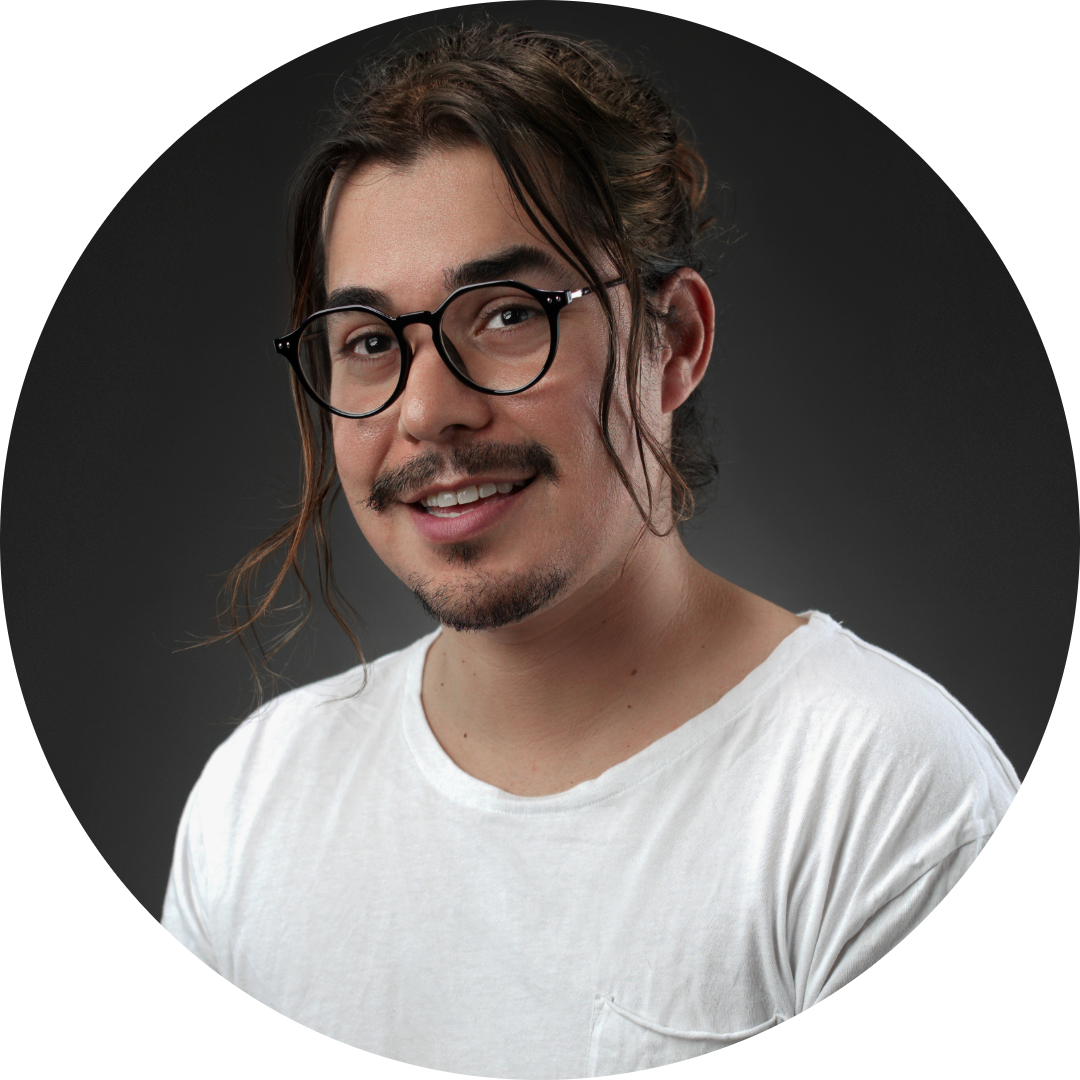
Edward Dennis
Edward is a Mexican-American visual storyteller who has worked with brands like Toyota, Disney, Estrella Jalisco, and Giant/LIV bicycles. His work has appeared in publications such as Bicycling Magazine and Outside magazine, Mountain Flyer, Backcountry Magazine, ImagineFX, Nintendo Force, and Nintendo. Recognized in the Hispanic Star Rising Stars Volume 3, Edward has authored and illustrated the children’s book series “The Boy from Mexico,” available at major retailers. He’s also finishing animation on “Super Ubie Island 2” and co-authored a book on game animation.
A 2023 LatinX in Animation Spark Netflix Grant finalist, Edward aims to adapt his books into an animated series and is currently directing his debut short film. He has been featured on networks like ABC, NBC, CNN, and Telemundo for his work.
