A trail project often begins with a person.
Someone sees an opportunity for a new trail system. Or maybe they recognize that existing trails need more attention. Or they start asking why their community doesn’t have better trail access.
They begin talking to other people. A few riders get interested, and they chat about it over beers at a local brewery after a ride. Someone knows a land manager. Another person has experience with grants. A local bike shop wants to help.
Eventually, someone asks the bigger question: "Hey, should we start our own trail organization?"
Sometimes the answer is yes. Trail orgs can advocate for access, organize volunteers, build relationships with land managers, raise money, pursue grants, coordinate trail maintenance, and help move trail projects forward. But creating a new organization, particularly a nonprofit, shouldn’t automatically be the next step.
Maybe the better question might be: Does our community need another trail org, or does it need a better way to organize around trails?
For some of you reading this, I get the tension you're feeling. This all sounds like A LOT of work compared to grabbing your shovel and quietly slipping into the forest to carve out trails on your own. Stick with me for a moment.
Here are five conditions that I believe are worth considering before starting something new.
1. There Is a Trail Need That Existing Organizations Cannot Fill
Before deciding to start a trail organization, identify the problem you’re trying to solve.
Maybe your community has no organization advocating for trails. Possibly an established organization operates nearby but doesn’t cover your geographic area. Maybe its mission doesn’t align with the kind of trails you’re pursuing. Or it simply doesn’t have the capacity to take on another trail system or project.
Those can all be legitimate reasons to create something new.
But first, find out what already exists.
Talk with nearby trail organizations. Ask whether your project could become part of their work. Could you create a local committee or chapter? Could they provide administrative support? Could you collaborate while your local group provides the people and energy?
The first question shouldn’t be, "Can we start a trail org?" Ask instead, "Is there already an organization that can help us accomplish this?"
2. Your Trail Organization Has More Than One Trail Champion
Every successful trail project seems to have someone who refuses to let the idea die.
A trail champion.
IMBA describes trail champions as people who bring together vision, persistence, civic engagement, influence, and the ability to rally people around trail development.
That person can start a movement. But one passionate person doesn’t necessarily create a sustainable trail organization.
What happens if that person moves, changes jobs, gets burned out, or simply has less time available? If everything stops when one person steps away, you probably don’t have the foundation for an organization yet.
Look instead for a core group of committed people who can share responsibility for advocacy, stewardship, finances, fundraising, communications, volunteer coordination, and relationships with land managers.
You don’t need a large organization to begin. You do need enough people that the mission can outlive any one of them.
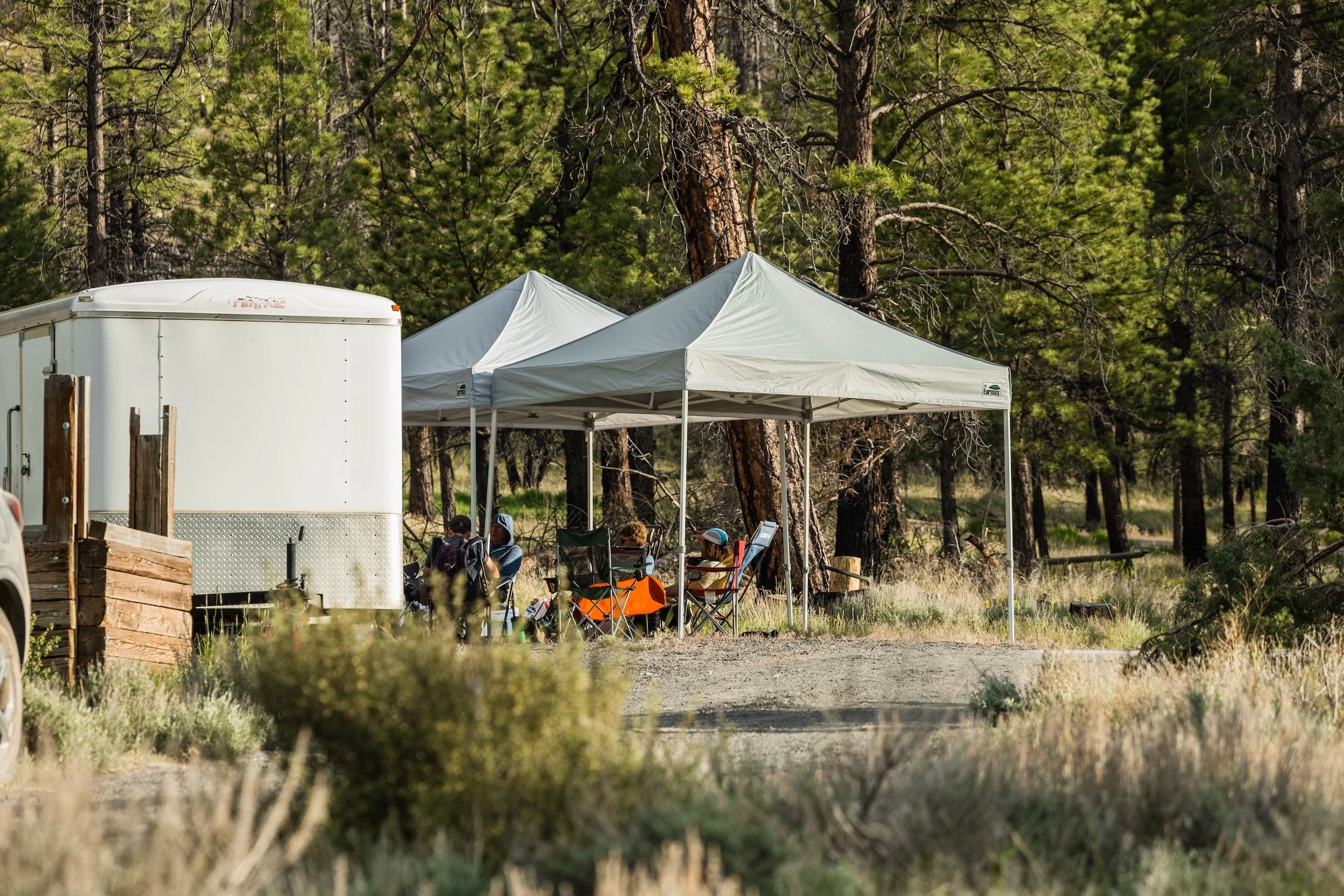
I get this feeling of overwhelm. As a volunteer board member of the all-volunteer-run Oregon Timber Trail Alliance, I squeeze in time to help when I can. It's tough.
3. Land Managers and the Community Support the Trail Organization
The people interested in starting an organization shouldn’t be the only people convinced it needs to exist. Trails almost always involve partnerships.
The land may belong to a city, county, state, or federal agency, private landowner, land trust, utility, school district, or another entity. Before creating an organization around developing or maintaining trails, find out whether those land managers actually want an organized trail partner.
Broader community support matters too.
Talk with local government, businesses, tourism organizations, other trail users, neighboring landowners, and community members. Attend planning meetings. Ask what people need and where an organized trail group could help.
You might discover widespread support for what you’re proposing. You might also discover that the idea needs more work. Both are valuable things to learn before creating an organization.

4. You’re Ready to Build a Trail Organization, Not Only Trails
This may be the toughest reality check.
Most people considering starting a trail organization are excited about trails. They want to design them. Build them. Maintain them. Advocate for them. Ride them.
Running a trail org? Well ...
Running an organization creates an entirely different category of work.
Starting a trail organization means accepting that some of your trail work will happen nowhere near a trail. There will befundraising, insurance, bookkeeping, volunteer management, grant reporting, communications, meetings, policies, partnerships, and organizational governance.
The question therefore isn’t simply whether you have enough people willing to build trails. Do you have people willing to build the organization that supports those trails?
If nobody wants to do that work, creating another nonprofit might not solve your problem. It might create a new one.
5. Your Trail Organization Has a Mission Beyond One Project
Now imagine everything works.
The trail gets approved. Funding comes through. Volunteers show up. Construction happens. Eventually, everyone gathers at the trailhead to celebrate what they accomplished.
Then what?
If your group succeeds in building the trail that brought everyone together, does the organization still have a reason to exist?
Maybe it does.
Trails require ongoing maintenance. Land-manager relationships continue. Volunteer programs need leadership. New trail opportunities emerge. Existing trails eventually require rehabilitation. Advocacy doesn’t stop when construction ends.
If your community will need years of stewardship, advocacy, maintenance, and trail development, a durable local organization may make tremendous sense.
But if the entire purpose of the group is accomplishing one project, creating a permanent organization may be unnecessary.
Should You Start a Trail Organization? A Quick Checklist
A new trail organization may make sense when:
There is a clearly defined trail, access, advocacy, or stewardship need.
Existing organizations cannot adequately address that need.
More than one person is committed to leading the effort.
Land managers are receptive to working with an organized partner.
There is broader community and volunteer support.
Your group is willing to handle organizational work beyond building trails.
There is a long-term mission beyond completing one project.
You’ve explored partnerships and alternatives before creating something new.
If you can’t check most of those boxes, it doesn’t necessarily mean the idea should stop. It may simply mean you’re not ready to create an organization yet.
Starting a Trail Organization Begins With Organizing
Trail orgs don’t start with a cool logo, a hopefully decent-looking website, a board of directors, or an application for nonprofit status. They begin when people recognize a need and decide to do something about it.
There needs to be a trail champion. Before there is an organization, there usually needs to be someone willing to articulate a vision, bring people together, develop relationships, and keep moving an idea forward.
If you’re looking around your community wondering why nobody is advocating for better trails, maintaining the trails you already have, or moving a promising project forward, it may indeed be time to start something.
But don’t begin with the paperwork.
Begin with the need. Find the people. Talk with land managers. Listen to the community. Explore partnerships. Build momentum.
Then ask whether creating a trail organization would allow that momentum to become something durable.
The real question may not be whether your community needs another trail organization. It may be whether the people who care about its trails are finally ready to organize

Sean is the Founder and Editor-in-Chief of Trail Builder Mag, a digital media instructor, and the Communications Director for the Northwest Trail Alliance in Portland, Oregon. Email: sean@trailbuildermag.com