
Trailtool Review: Two-Year Report on the French-Made Tool
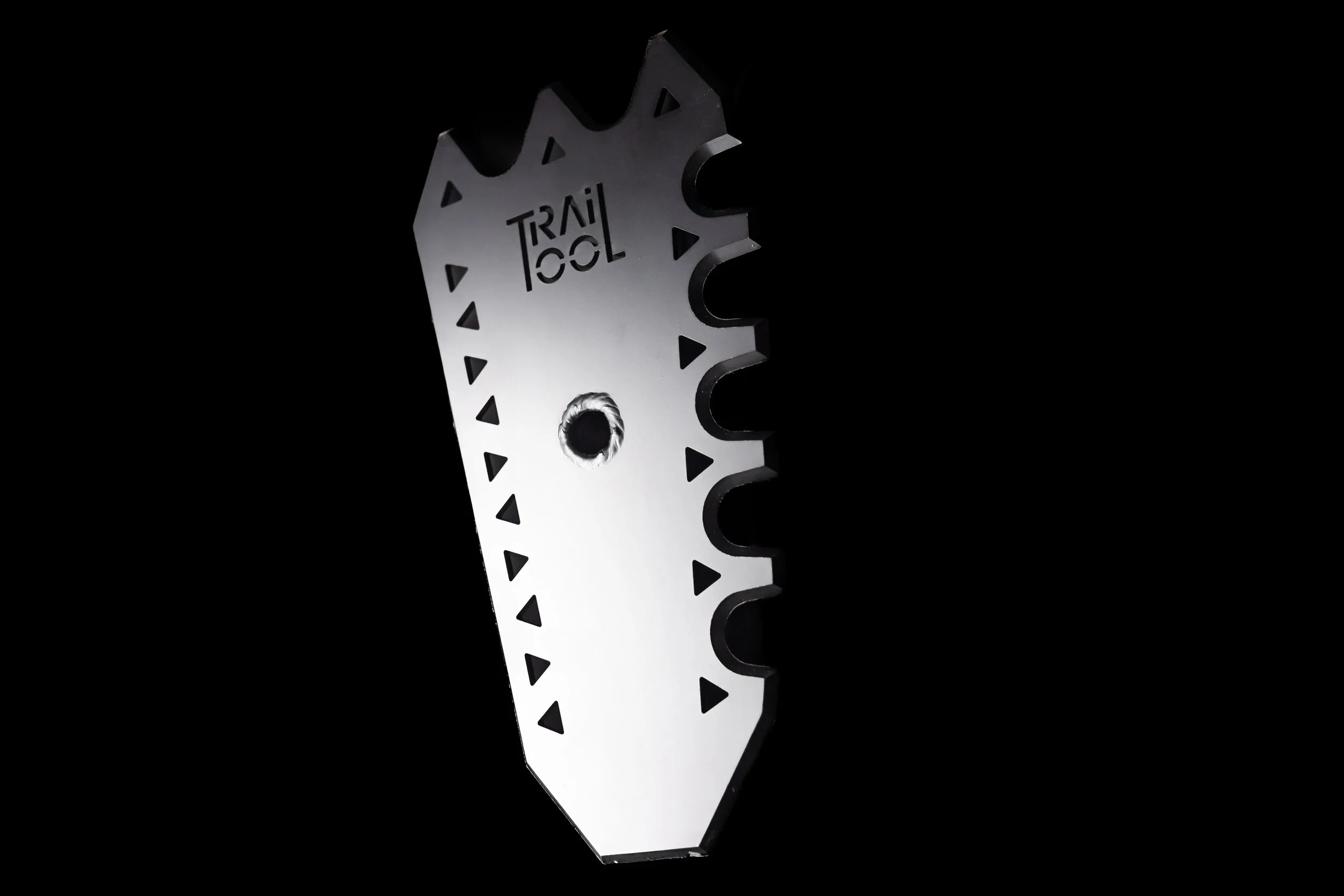
In the world of trail building, having the right tools directly translates to a better trail experience. But what if you could have a high-quality, multi-use tool that also fits in your backpack? Enter the Trailtool Pocket, a versatile French-made tool including a collapsible shaft with a variety of heads. I’ve been using the saw, shovel, and their custom McLeod-like attachments. Let’s dive in.
Testing the Trailtool Pocket Across Two Years of Professional Trail Building
First, a bit of background. I build trails professionally in Austria for 1-6 months a year and volunteer when I can here in Spain, my home base. Professionally, I’m lucky to have a selection of projects to choose from each year that fit my schedule, what I like to build, and what I want to learn.
After working on multi-use trails in Colorado for a few years, I shifted to Austrian flow trails and jump lines after moving to Europe in 2021. They require a lot of flat shovel time.
In the cooler and rainier winter months, I try to get out on my local lap from the door of my apartment in Barcelona to the closest north-facing slope. I try to keep up with the basic maintenance of the multi-use, 80m/250ft vertical drop descent - clearing drains, trimming vegetation, filling in rain ruts, etc.
It’s fair to say I have used the Trailtool in a variety of conditions since I bought it two years ago.

Trailtool Pocket Design, Materials, and Build Quality
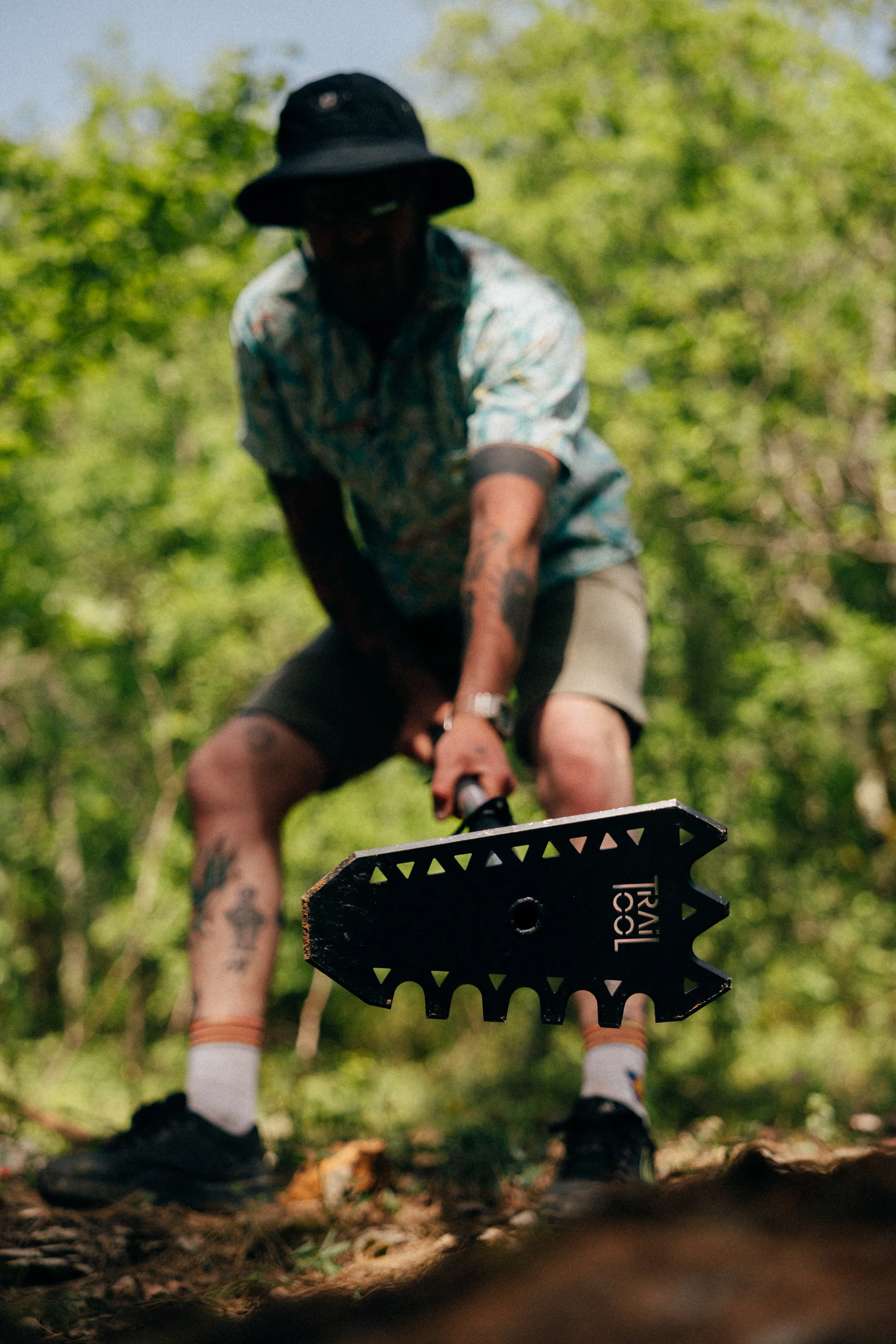
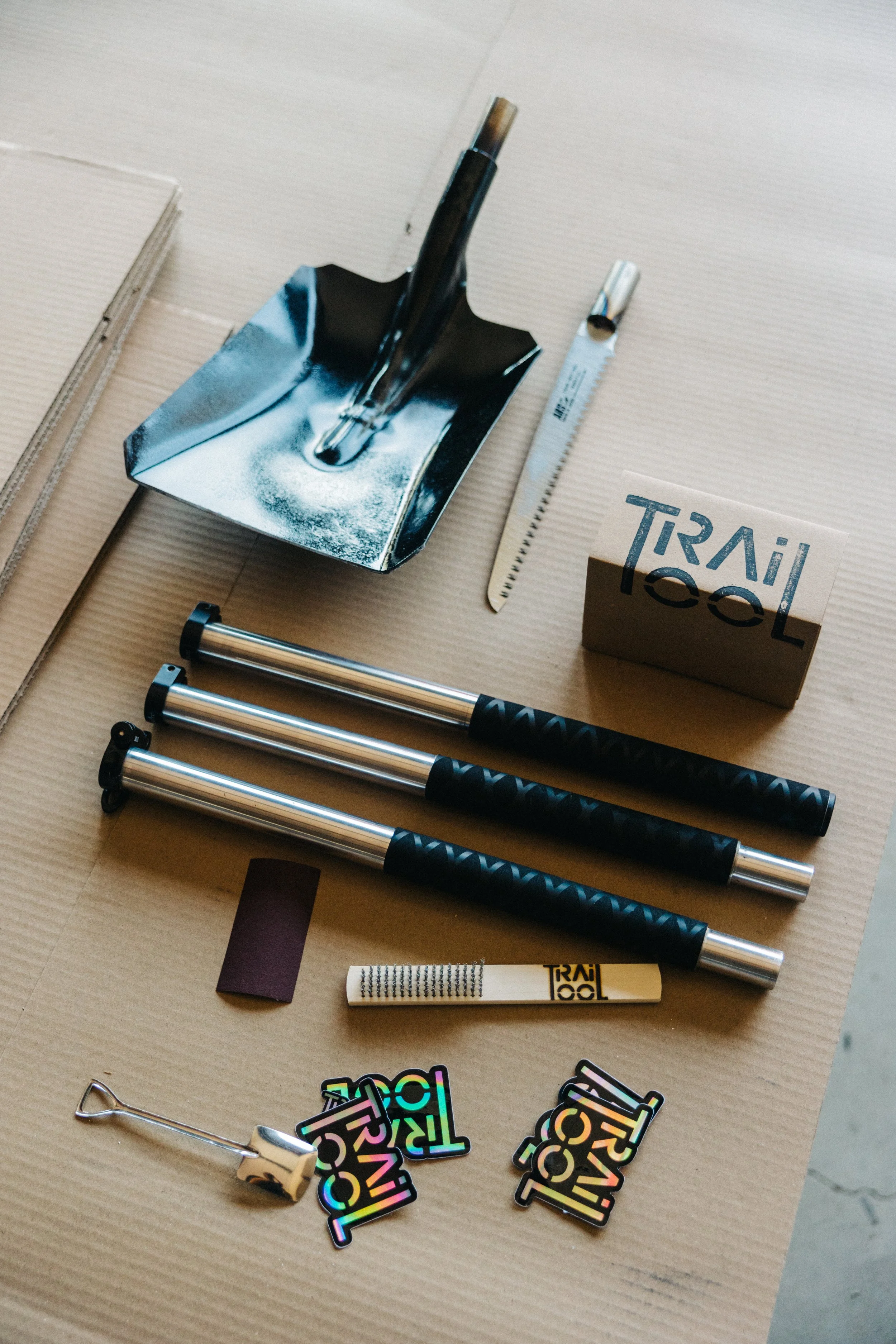
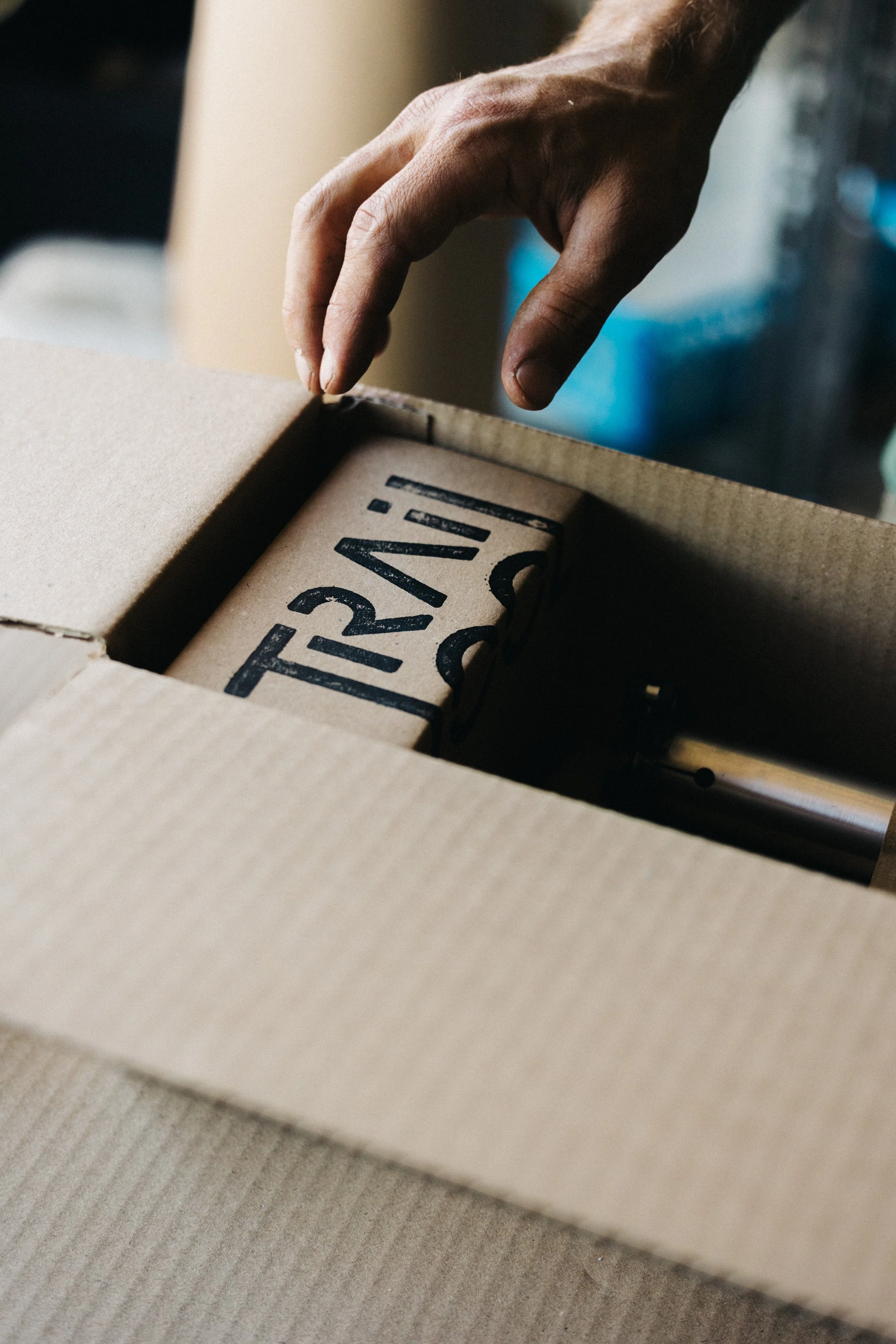
Unpacking the Trailtool, it was clear that it wasn’t from Harbor Freight or AliExpress. From the welds to the sharpened edges, the quality is evident. Plus, a metal brush is included for quick cleaning. I went with the wooden and leather protector sleeve for the custom McLeod-like head, mainly to protect my pack and contents.
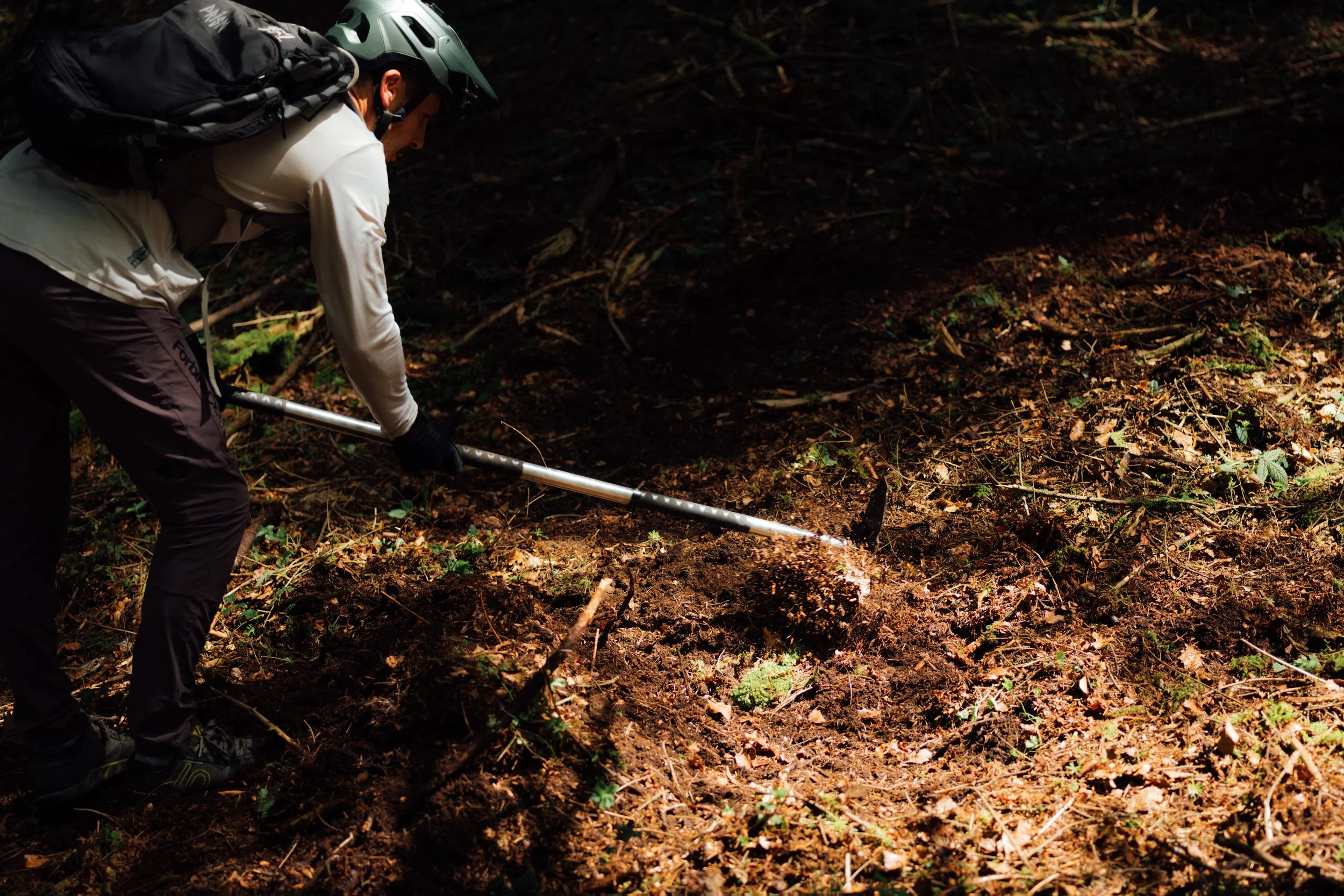
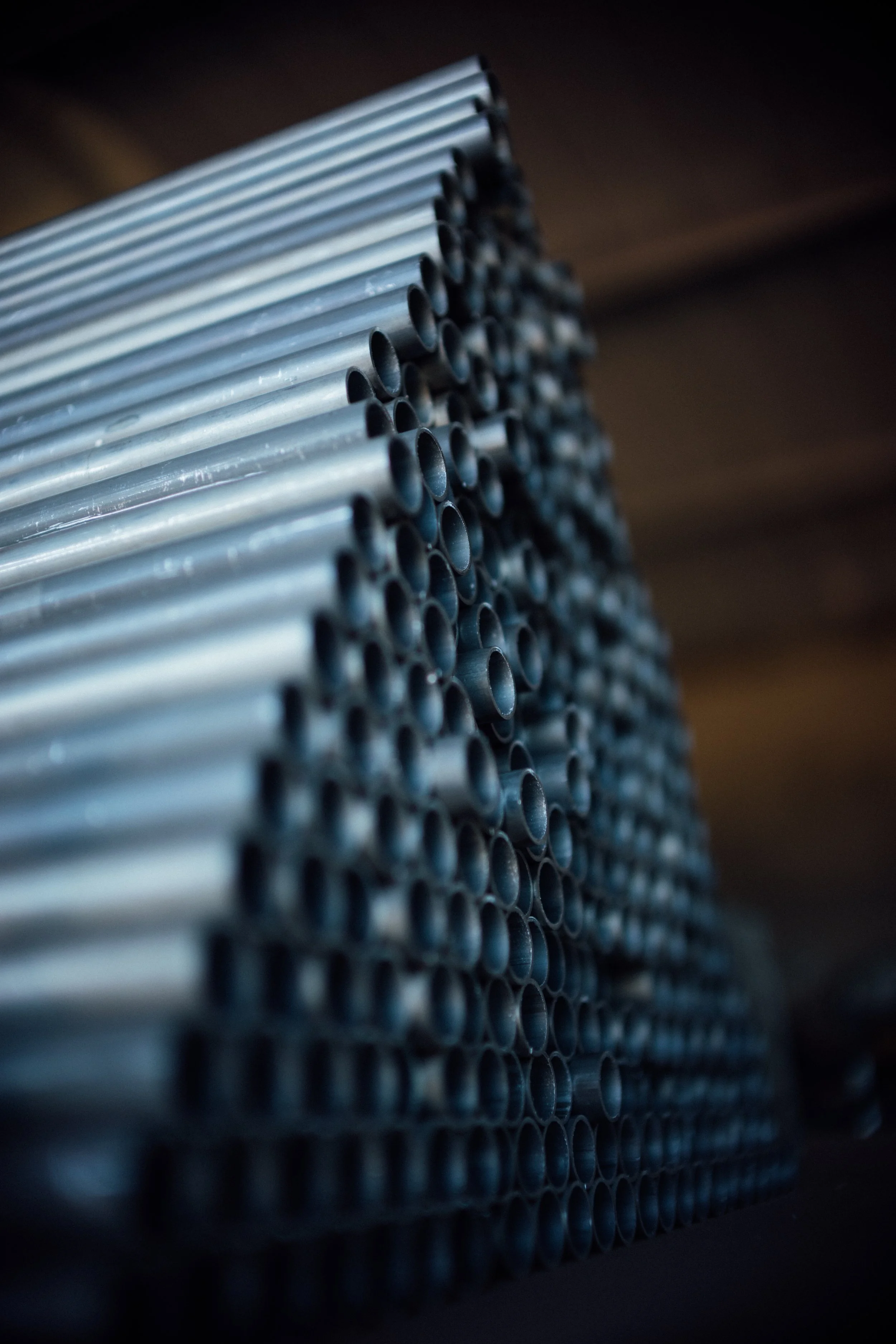
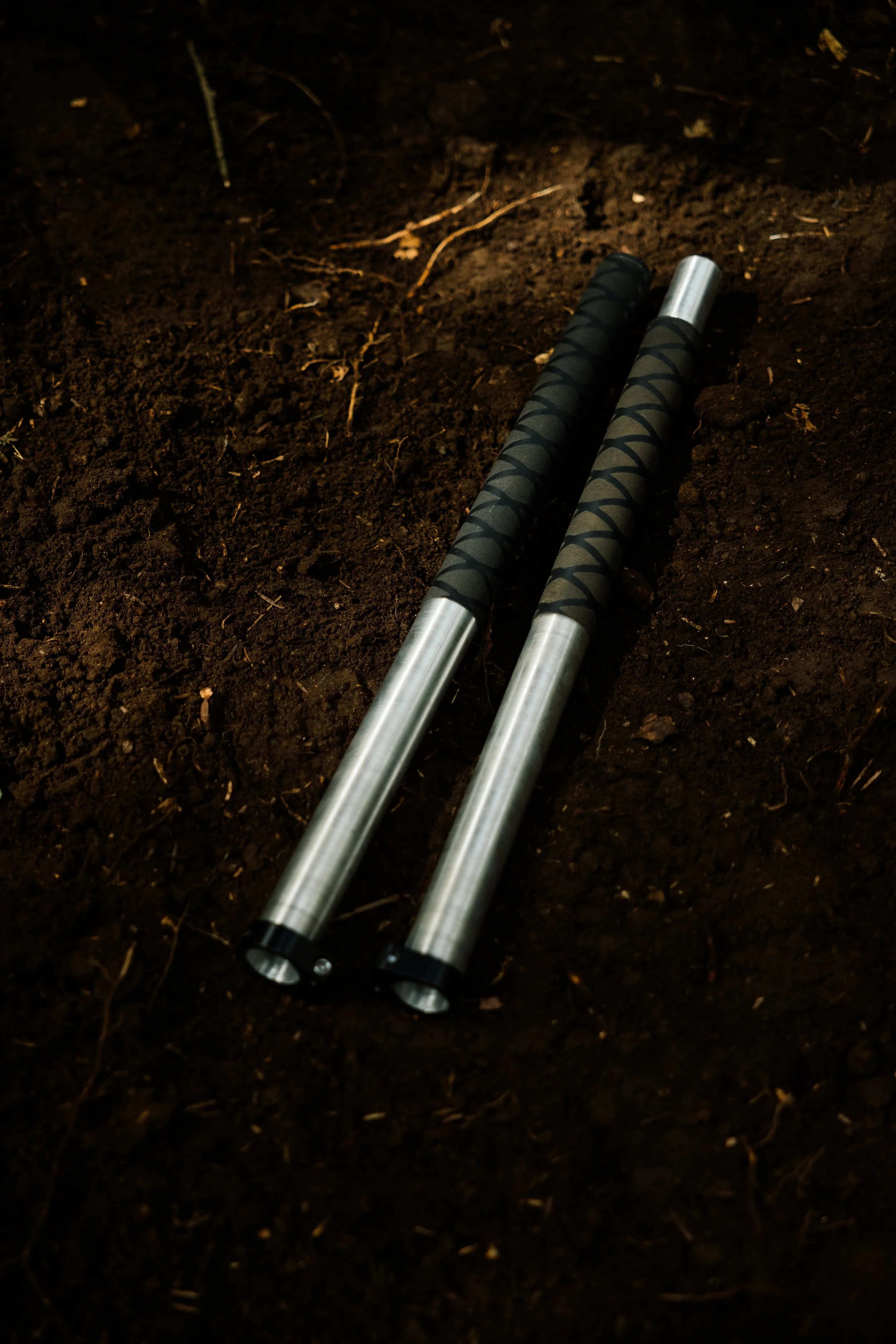
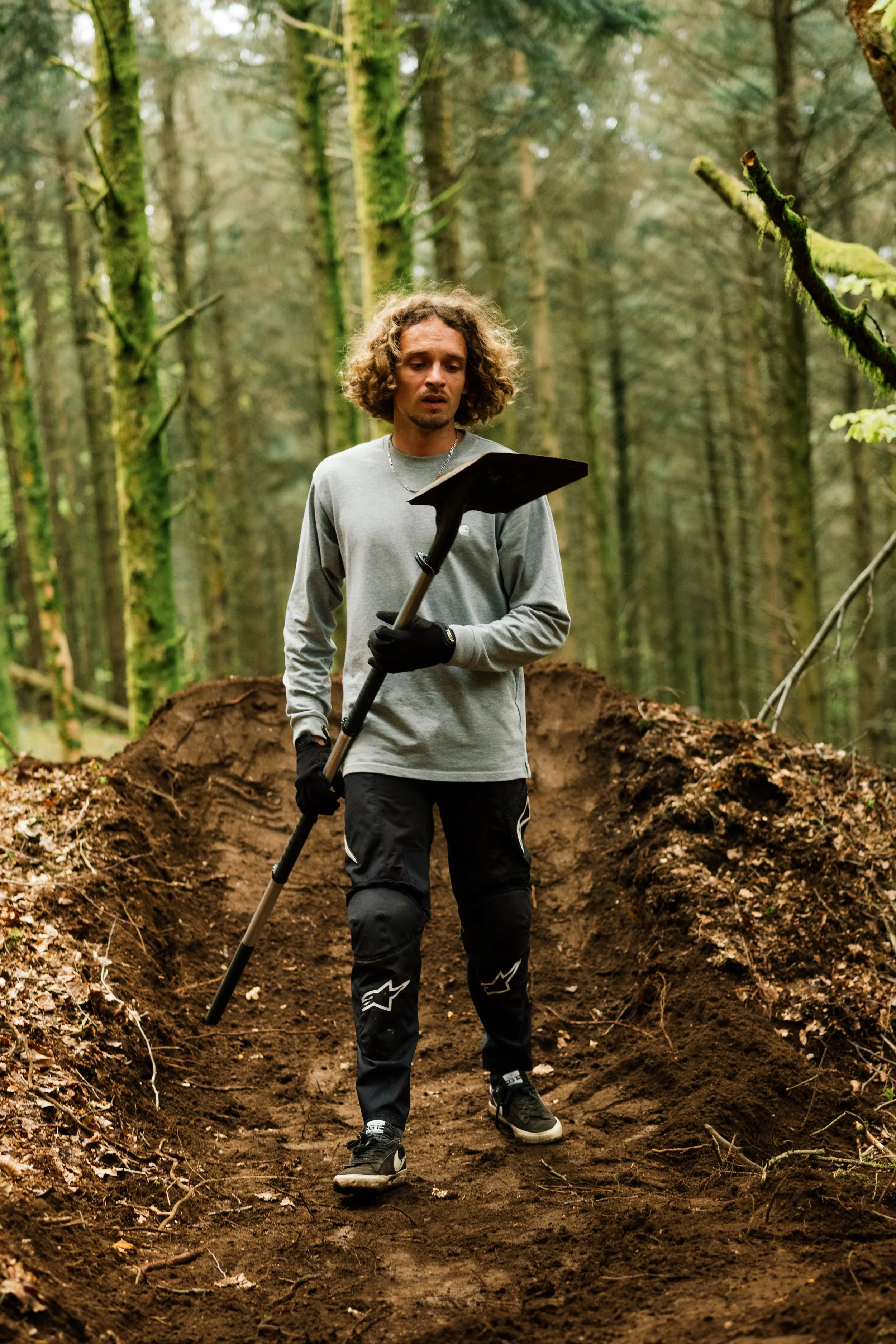
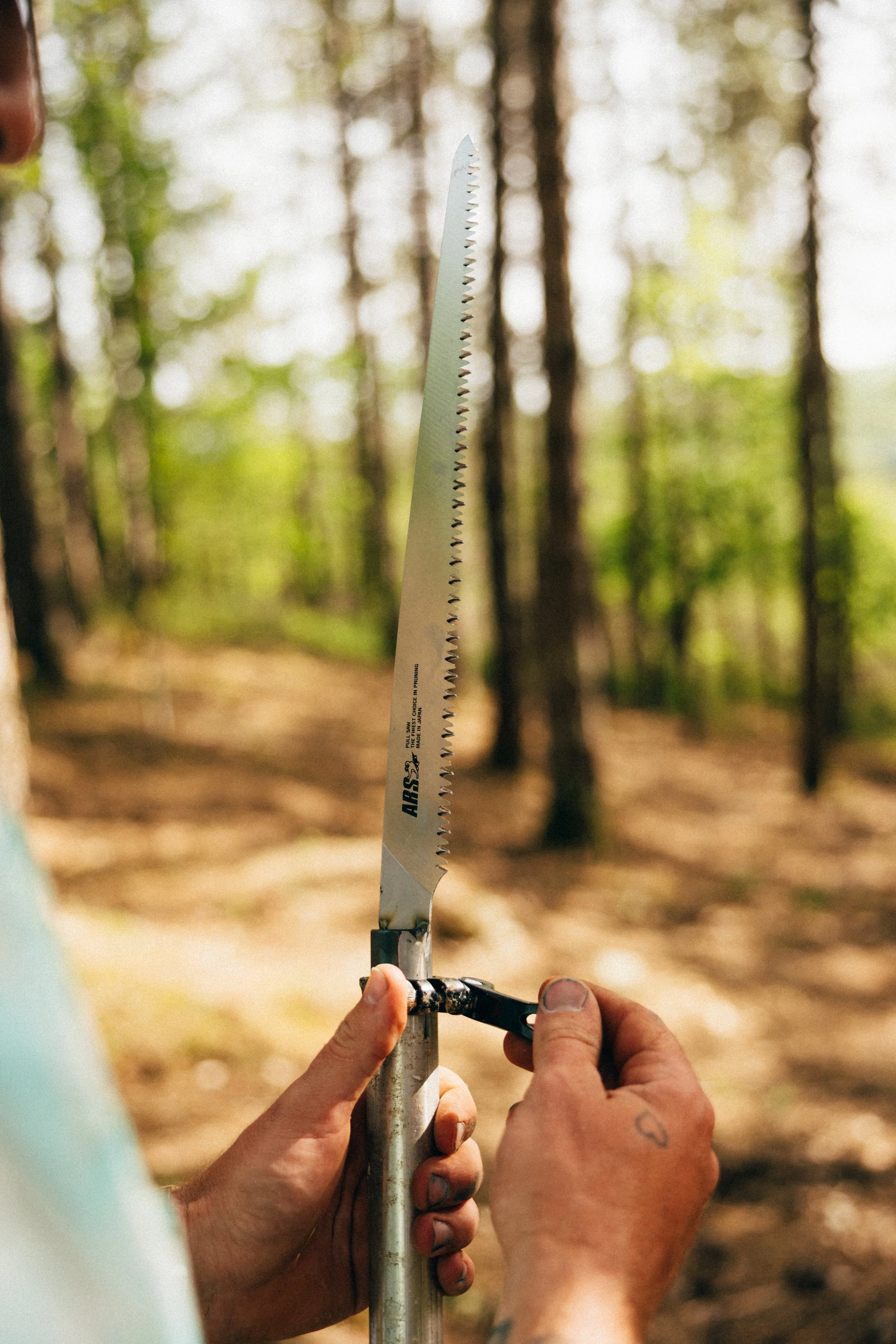
The metal shaft is composed of three sections that attach via a seat-clamp-like collar and a 4mm Allen key. The end closest to the head uses a quick release, identical to that of a seat collar. This ensures quick swap-outs of the heads. The Trailtool shaft feels a bit lighter and less beefy than that of the packable American-made Trailboss, but no durability issues have been noted so far. The newest version ups user-friendliness with quick-release attachments instead of needing a 4mm Allen key.
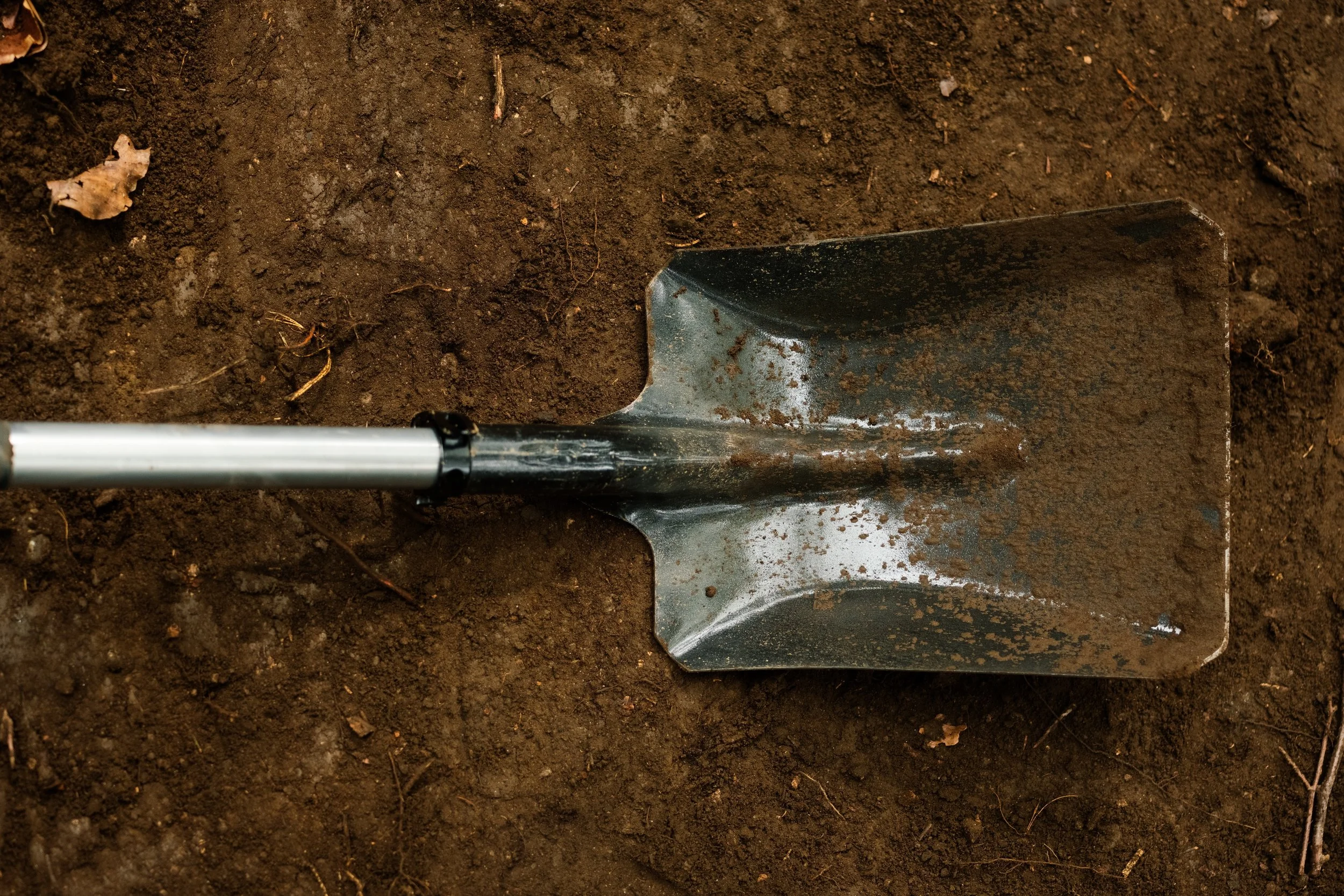
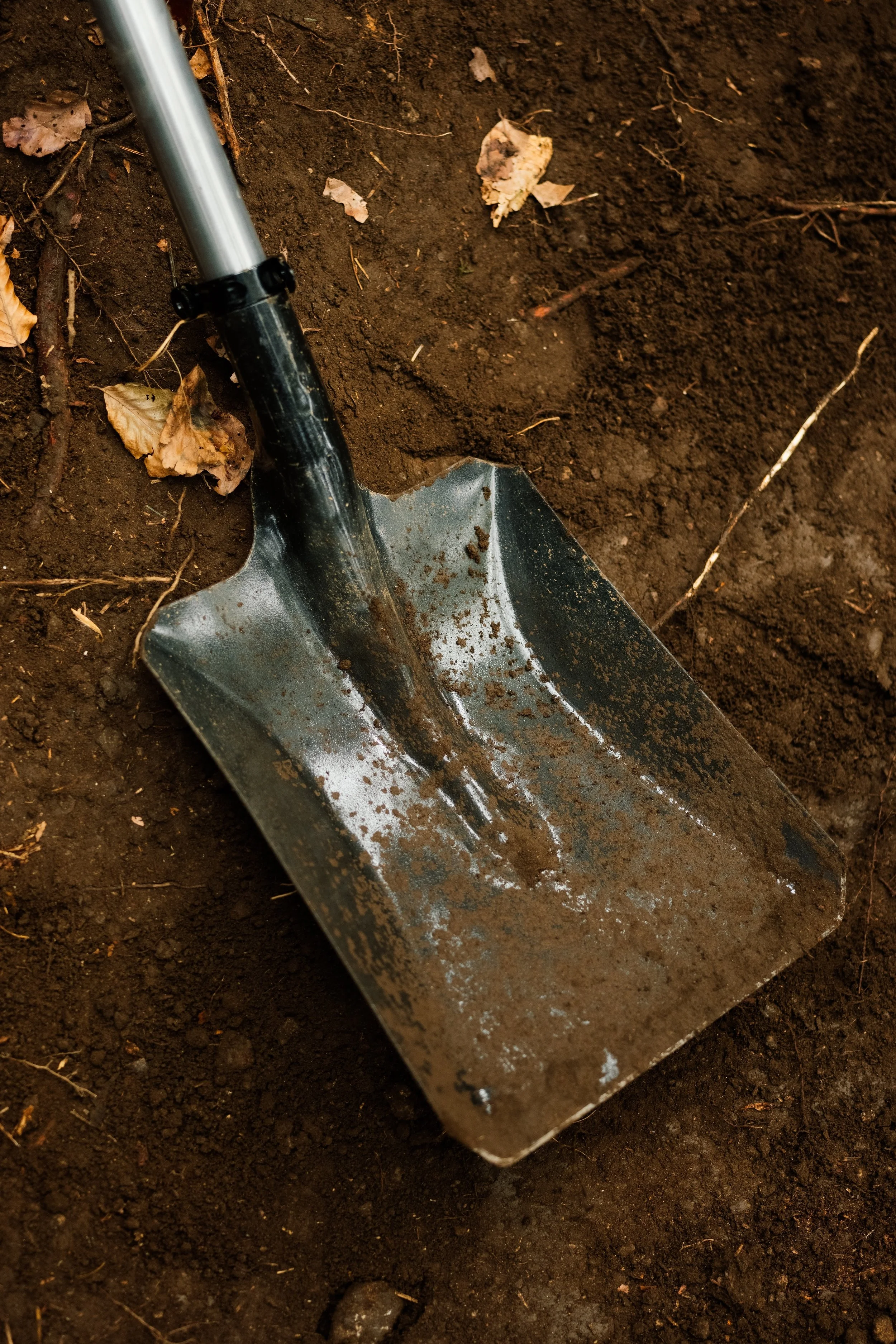
The whole setup felt robust from the start. The saw blade has proven to be more durable than my beloved Silky folding saws, and the shovel has not shown signs of fatigue, like cracks that some shaping shovels develop. The shovel also has a unique shape. I would call it a flat shovel, but it’s a bit of a hybrid with a point that can also dig.

How the Collapsible Trailtool Shaft Performs in the Field
The collapsible shaft was what I was most concerned about. That many bolts and attachments seemed to be a likely point of failure. I was proven dead wrong.
The only downside is that the quick-release occasionally fills with dirt, and you need to use the included metal brush to remove the dirt to swap heads.
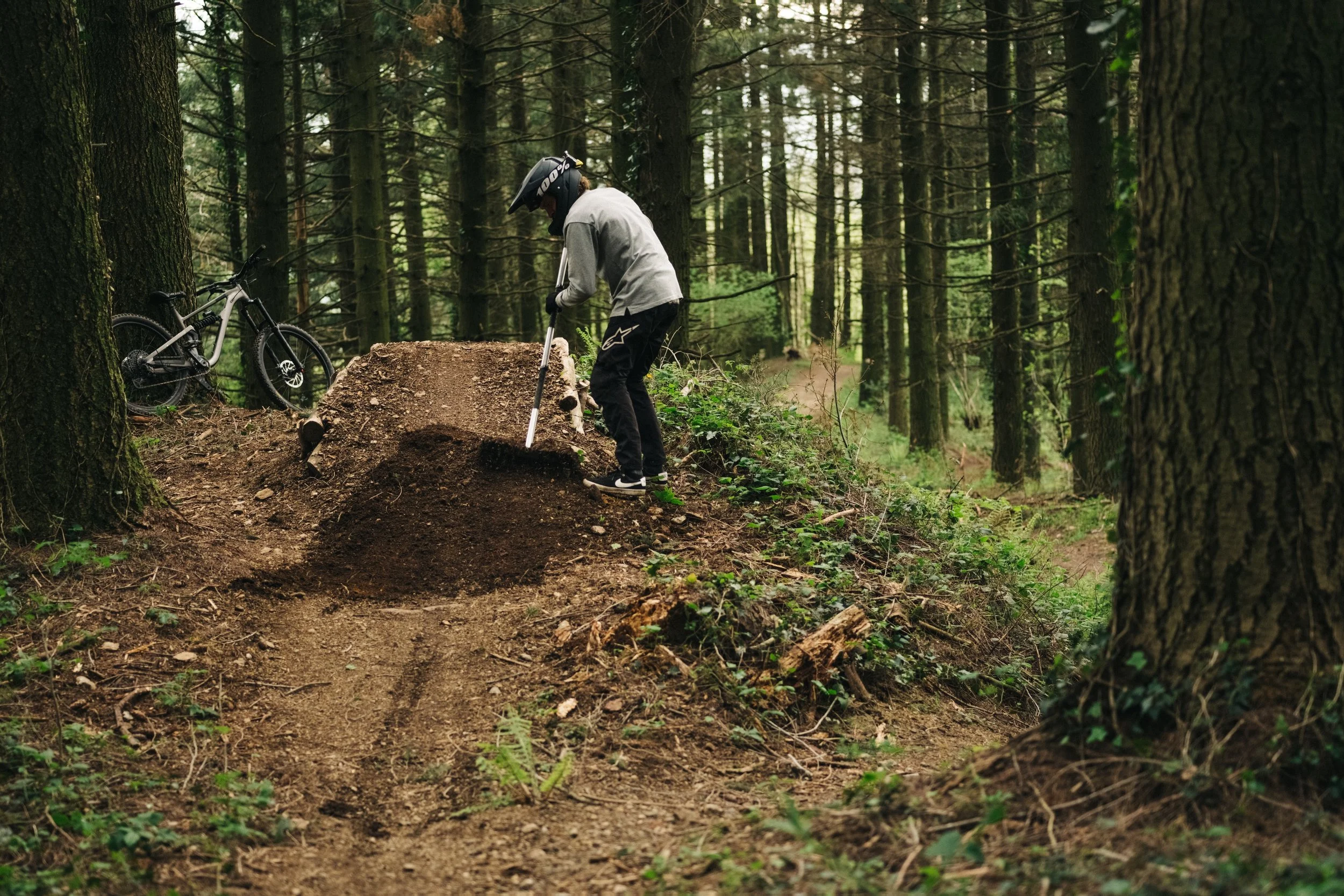
While I still wouldn’t use the multi-piece metal shaft for full-time shaping work, where I prefer a longer, curved wooden shaft to mitigate vibrations and offer a more ergonomic slapping position, it is not because of durability. In fact, at 4 Riders Bike Park here in Spain, they use the custom Trailtool head with a wooden shaft for full-time bike park shaping. This seems to work quite well.
Anyone who has visited the park will speak to the trail quality, especially the steep berms! Again, the tool quality directly translates to the trail quality.

Trailtool McLeod-Style Head for Cutting Roots and Working Hard Soil
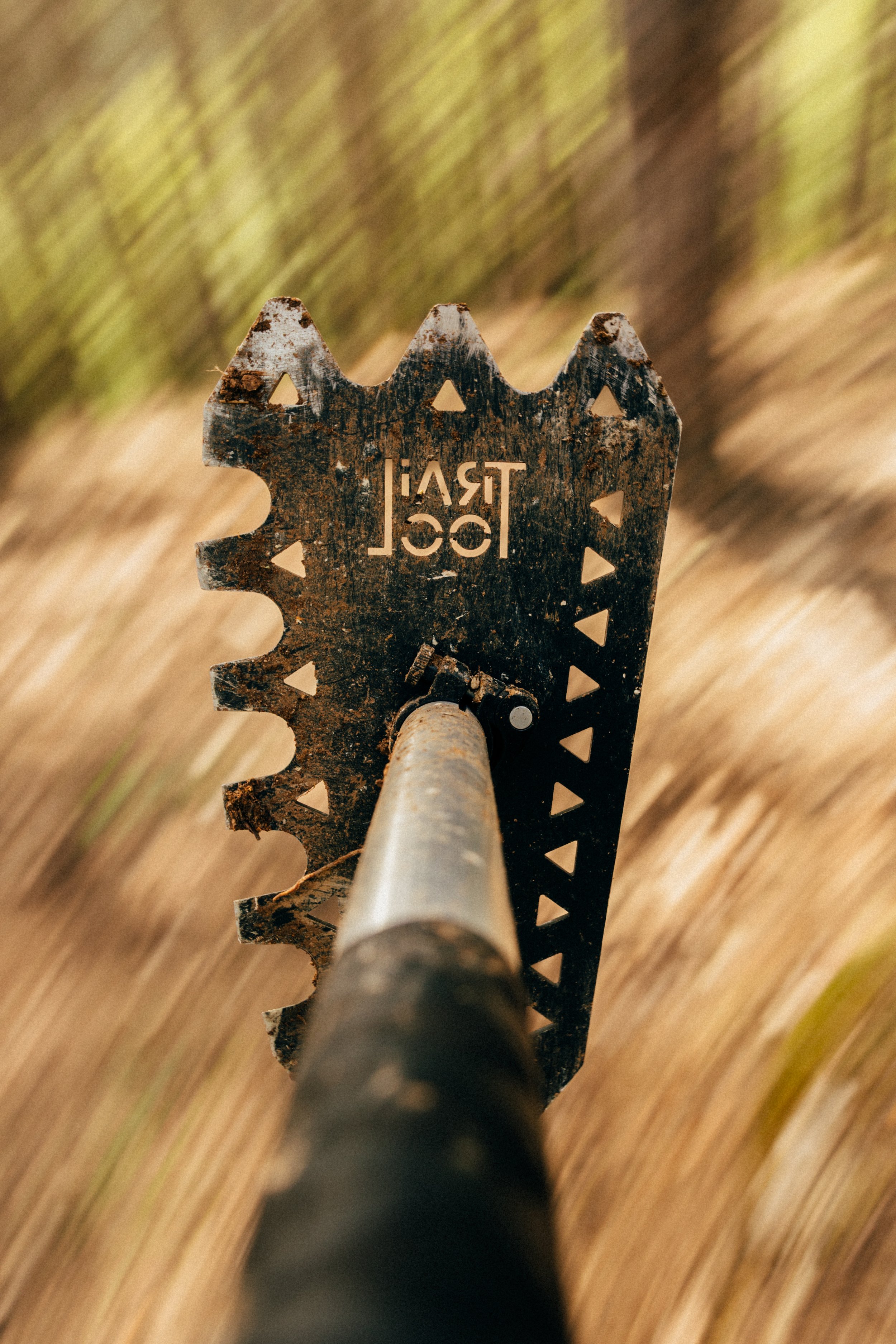
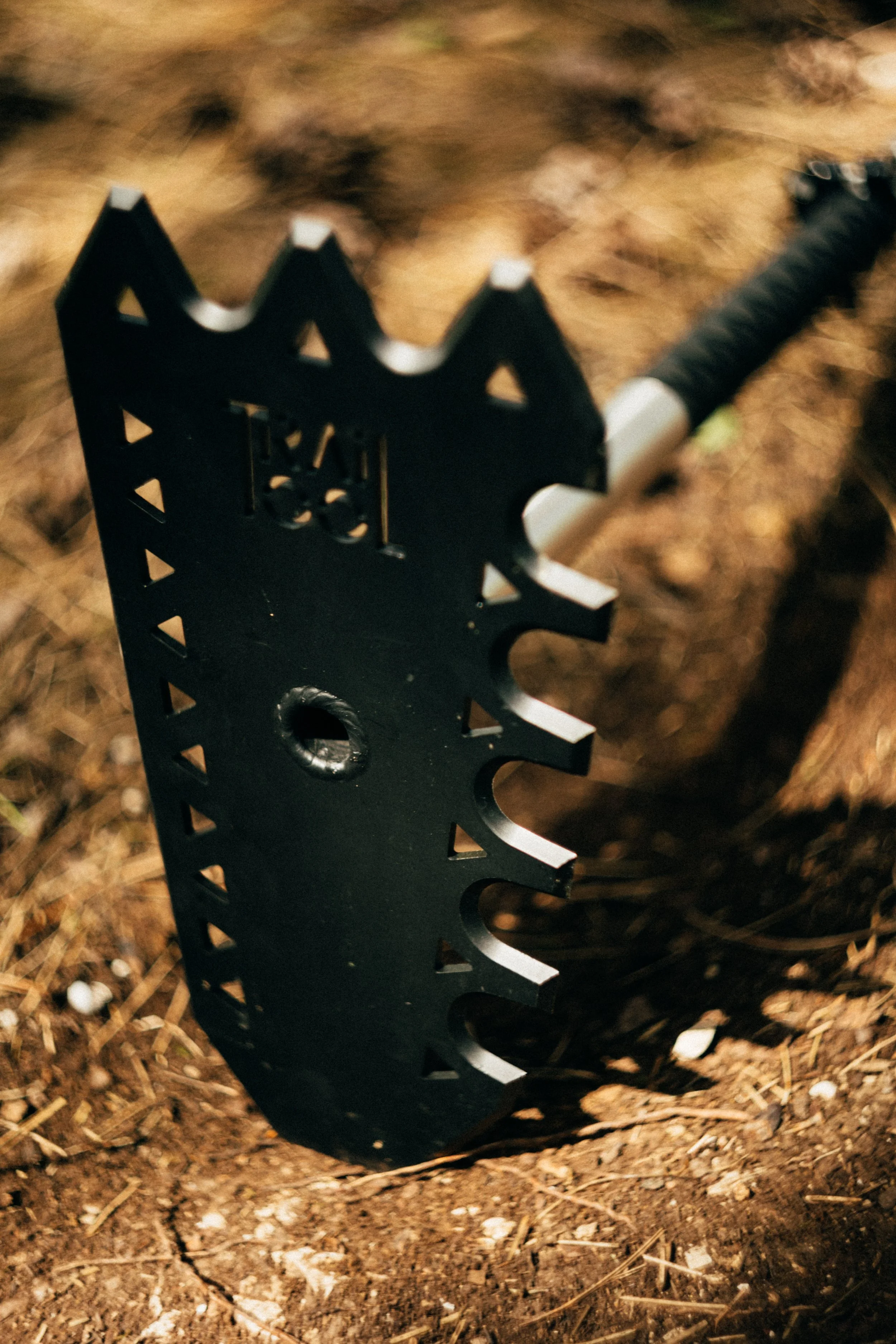
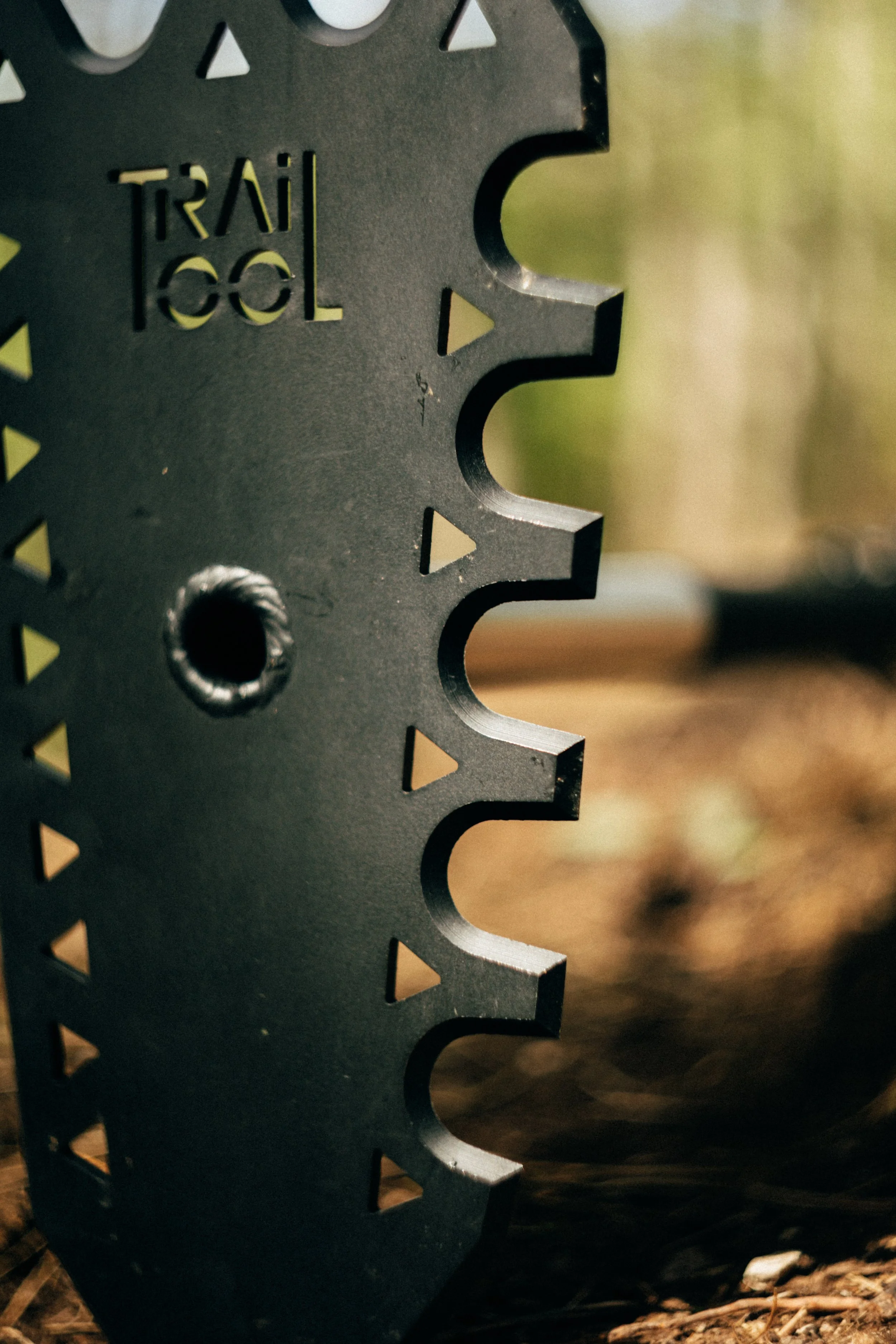
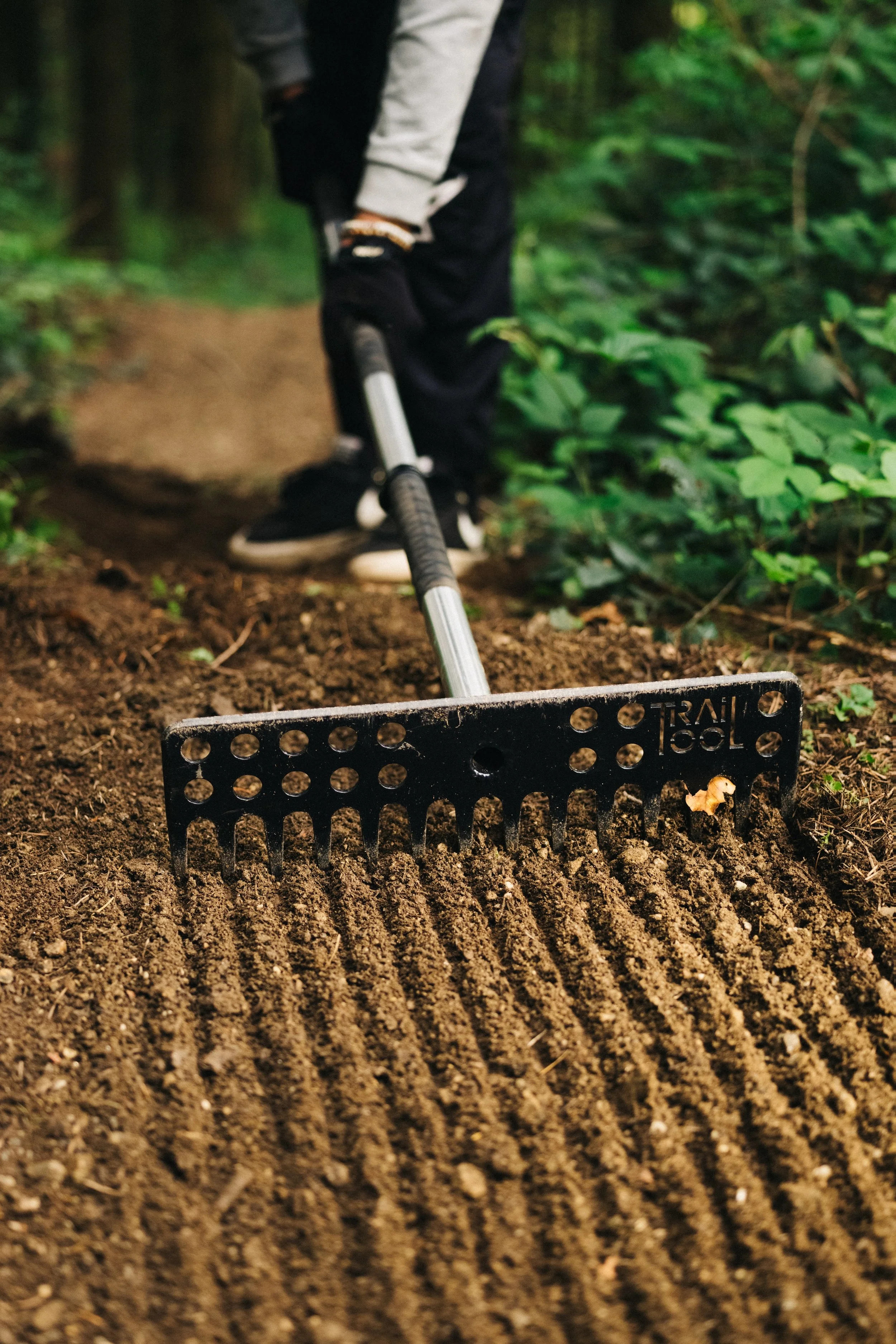
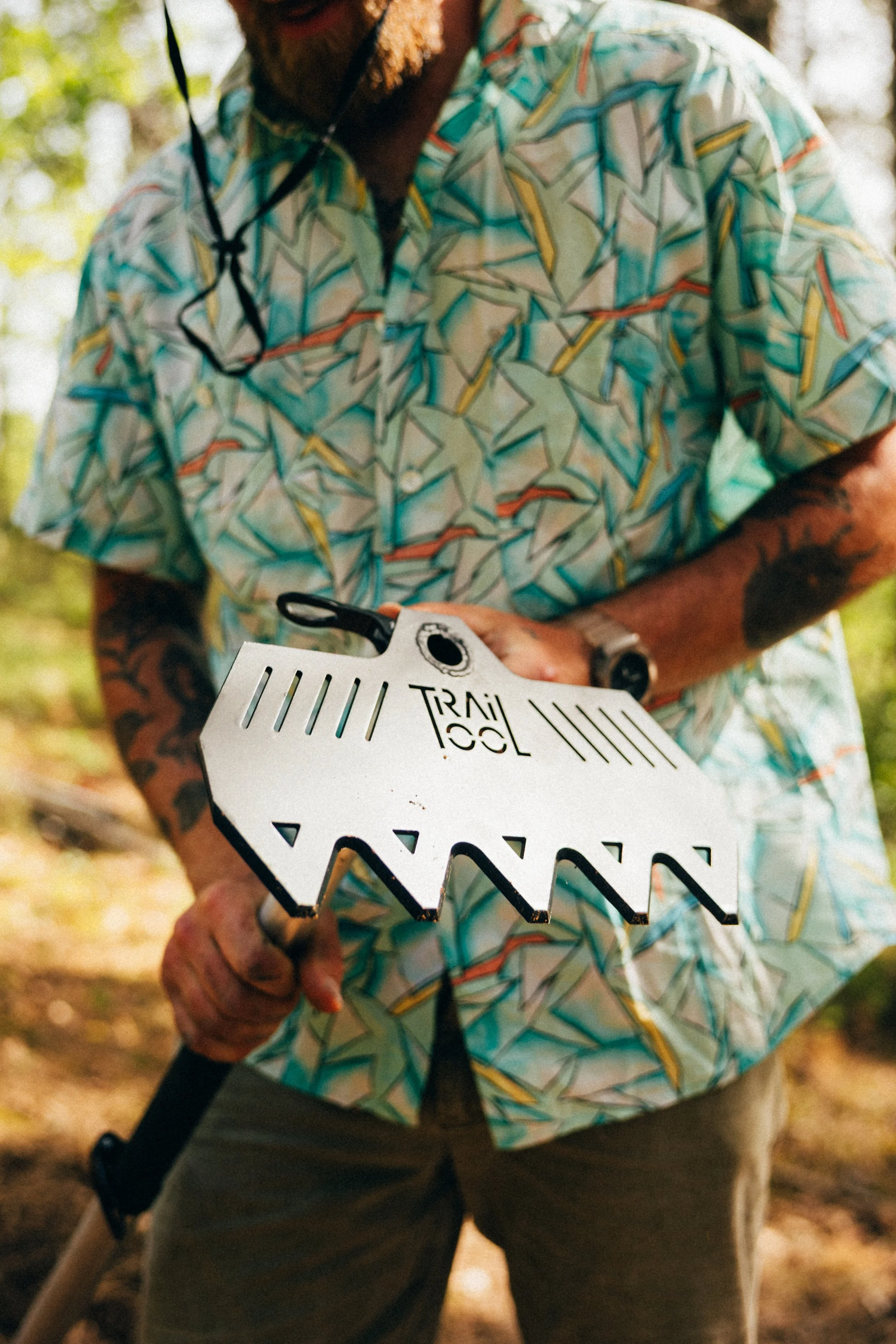
The McLeod-like head mentioned before is really THE Trailtool. Combining some qualities of a pickaxe, rake, and axe, this is essentially a McLeod in the shape of a triangle with sharp teeth and cutting edges.
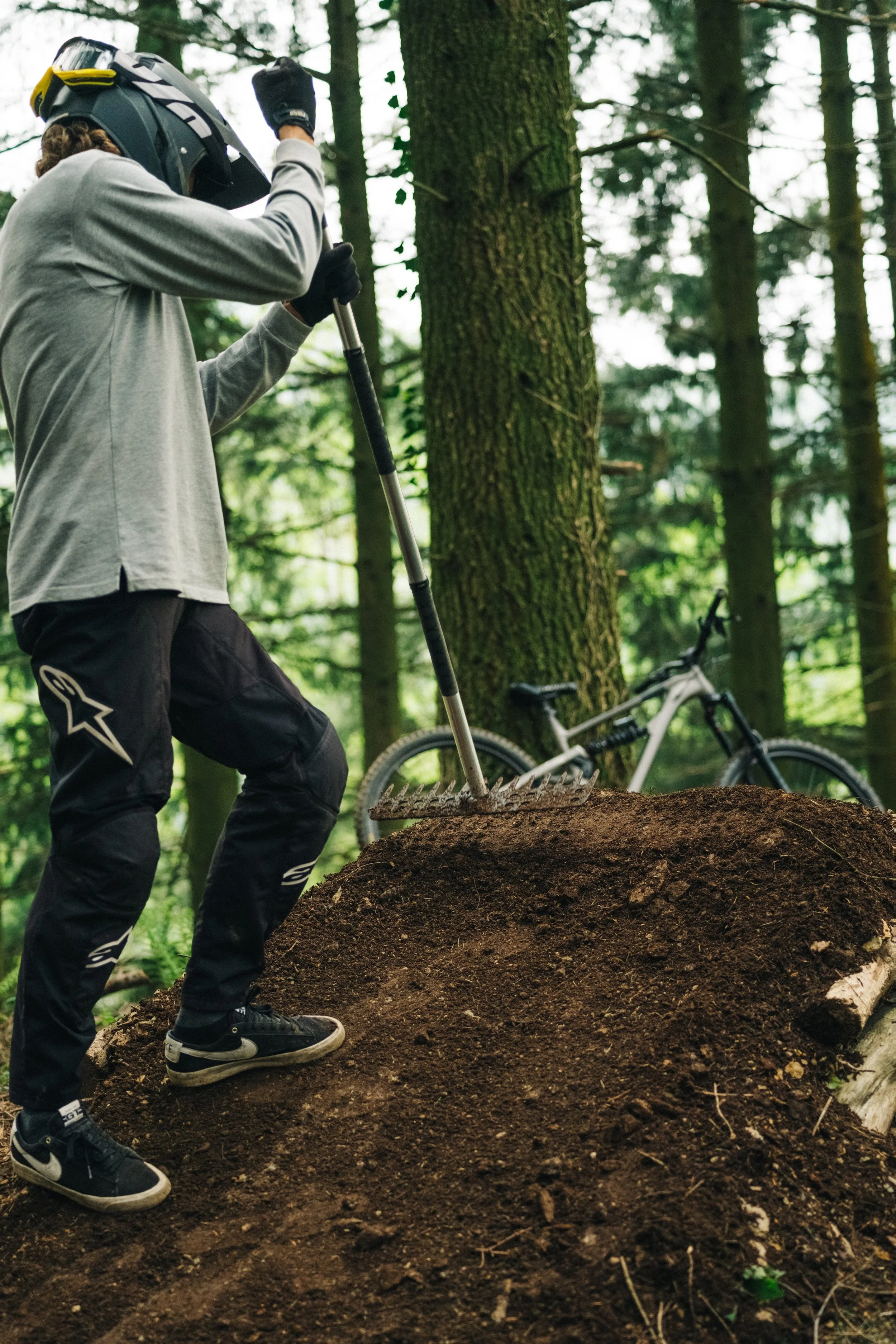
Similar to the traditional McLeod, the Trailtool is multi-use in all of the roles just mentioned. I wouldn’t say that it is better than a pickaxe and a rock bar for rock work, but it does cut through roots and hard dirt with precision and speed, much faster than a normal McLeod.
Personally, I prefer the Fiskars Exacto Rake, but I also would never drag a rock bar and rake along on rides or in the locations I use the Trailtool. The newest revision of the Trailtool features a short flat edge at the pointier edge of the triangle, rather than just a point, to enhance ease of cutting.
Trailtool Shovel Performance for Digging, Slapping, and Shaping
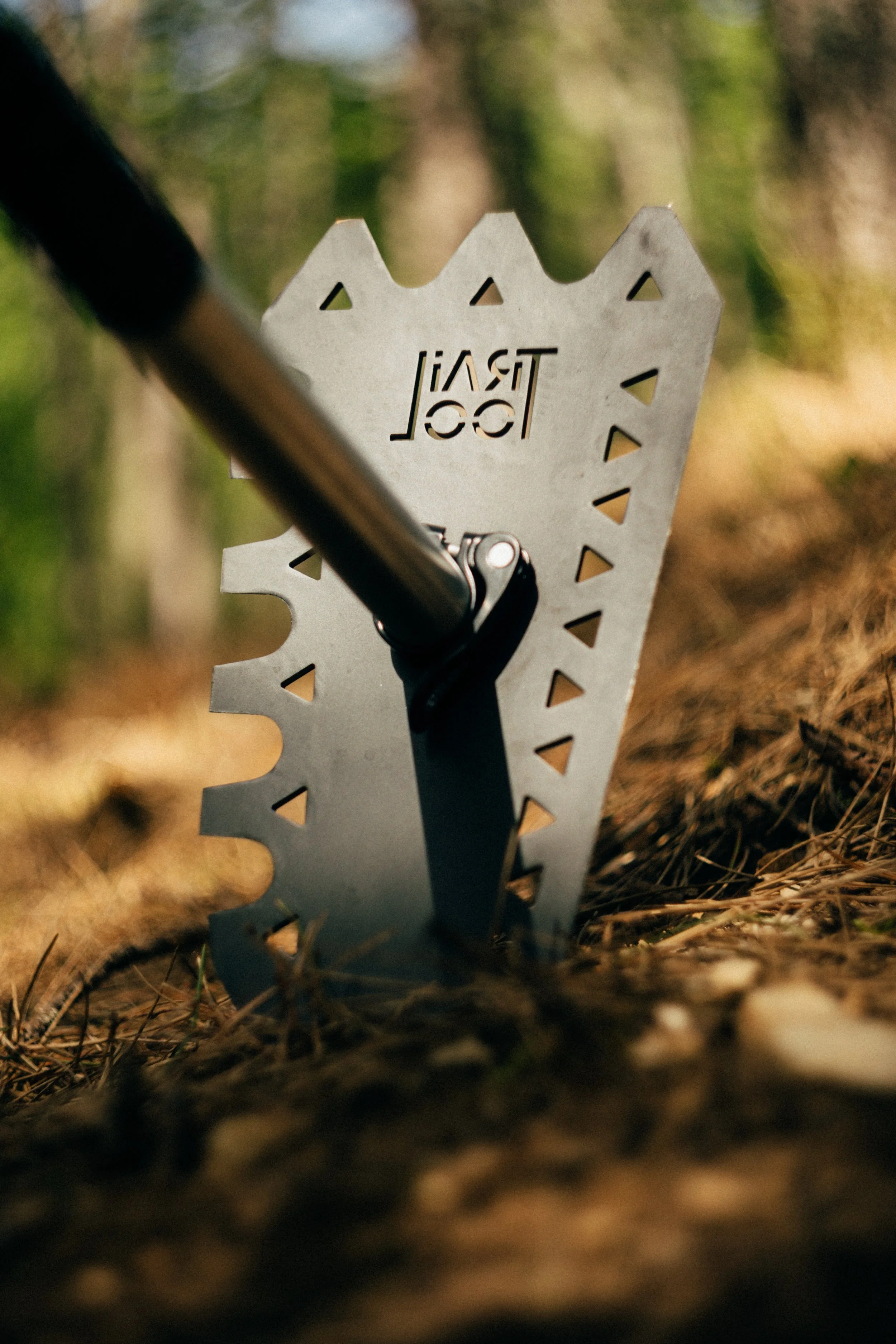
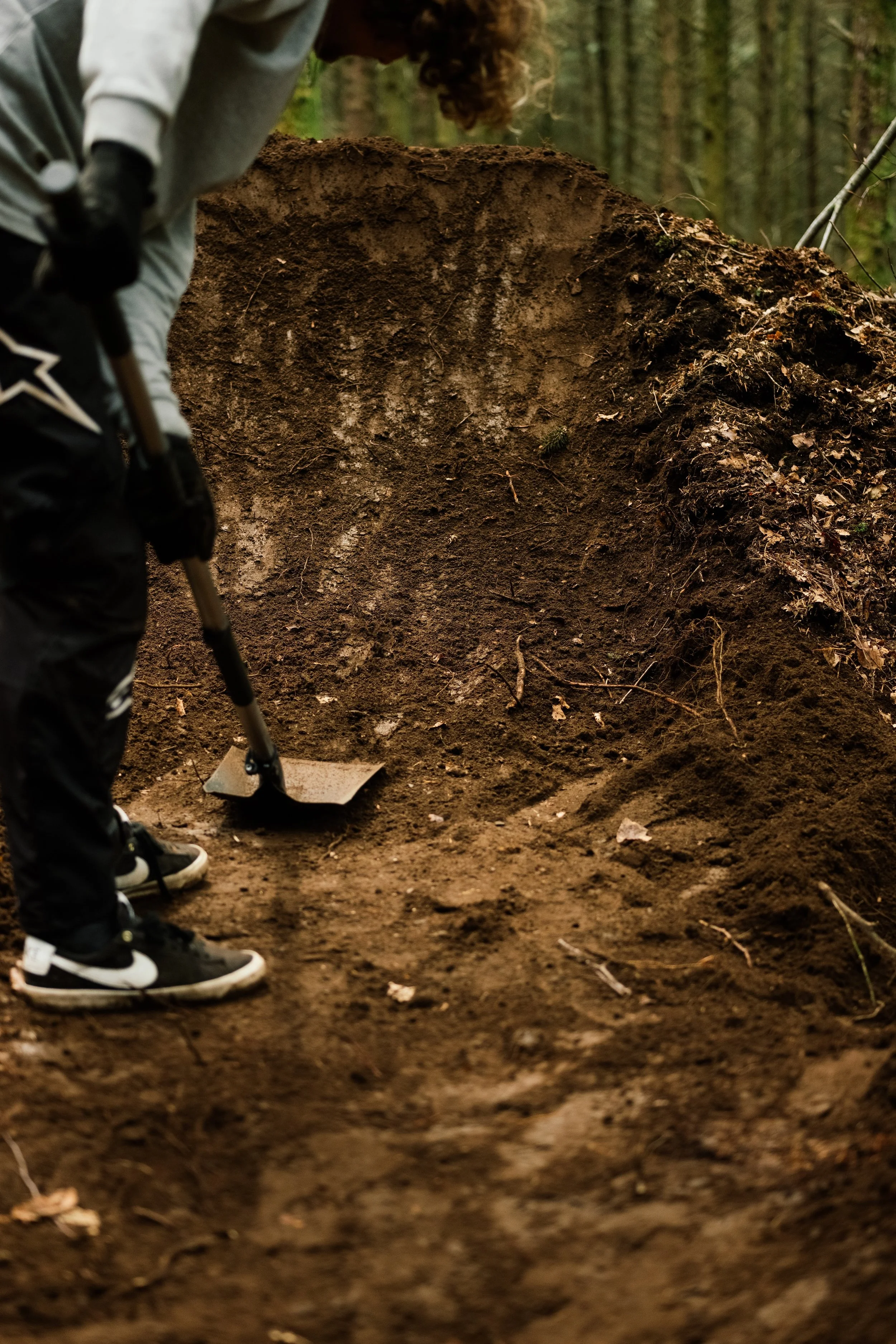
Similar to the Trailtool head, the shovel is a multi-use hybrid that leans towards a flat shovel. Its point allows for a bit more digging prowess, and the large, slightly cupped shape allows for quite the shovel-full of dirt. It does not leave as crisp an edge as, say, a Trailshark, but again, I am not bringing separate tools along for the ride to the places I go with the Trailtool.
The slapping and shaping performance is more than enough for any build. If you are working on a manicured flow trail, you will probably have easy access to the work site and have a dedicated flat shovel on hand anyway. Note that the newest version has a flat blade and leans more towards a traditional flat shovel that looks even better for shaping.
Trailtool Saw Attachment for Backcountry Trail Maintenance
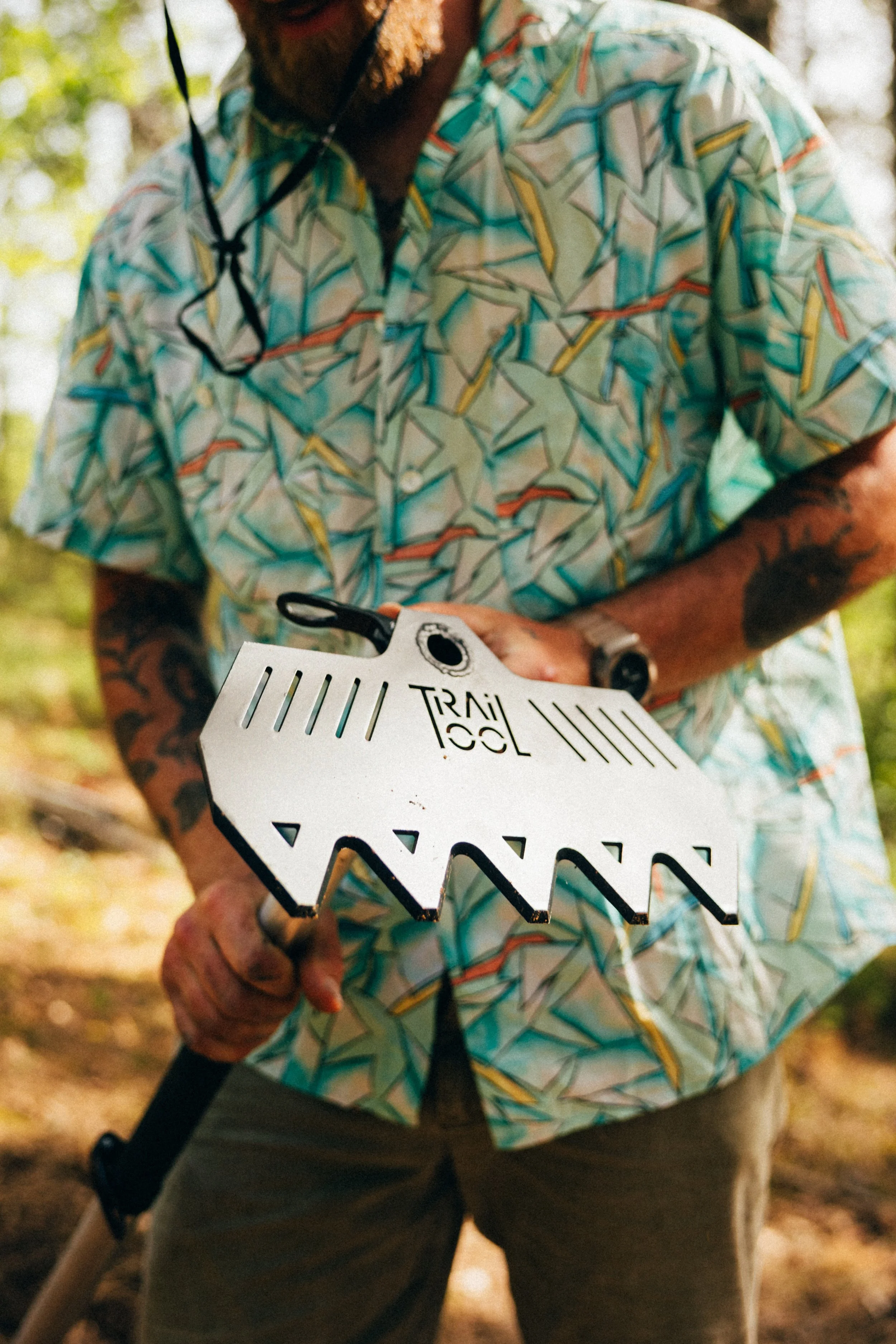
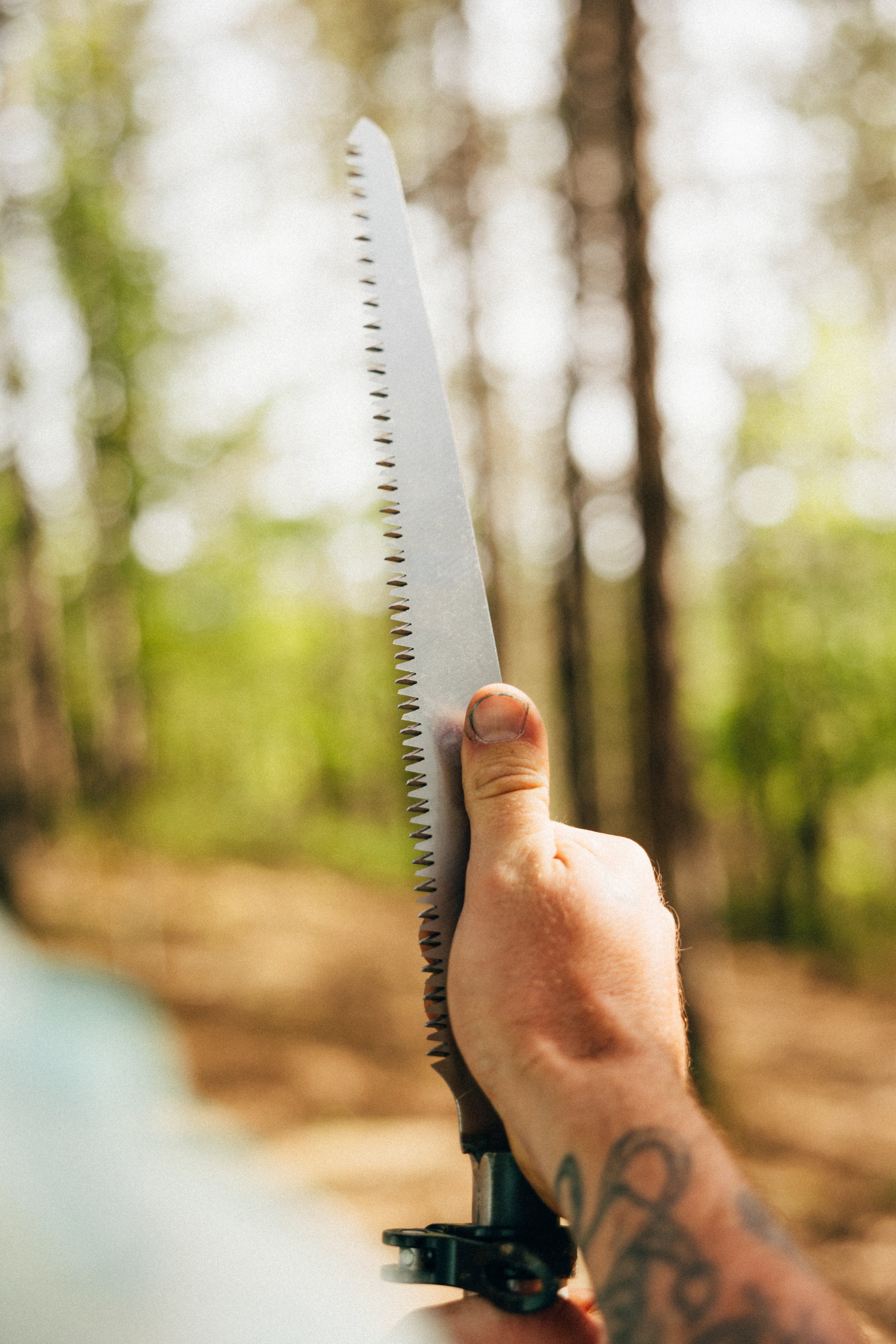
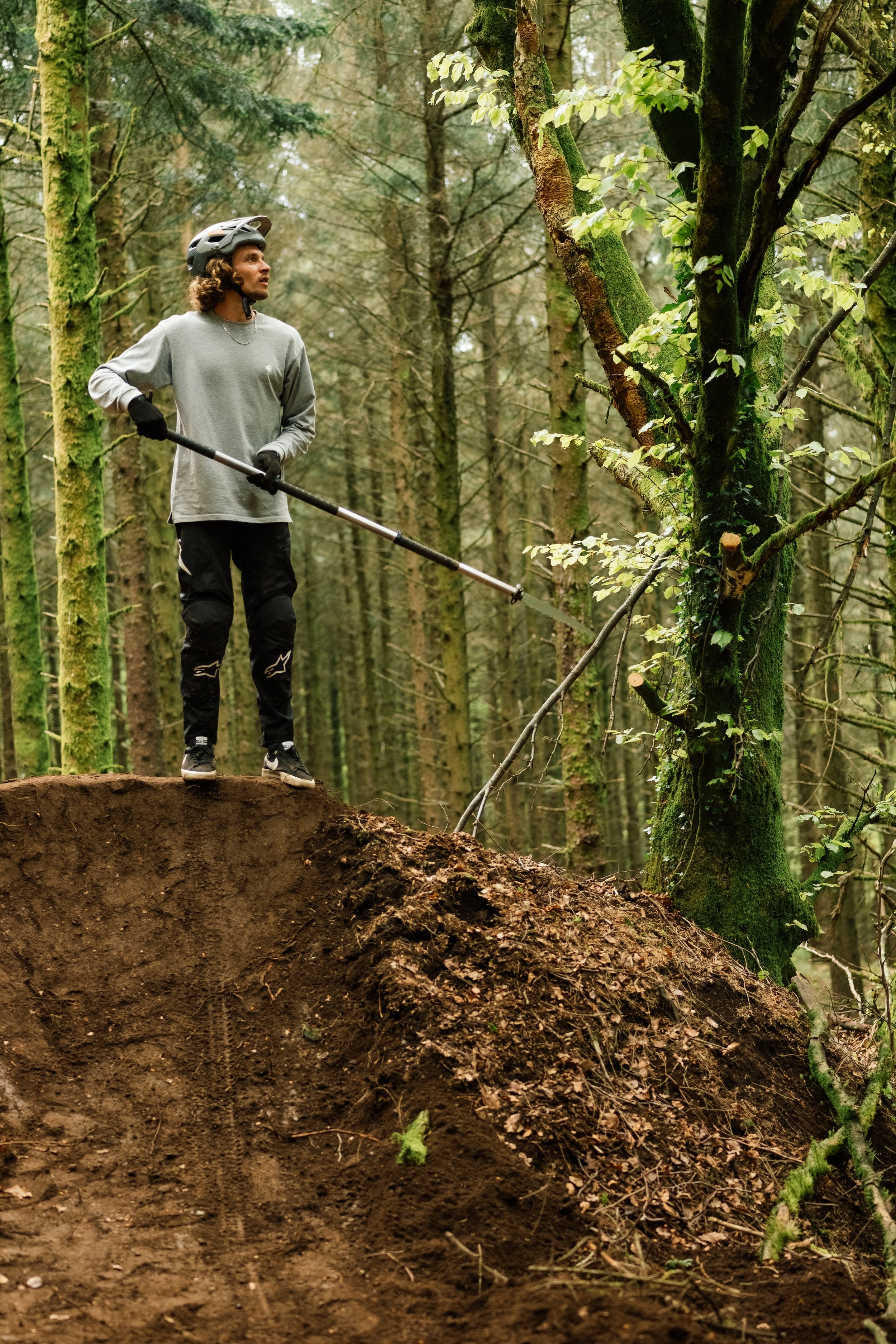
The saw attachment is packable and efficient, with a flat blade. It doubles as a pole saw when combined with the full shaft for those pesky downward-sloped branches, or you can just use one section of the shaft for a more traditional saw feel.
The blade lasts much longer than my Silky folding saws, but does not cut nearly as fast. I personally prefer a curved blade for ease of cutting.
Luckily, I usually still have room in my 20L pack to also bring a Silky since a lot of my volunteer work involves trimming branches. The Silky blades are razor sharp, but they do snap if you’re not careful.
Who Should Buy the Trailtool Pocket?
The Trailtool Pocket is ideal for those working in the backcountry or just to maintain local trails while eliminating the guesswork of getting tools to the trail, since it fits easily in a 20L+ backpack. While not cheap at 220 euros for the Pocket Tool V3 and 440 euros for the Pro Pack with multiple heads, it is significantly more affordable than competitors such as Trailboss. Combined with a dedicated wooden shaft, the Trailtool custom head has proven to be valuable for full-time shapers at bike parks as well, also saving money.
Final Verdict After Two Years With the Trailtool Pocket
The Trailtool has proven to be a valuable addition to my tool arsenal over the last two years. While it is not better than any specific individual, non-collapsible tool, each head attachment is a competitor in its own respective field of competition.
In the end, this is the perfect multi-tool for missions just like I mentioned—working on trails where you want to get in and out without much weight, and also for riding your bike before and after maintenance. More people carrying tools more often means more trail maintenance, something we can all get behind.
What Changed With the Trailtool Pocket Tool V3?
Note: There is an updated version of the Trailtool with a similar, but refined, design that uses quick-release clamps for all shaft connections instead of Allen keys. You can still purchase the Allen connectors if that’s what you like.
They also have new heads, like a rake and another smaller McLeod-like option. The shovel end also has slight refinements, like a flat, non-pointed tip.
All that and more can be seen on their website at shaapers.com.
Here are the stats on the newest Trailtool Pocket Tool V3: Sleeve: 133 cm, Head: 31 cm x 16.5 cm, Weight: 2.08 kg.
————————————
This article originally appeared in Volume 3, Issue 2 of Trail Builder Magazine.
Photo credit: Valentin Popineau | @popival


Willard Bruce
Will is a Utah-born, Northeast-grown writer and trail builder based in Barcelona, Spain. He splits his time between digital marketing for BUFF®, professional trail building in Austria, and freelance journalism and content creation. He rides as much as possible. Favorite projects include the Schladming bottom jump area, the Bachtl Trail in Tirol, and volunteering at Rocallaura Bike Park. Follow his travels @willardsbruce.
