
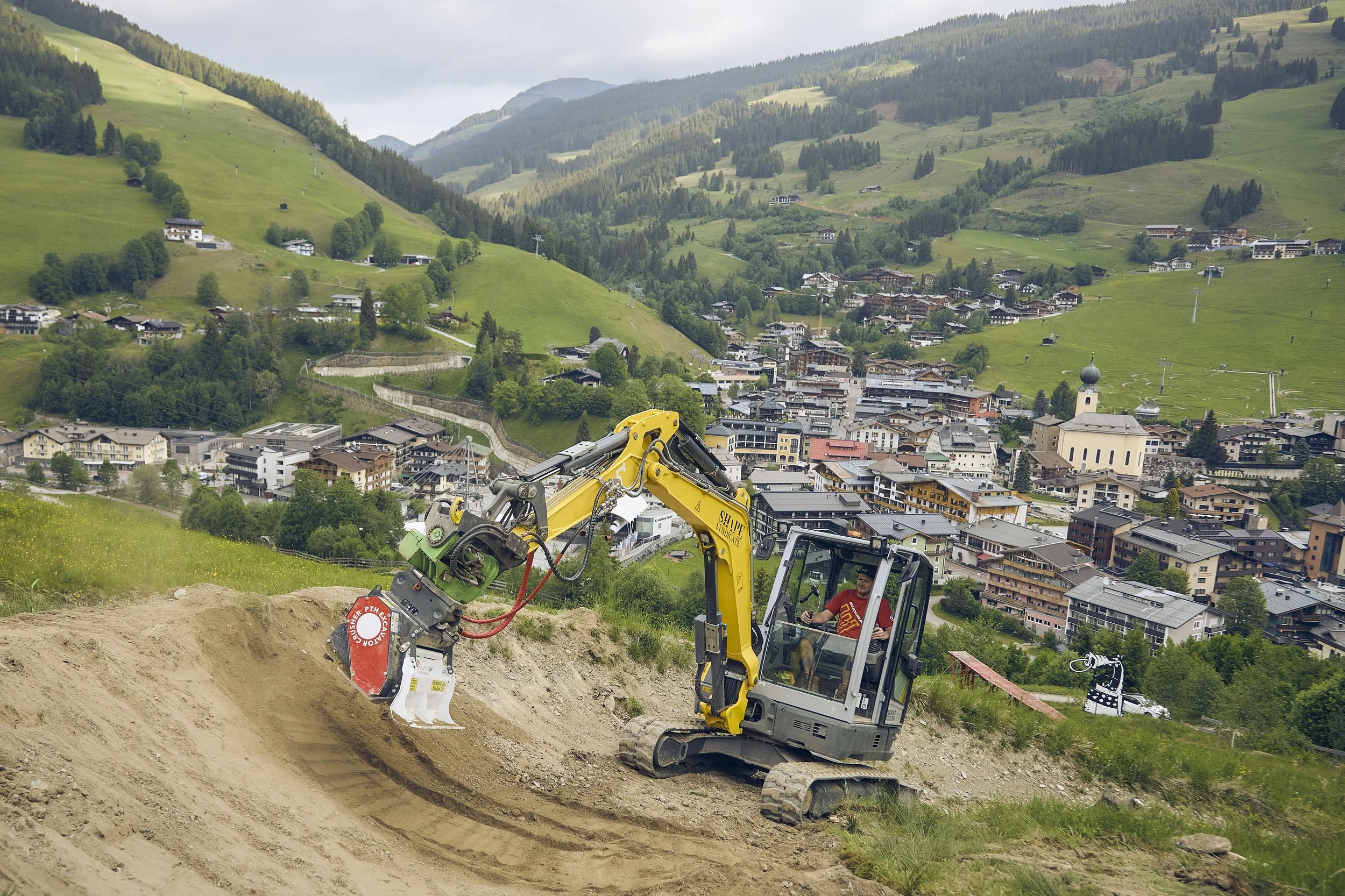
Every trail builder knows the feeling.
A section has been damaged by water. Braking bumps have grown into deep holes. Rocks are pushing through the tread. A corner that once flowed now feels rough, loose, and tired.
The problem may be obvious. The harder question is what it will take to fix it.
Maybe the crew is working deep in the woods where hauling fresh material is difficult. Maybe a trail center cannot afford to keep a popular line closed for a week. Maybe the builders have the right machine on site, but not the right way to process the material beneath them.
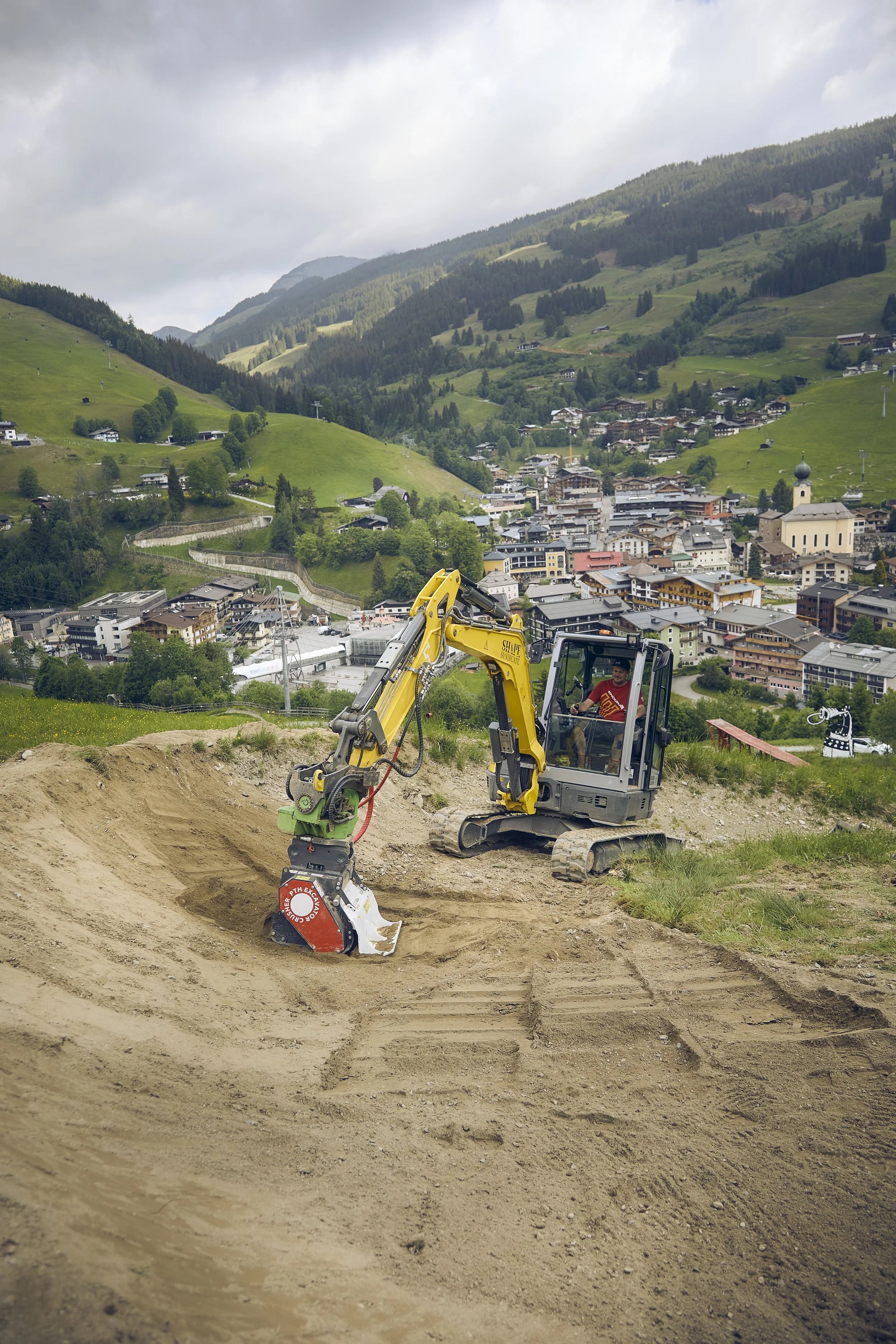
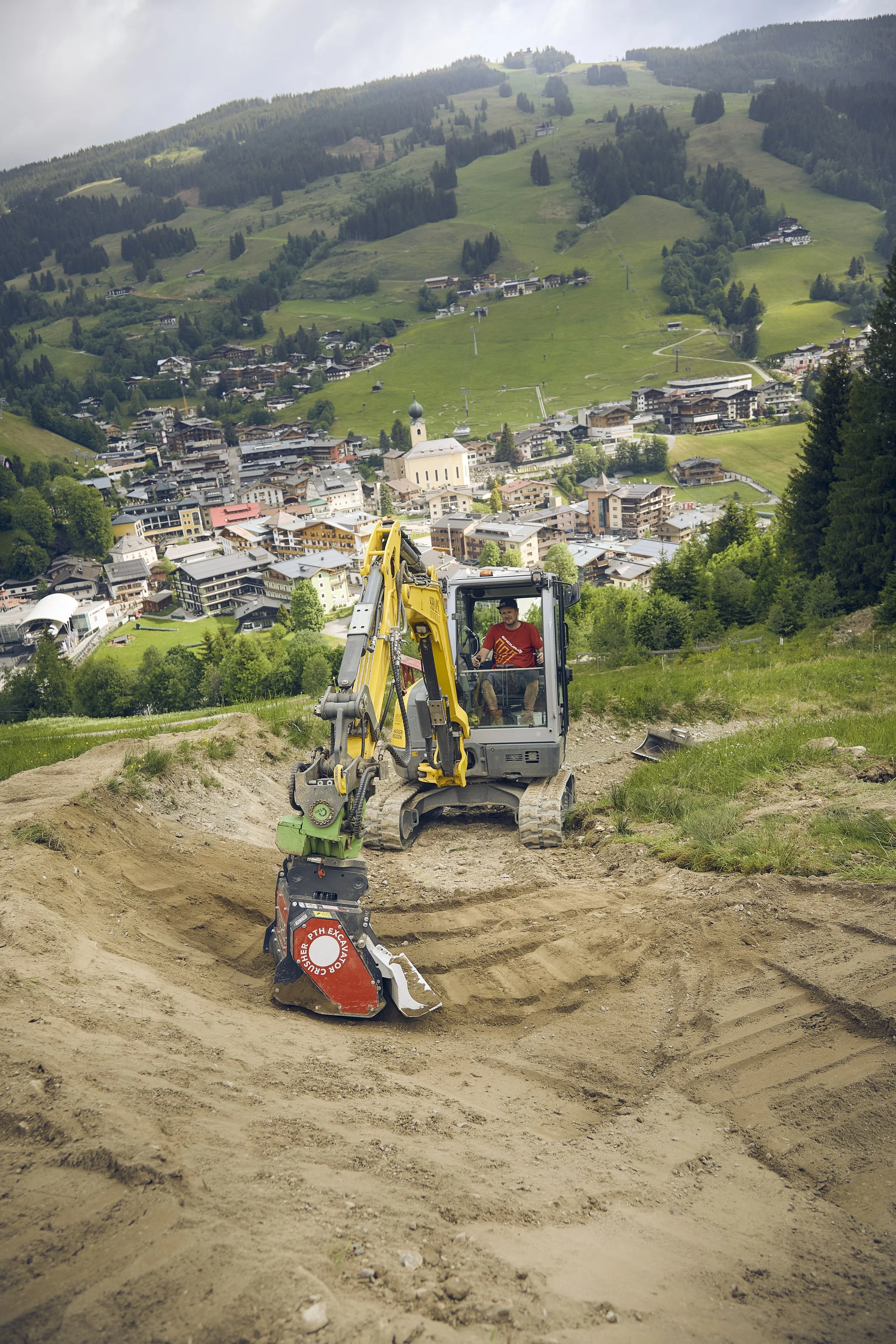
This is the problem PTH Products hopes to address with the PTH Excavator Crusher EC-S, a compact attachment designed for mini excavators.
At first glance, it is easy to see the EC-S as another specialized piece of equipment. Look closer, however, and the more interesting story is what it could allow trail crews to accomplish.
The EC-S is designed to help a mini excavator go beyond just moving dirt. It can mill, crush, mix, place, and level existing material directly on the trail.
For trail builders, that creates a bigger possibility: repairing more trail with fewer equipment changes, making better use of what is already on site, and reopening damaged sections sooner.
Why Mini Excavator Attachments Matter for Trail Maintenance
We know that trail systems rarely fail all at once.
They usually wear down slowly. A drainage issue becomes a rut. A rough patch becomes a braking zone. Exposed rocks turn into a section riders begin avoiding.
Maintenance crews are often asked to solve these problems with limited time, access, and resources.
For bike parks, trail centers, and small professional crews, a closed trail can have a significant impact. Riders are pushed onto other trails, traffic becomes concentrated, and staff members feel pressure to finish the repair quickly while still making it last.
The EC-S is meant to fit into the gap between a hand repair and a major reconstruction project.
It gives crews another option when a job is too large or repetitive for hand tools, but too small, tight, or remote for larger equipment.
A significant amount of trail maintenance lives in that middle ground.
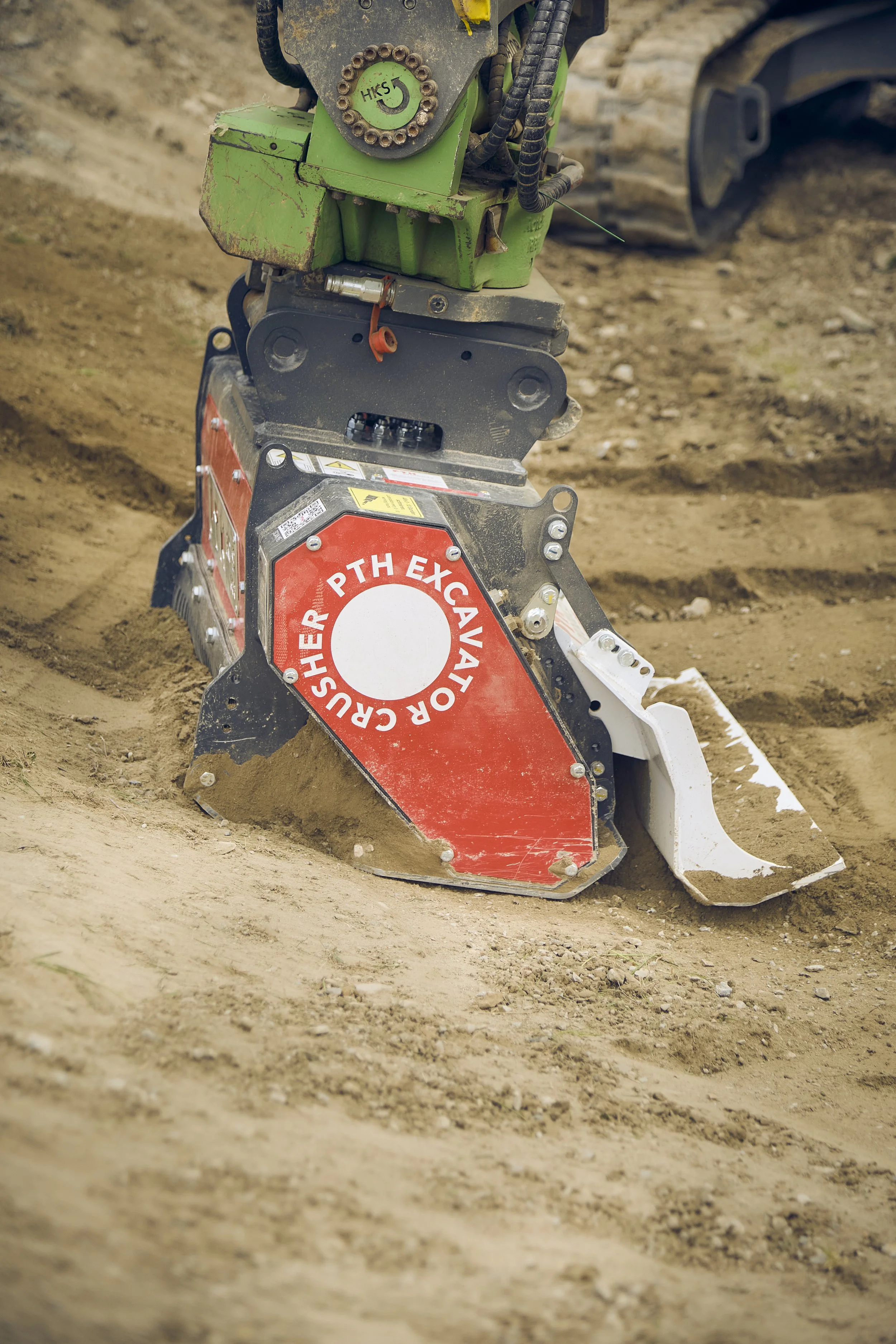
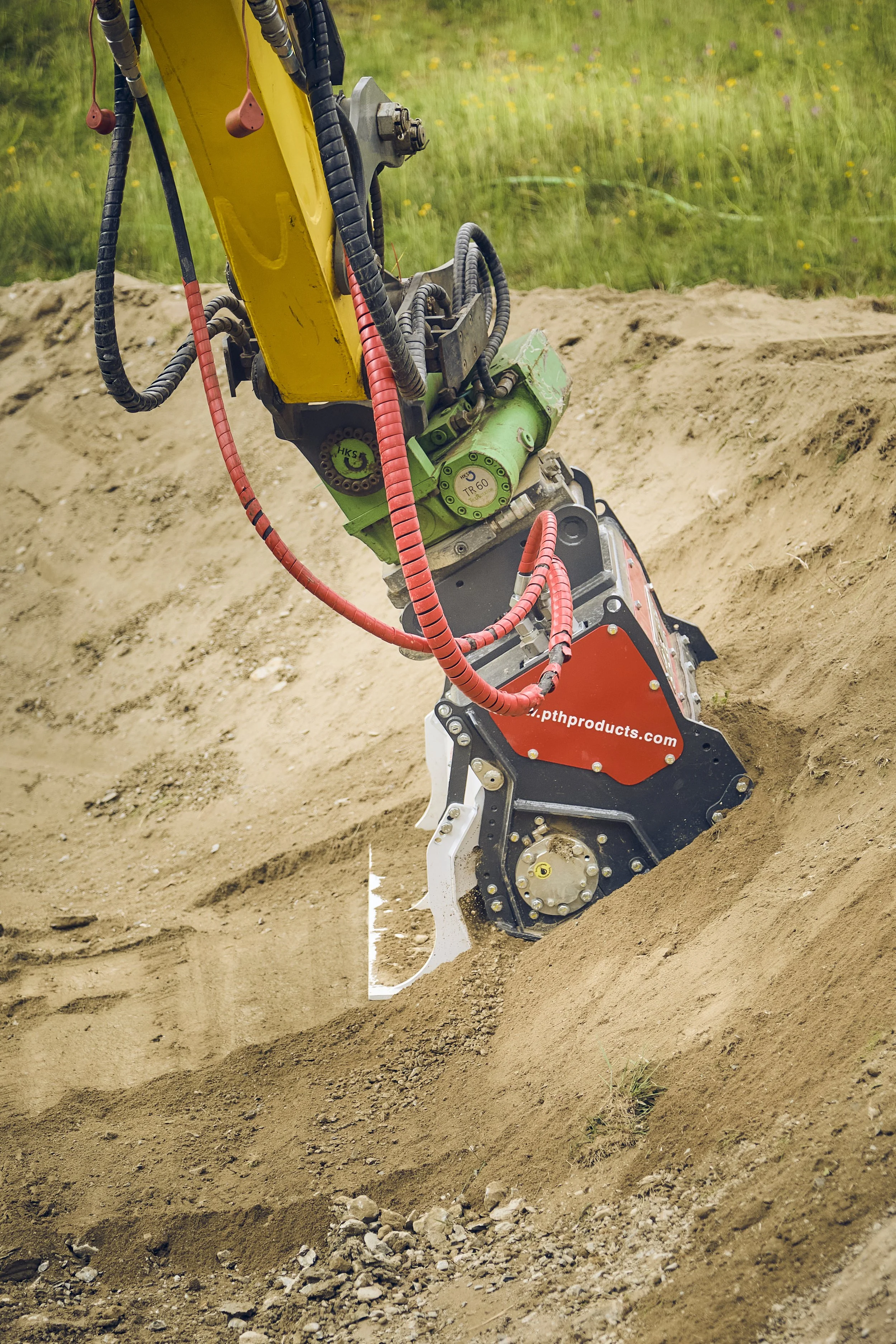
How the PTH EC-S Expands Mini Excavator Capabilities
Mini excavators are already common on trail projects. Their small footprint and maneuverability make them useful for benching, shaping, drainage work, repairs, and technical features.
Instead of introducing a completely different machine, PTH designed the EC-S to expand the capabilities of equipment many professional builders already use.
It can break down rocky tread, loosen compacted surfaces, mill roots and woody material, and mix soil and stone before the trail is shaped again. The optional leveling bucket allows the operator to place, spread, and pre-level that material.
In practical terms, a crew could move into a damaged section, loosen and blend the existing material, rebuild the rough shape, and then turn the trail back over to the shapers for the details that determine how it rides.
That could mean fewer attachment changes, less movement in and out of the work zone, and fewer delays waiting for additional material.
The attachment gives the operator more ways to prepare the material before the final shaping begins.
Reusing On-Site Material for More Efficient Trail Repairs
Trail building is always partly about working with what is available.
The best material is not always sitting in a stockpile near the trailhead. Sometimes it is already beneath the machine, locked into a compacted surface, mixed with rock, or buried beneath damaged tread.
The EC-S is designed around the idea that more of that material may be reusable.
This could be especially valuable on remote trails where hauling aggregate is expensive or impractical. Instead of automatically removing material and replacing it, crews may be able to loosen, crush, blend, and rebuild what is already within the corridor.
That does not mean every material should remain in the trail. Builders still need to evaluate soil composition, organic content, drainage, compaction, and environmental requirements. Experience remains essential.
The attachment simply gives builders more choices.
Rather than asking, “How do we get new material into this location?” a crew may be able to ask, “How can we make better use of what is already here?”
That shift could reduce transportation, simplify logistics, and help crews work more efficiently in places where every machine movement matters.
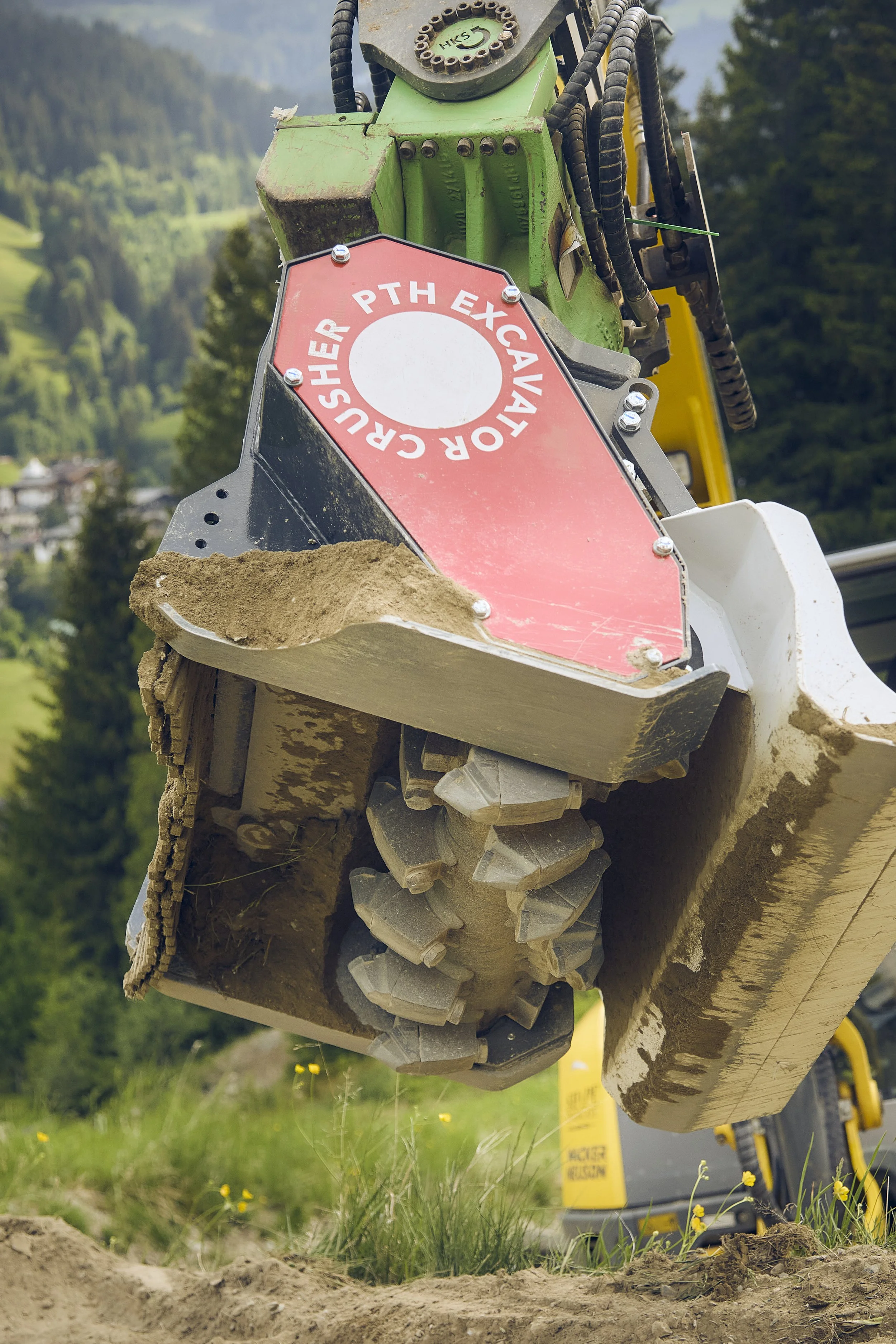
How the PTH EC-S Could Reduce Trail Closures
For many trail organizations, the most compelling use case may be routine maintenance.
Consider a bike park preparing for a busy weekend. A heavily used section has developed braking bumps and exposed stone. The trail is still rideable, but the damage is getting worse.
With the EC-S, the crew may be able to process and remix the existing tread, pre-level the repair, and give the shaping team a more workable base.
The same approach could apply after a storm, when runoff has cut through a section and pushed material into the wrong places. It could help on a damaged drainage area, a rutted access path, or a technical feature that needs to be rebuilt.
None of these jobs sound glamorous. They are, however, the work that keeps a trail system functioning.
For a bike park or destination trail network, reducing a closure by even a few days can make a difference. It keeps more terrain available, distributes riders across the system, and gives visitors the experience they traveled to find.
For a community trail system, getting a damaged section open sooner can restore an important connection and reduce pressure on volunteer crews.
Helping Small Trail Crews Complete More Work
I get it. Most trail crews are small.
A professional builder may work with only a few employees. A bike park team may be responsible for far more mileage than its staffing level suggests. A nonprofit relies on volunteers for finishing work while contracting out heavier machine work.
In each situation, equipment versatility is a big deal.
A machine that can handle several stages of a repair can help a small crew use its time more effectively. The operator can prepare the material and rough in the surface. The shaping crew can then focus on drainage, transitions, compaction, corner geometry, and the final finish.
PTH summarizes the relationship this way: “The machine does the heavy preparation. The people give the trail its character.”
The EC-S does not automate trail design. It’s not A.I. It cannot understand rider movement, water, soil, or the character of a landscape. It cannot decide where a trail should go or how a corner should feel.
Those decisions still belong to trail builders (whew …).
The attachment is intended to remove some of the hard, repetitive groundwork so skilled builders can spend more time making those decisions well.
The Future of Mini Excavators in Trail Building
Often times, trail building innovation is often discussed in terms of speed, power, efficiency, and productivity. Those things are definitely important, but they are not the whole story.
The deeper value of a tool like the EC-S is what that efficiency makes possible.
It can give crews more time to focus on drainage. It can help builders reuse material rather than automatically importing more. It can make a small machine more useful in a remote work zone. It can shorten the distance between identifying a problem and reopening the trail.
Most importantly, it can support the people whose knowledge still determines whether the finished trail works.
The EC-S processes the material. Trail builders still shape the experience. That’s a good 1-2 punch.
As trail systems are asked to carry more riders, withstand more weather, and operate with limited maintenance resources, helping builders do more with the machines they already have may be the real innovation.
Editor’s note: This article is based on product information supplied by PTH Products. Trail Builder Magazine has not independently tested the PTH Excavator Crusher EC-S.


Sean is the Founder and Editor-in-Chief of Trail Builder Mag, a digital media instructor, and the Communications Director for the Northwest Trail Alliance in Portland, Oregon. Email: sean@trailbuildermag.com